
PRP therapy delivers sustained 12-month benefit for knee osteoarthritis at $8,635 per quality-adjusted life year, well below the $50,000 cost-effectiveness threshold. This cost benefit analysis examines condition-specific pricing, insurance coverage, and ROI data to determine whether PRP therapy makes financial and clinical sense for your situation.
Key Takeaways
- PRP achieves sustained 12-month benefit for knee arthritis (WOMAC MD -14.69) at $8,635 per QALY, well below the $50,000 cost-effectiveness threshold
- Platelet concentration >1 million/µL critically determines success: high-concentration formulations achieved meaningful improvement while low-concentration protocols failed consistently
- Total treatment costs range $1,500-$11,000, including injections, imaging, guidance, and PT, with 20-40% geographic variation
- Knee osteoarthritis and plantar fasciitis demonstrate the strongest evidence with 60-85% success for mild-moderate cases
- Severe bone-on-bone disease (KL-4), acute symptoms <3 months, and inability to commit to PT predict poor value
What Is PRP Therapy And How Does It Work?
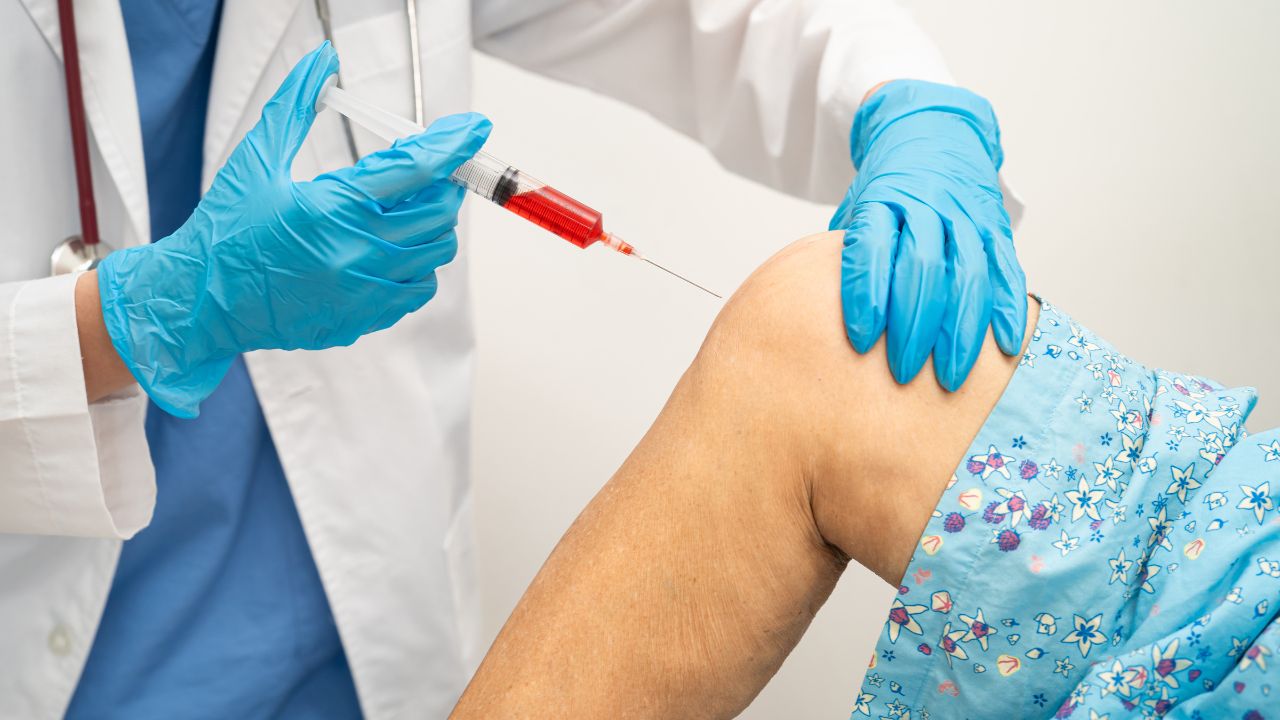
PRP harnesses concentrated growth factors from your blood to stimulate tissue repair. Unlike corticosteroids that suppress inflammation, this regenerative treatment addresses underlying damage with effects building over weeks and sustaining for months.
What Is Platelet-Rich Plasma (PRP)?
PRP concentrates growth factors, PDGF, TGF-β1, VEGF, increasing anti-inflammatory cytokines 5-fold. Requires 2-6× baseline platelet concentration for therapeutic effect using your own cells versus synthetic materials.
How Is PRP Prepared And Administered?
- Blood draw (30-60 mL)
- Centrifugation to separate components
- Platelet concentration (double-spin protocol)
- Injection (3-6 mL) with imaging guidance
- Timeline: 1-3 months initial improvement, 3-6 months peak benefit
Why Is PRP Considered A Regenerative Treatment?
Addresses underlying tissue damage rather than masking symptoms. Growth factors are released gradually, stimulating natural healing without synthetic materials.
What Results Can PRP Therapy Realistically Deliver?
Success in 50-70% of appropriately selected patients. Pain and function improve without visible cartilage regeneration, symptomatic treatment, not disease modification. 96.5% patient follow-up completion rate.
Which Conditions Most Commonly Drive PRP Cost-Benefit Decisions?
Knee osteoarthritis and plantar fasciitis represent the strongest cases with Level I evidence. Patient selection determines whether PRP delivers value for joint pain.
Common PRP Use Cases Comparison
| Condition | Why PRP Considered | Typical Goal | Evidence Level |
| Knee OA | Failed PT/meds, avoid surgery | Pain relief 6-18+ months | High (Level I, NNT 2-3) |
| Plantar Fasciitis | Failed orthotics/PT | Complete heel pain resolution | Very High (SMD 3.42 vs placebo) |
| Tennis Elbow | Chronic work/sport pain | Return to activity | Moderate (mixed evidence) |
| Rotator Cuff | Want functional improvement | Overhead activity without pain | Moderate (superior function) |
Why Is Knee Osteoarthritis a Top PRP Cost-Benefit Case?
AAOS moderate recommendation backed by 18 RCTs with 1,995 patients. Achieves 60-85% success for mild-moderate OA (KL 2-3). NNT of 2-3 means every 2-3 patients treated yields one additional meaningful improvement.
Why Is Plantar Fasciitis Frequently Evaluated For PRP?
Dramatic superiority over placebo (SMD 3.42) and outperforms corticosteroids at 6-12 months. 85% success rates represent PRP’s most compelling cost-benefit scenario.
Where Does Hair Loss Fit In A PRP Cost-Benefit Article?
Cosmetic outcomes requiring ongoing maintenance create a different value proposition from orthopedic applications, where pain relief drives decisions.
How Much Does PRP Therapy Cost?
Single sessions range $400-$2,500; most require 1-3 treatments with total costs reaching $1,300-$11,000. Major metros charge 20-40% premiums versus rural markets.
Typical PRP Session Costs By Condition
| Condition | Low | Average | High |
| Knee OA | $500 | $1,250 | $2,500 |
| Tennis Elbow | $400 | $800 | $1,200 |
| Plantar Fasciitis | $500 | $1,000 | $1,500 |
| Rotator Cuff | $600 | $1,050 | $1,500 |
Typical Number Of Sessions By Condition
| Condition | Sessions | Spacing | Maintenance |
| Knee OA | 1-3 | 1-4 weeks apart | Every 12-18 months if needed |
| Plantar Fasciitis | 1-3 | 2-4 weeks apart | Rarely needed |
| Rotator Cuff | 1-2 | 4-6 weeks apart | Case-dependent |
Factors That Change PRP Pricing
- Geography: Major metros 20-40% higher ($9,000 vs $4,000 for 5-session series)
- Provider expertise: Board-certified specialists command premium
- Imaging guidance: Ultrasound/fluoroscopy adds $200-$500
- Protocol quality: High platelet concentration (>1M/µL) may cost more
- Clinic type: Academic centers vs private vs regenerative specialists
Extra Fees That May Increase the Total PRP Bill
- Consultation: $0-$300
- Pre-treatment imaging: X-rays $100-$300, MRI $500-$3,000
- Imaging guidance: $200-$500 per injection
- Post-treatment PT: $450-$2,400 (6-12 sessions)
- Follow-up visits: $150-$300 each
Total-Cost For Full Treatment Plans
| Condition | Sessions × Cost | Add-ons | Low Total | High Total |
| Knee OA | $500-$2,500 × 1-3 | $1,000-$3,500 | $1,500 | $11,000 |
| Tennis Elbow | $400-$1,200 × 1-3 | $800-$2,500 | $1,200 | $6,100 |
| Plantar Fasciitis | $500-$1,500 × 1-3 | $800-$2,500 | $1,300 | $7,000 |
Does Insurance Cover PRP Therapy?
Most plans classify PRP as experimental despite Level I evidence. Medicare excludes coverage; commercial insurers follow.
Why Is PRP Therapy Often Not Covered?
Classified as experimental/investigational. FDA has not approved PRP for orthopedic conditions (2026). Expect out-of-pocket payment.
What Does Medicare Say About PRP For Musculoskeletal Conditions?
Generally excludes coverage, classified as not medically necessary.
Do Commercial Insurance Plans Ever Cover PRP?
Rare exceptions exist; most follow Medicare guidance (no coverage).
Can HSA Or FSA Funds Be Used For PRP?
May be eligible with Letter of Medical Necessity for orthopedic conditions. Not eligible for cosmetic treatments. Verify with plan administrator.
Pre-Treatment Billing Checklist
- Confirm coverage status in writing
- Clarify CPT codes and bundled vs separate fees
- Get written cost estimate with all add-ons
- Ask about payment plans
- Understand cancellation policy
- Verify HSA/FSA eligibility
What Benefits Should You Count In A PRP Cost-Benefit Analysis?
PRP delivers quantifiable value through sustained pain reduction, functional gains, and potential avoidance of surgery. Knee arthritis patients achieve meaningful improvement through 12 months.
Can PRP Reduce Pain And Improve Function?
Knee OA exceeds the 6.4-point WOMAC threshold at all timepoints. Pain reduction averages 20-30%; functional scores improve 15-30 points.
Can PRP Delay Surgery Or More Invasive Care?
Potentially delays/eliminates knee replacement ($30,000-$50,000). Some achieve 2+ years benefit, avoiding surgical risks and recovery.
Expected Value Windows
| Timeframe | Timeline | Expected Benefits |
| Short-term | 1-3 months | Initial improvement begins |
| Mid-term (Peak) | 3-6 months | Peak benefit achieved |
| Long-term | 6-12+ months | Sustained benefit (WOMAC MD -14.69) |
| Extended | 12-24 months | Duration 6-18 months; some 2+ years |
Downstream Costs PRP May Reduce
- Avoided surgery: $30,000-$50,000
- Reduced pain meds: $20-$300/month
- Fewer cortisone injections: $100-$300 each
- Reduced PT burden vs standalone PT
Patient Traits Associated With Better PRP Value
- Mild-moderate severity (KL 2-3, partial tears)
- Chronic symptoms >3-6 months
- Failed conservative treatment
- Commitment to 6-12 weeks PT
- Realistic expectations (symptom improvement, not cure)
What Costs And Risks Are Easy To Miss With PRP?
Minimal medical risk (<0.1% serious complications) but hidden costs include 1-3 days reduced work capacity and sunk costs if treatment fails. High platelet concentration (>1M/µL) succeeds while low-platelet formulations fail.
Side Effects, Recovery, And Downtime-Related Costs
- Serious complications: <0.1%
- Common: Temporary pain/swelling
- LP-PRP reduces adverse events 56-64%
- Initial 2-7 days may have increased pain
- Lost work: 1-3 days reduced capacity
Repeat-Treatment Costs
| Scenario | Timing | Cost Impact |
| Initial series only (success) | One-time | $0 after initial |
| Maintenance (good responder) | Every 12-18 months | $500-$2,500/year |
| Non-responder (switch treatment) | After 3-6 months | Lost $1,500-$7,500 + new costs |
What Is the Cost If PRP Does Not Work?
Sunk cost $1,500-$11,000 non-refundable. May still need surgery adding $5,000-$50,000. Time cost: 3-6 months before knowing outcome.
How Does Time To Improvement Affect Value?
PRP peak at 3-6 months (gradual). Corticosteroid within days (fades by 3-6 months). Pattern: 0-3 months similar; 3-6+ months PRP superiority emerges.
How Do Protocol Differences Affect Outcomes And ROI?
CRITICAL: High-platelet (>1M/µL) achieved MCID; low-platelet (<1M/µL) FAILED. LP-PRP: 56-64% fewer adverse events, equal efficacy. Imaging guidance reduces waste.
How Does PRP Compare With Other Treatments On Cost And Value?
PRP costs $1,500-$7,500 for 6-18+ months relief. Comparing drug-free alternatives helps determine best approach.
Treatment Cost Comparison
| Treatment | Cost | Duration | Best For |
| PRP | $1,500-$7,500 | 6-18+ months | Mild-moderate OA; failed conservative care |
| Cortisone | $100-$300 (repeat q6-12wks) | 6-12 weeks | Acute flares |
| Physical Therapy | $1,500-$4,000 | Ongoing | Mild symptoms |
| Surgery | $5,000-$50,000 | Variable | Severe OA |
Can PRP Add Value When Combined With Rehab?
PRP + PT outperforms PT alone. Structured 6-12 weeks PT adds $450-$2,400 but may reduce repeat PRP needs.
How Should You Calculate Whether PRP Is Worth It For You?
Total all costs, injections, imaging, PT, missed work, then measure benefits. Personal value factors often outweigh pure financial metrics.
Costs To Add Up First
- Direct injection fees × sessions
- Consultation: $0-$300
- Imaging: $100-$3,000
- Guidance: $200-$500 per injection
- PT: $450-$2,400
- Follow-ups: $150-$300 × 2-4
- Missed work: 1-3 days
Benefits To Measure Beyond Pain Relief
- Pain reduction: 20-30% improvement
- Functional gains: 15-30 points
- Return to activities (personal value)
- Medication savings: $20-$300/month
- Avoided surgery: $5,000-$50,000
- Quality of life improvements
Personal ROI Table Template For Comparing PRP Value
| Metric | 3 Months | 6 Months | 12 Months |
| Total $ Invested | [Your costs] | [Same unless repeat] | [Add maintenance] |
| Pain Reduction (%) | [Your improvement] | [Your improvement] | [Your improvement] |
| Avoided Costs ($) | [Meds saved] | [Surgery delay value] | [Cumulative] |
| Satisfaction (1-10) | [Your rating] | [Your rating] | [70-85% would repeat] |
Consultation Question List To Help Patients Decide
- What is my diagnosis and disease severity? (Request KL grade)
- Am I a good candidate based on your outcomes?
- What platelet concentration do you achieve? (Demand >1M/µL)
- Do you use LP-PRP or leukocyte-rich?
- Will you use imaging guidance?
- What is total cost including ALL fees?
- What’s expected timeline and benefit duration?
- What happens if it doesn’t work?
Is PRP Therapy Worth The Investment For Knee Osteoarthritis?
Strongest value for mild-moderate knee OA (KL 2-3) with 60-85% success. Severe bone-on-bone (KL-4) shows poor outcomes.
When Is PRP More Likely To Be Worth It For Knee OA?
KL 2-3 achieve 60-85% success. Failed conservative treatment >3-6 months indicates candidacy. Active lifestyle goals justify investment.
Knee OA Options Comparison
| Treatment | Cost | Duration | Best Profile |
| PRP | $1,500-$11,000 | 6-18+ months | KL 2-3; active |
| Hyaluronic Acid | $500-$1,500 | 3-6 months | Mild OA |
| Corticosteroid | $100-$300 | 6-12 weeks | Acute flares |
When Is PRP Less Likely To Be Worth It For Knee OA?
Severe bone-on-bone (KL-4), cannot regenerate lost cartilage. Unrealistic expectations. Cannot wait 3-6 months.
Knee OA Cost-Benefit Factor Table
| Factor | PRP Worth It | Not Worth It |
| OA Severity | KL 1-3 | KL-4 (bone-on-bone) |
| Activity Goals | Active lifestyle | Sedentary |
| Prior Treatment | Failed PT/NSAIDs 3-6+ months | Haven’t tried conservative |
| Budget | $3,000-$5,000 available | <$1,000 available |
Is PRP Therapy Worth the Investment for Tennis Elbow?
Mixed evidence creates uncertainty. PRP shows superior 3-6 month outcomes for chronic cases >6 months.
Comparison Table For PRP vs Steroid Over Time
| Timepoint | PRP | Corticosteroid | Winner |
| 1-2 weeks | Minimal | Moderate-high | Steroid |
| 3-6 months | Good improvement | Minimal-none | PRP |
| Evidence | Mixed | Short-term only | Conflicting |
When Is PRP More Cost-Effective For Recalcitrant Tennis Elbow?
Chronic >6 months despite rest, bracing, PT. The job requires repetitive gripping. Multiple steroids with diminishing returns.
When Is PRP Not Worth The Cost For Tennis Elbow?
Acute <3 months, try conservative care ($100-500 vs $1,200-$6,100). Can modify activities. Evidence uncertainty.
Tennis Elbow Cost-Benefit Factor Table
| Factor | Higher PRP Value | Lower PRP Value |
| Duration | >6 months chronic | <3 months acute |
| Conservative Care | Failed PT/bracing | Haven’t tried |
| Job Demands | Essential gripping | Can modify work |
Is PRP Therapy Worth The Investment For Plantar Fasciitis?
Dramatic superiority (SMD 3.42) with sustained 6-12 month benefit. 85% success offers compelling value for standing jobs and runners.
Comparison Table For PRP vs Steroid In Plantar Fasciitis
| Factor | PRP | Corticosteroid |
| Cost | $1,300-$7,000 | $100-$300 |
| 0-3 months | Similar | Similar |
| 6-12 months | Superior (SMD 1.08) | Minimal-none |
| Success Rate | 85% sustained | 60-70% short-term |
| Tissue Damage Risk | Minimal | Fascia rupture, fat pad atrophy |
When Is PRP More Likely To Deliver Better Mid-Term Value?
Chronic >6 months despite orthotics, PT. Standing jobs, running. Concern about steroid risks. Can wait 3-6 months for peak.
When Is PRP Not Worth The Cost For Heel Pain?
Acute <3 months respond to conservative care, orthotics ($50-$200), PT ($450-$1,500) versus $1,300-$7,000. Need immediate relief.
Plantar Fasciitis Cost-Benefit Factor Table
| Factor | Higher PRP Value | Lower PRP Value |
| Duration | >6 months | <3 months |
| Activity | Running/standing jobs | Sedentary |
| Prior Steroids | 1-2+ with short relief | None tried |
Is PRP Therapy Worth The Investment For Rotator Cuff Tendinopathy?
PRP excels at functional restoration, ASES superior at 12 weeks, Constant-Murley at 24 weeks. Best for partial tears when overhead function matters.
What Does The Evidence Say About PRP For Rotator Cuff Pain?
Pain relief minimal versus corticosteroids. Functional outcomes superior at 12-24 weeks. PRP excels when overhead function, not pain alone, is primary goal.
When Might PRP Be Worth Trying Before Surgery?
Partial-thickness tears, tendinopathy. Functional goals priority. Desire to delay surgery 1-3+ years.
When Is PRP Less Likely To Be Worth It For Shoulder Pain?
Full-thickness tears >3cm, surgery superior. Pain relief primary goal and shows equivalent outcomes with cheaper steroids. Cannot commit to 12+ weeks PT.
Rotator Cuff Cost-Benefit Factor List
✓ Worth it: Partial tears, functional goals, committed to PT
✗ Not worth it: Large tears (>3cm), pain-only goal, cannot do rehab
Is PRP Therapy Worth The Investment For Achilles Or Patellar Tendinopathy?
80% success for chronic Achilles at 6-12 months when combined with eccentric loading. Athletes for whom running/jumping represent core quality-of-life activities justify investment.
What Does the Evidence Say About PRP for Achilles Tendinopathy?
80% success at 6-12 months. Requires 12-week eccentric loading adherence. Combined PRP + PT outperforms PT alone.
When Is PRP More Likely to Be Worth It for Tendon Overuse Injuries?
Chronic >3-6 months despite completing a 12-week eccentric protocol. Running and basketball critical to life quality. Willing to commit to structured loading.
When Is PRP Not Worth The Cost For Tendinopathy?
Acute <3 months, trial eccentric loading first (free-$450 vs $2,400-$7,000). Unwilling to commit to the program. Low activity demands.
Tendon Overuse Cost-Benefit Factor Table
| Factor | Higher Value | Lower Value |
| Chronicity | >6 months | <3 months |
| Eccentric Loading | Completed 12-week program | Haven’t tried |
| Sport Demands | Running/jumping essential | Recreational only |
Is PRP Therapy Worth The Investment For Hair Loss?
Hair restoration requires ongoing maintenance, creating 5-year costs of $7,500-$30,000. Works best as a complement to minoxidil/finasteride.
Hair-Loss Outcomes That Should Count In PRP Value
- Hair density increase (terminal hairs per cm²)
- Shedding reduction
- Scalp coverage improvement
- Maintenance burden (ongoing treatments)
Cost Table For Initial PRP Series And Maintenance Sessions For Hair Loss
| Phase | Sessions | Total Cost |
| Initial Series | 3-4 monthly | $1,500-$6,000 |
| Annual Maintenance | 2-4/year | $1,000-$6,000/year |
| 5-Year Total | 15-20 total | $7,500-$30,000 |
When Is PRP Better As An Add-On Than A Standalone Option?
PRP + minoxidil/finasteride is superior to either alone. Post-transplant may improve graft survival. Standalone limitations: won’t address hormonal causes.
When Is PRP Not Worth the Cost For Hair Loss?
Advanced baldness (no follicles). Haven’t tried minoxidil/finasteride (proven, less expensive). $7,500-$30,000 over 5 years is prohibitive for cosmetic concern.
How Can You Choose A PRP Provider Without Overpaying?
Board certification, procedural volume, imaging guidance, and protocol transparency distinguish high-value providers. Demand >1M/µL platelets, LP-PRP formulation, imaging-guided delivery.
Provider Credential Checklist
- Board-certified in orthopedics/sports medicine/PM&R
- High PRP procedural volume (>50-100/year)
- Uses imaging guidance routinely
- Transparent about protocol (>1M/µL, LP-PRP)
- Shares outcome data
- Honest about who is NOT a candidate
PRP Protocol Question List
- What platelet concentration do you achieve? (Demand >1M/µL)
- LP-PRP or leukocyte-rich? (LP-PRP preferred)
- Imaging guidance included? (Essential)
- Structured rehab protocol? (Improves outcomes)
Clinic Comparison Table Focused on Value
| Factor | High-Value | Low-Value (Red Flag) |
| Pricing | Transparent all-inclusive | Vague “starts at $X” |
| Protocol | Shares concentration data | Refuses details |
| Candidacy | Tells you if NOT good candidate | Everyone qualifies |
Red-Flag List For Poor PRP Value
❌ Guarantees success/cartilage regeneration
❌ Won’t specify platelet concentration
❌ No imaging guidance offered
❌ Everyone qualifies
❌ Hidden fees (final bill 2-3× “starting price”)
Who Should Consider PRP Therapy And Who Should Skip It?
Ideal candidates show mild-moderate disease, chronic symptoms >3-6 months, rehabilitation commitment, and realistic expectations for 20-30% improvement.
“Good Candidate” List For PRP
✓ Mild-moderate disease (KL 2-3, partial tears)
✓ Chronic >3-6 months, failed conservative care
✓ Can commit to 6-12 weeks PT
✓ Realistic expectations (20-30% improvement, not cure)
✓ Can afford $1,500-$7,500 out-of-pocket
“Consider Other Treatments First” List
⚠ Severe bone-on-bone OA (KL-4): Consider surgery
⚠ Acute <3 months: Try PT, orthotics, NSAIDs first
⚠ Budget <$1,500: Consider covered alternatives
⚠ Cannot commit to rehab: PRP alone insufficient
Short List Of Situations Where A Second Opinion Is A Smart Next Step
Provider guarantees success. Total cost exceeds regional averages significantly. Protocol details vague. Pressure tactics (“decide today”).
Frequently Asked Questions
Is More Expensive PRP Always Better?
No. Critical factors: >1M/µL platelets, LP-PRP, imaging guidance. Geography drives cost more than quality (metro 20-40% premium).
How Soon Will I Know if PRP Is Working?
Gradual improvement over 3-6 months. If no improvement by 6 months, unlikely to benefit from repeat.
Can PRP Permanently Fix the Problem?
No. Symptomatic treatment with typical 6-18 month duration. Some achieve 2+ years. Maintenance may be needed every 12-18 months.
What Is The Final Verdict On PRP Therapy Value?
PRP delivers compelling cost-effectiveness for properly selected patients. At $8,635 per QALY, well below the $50,000 threshold, PRP represents a sound investment when mild-moderate disease, failed conservative care, and quality protocols converge.
When PRP Is More Likely Worth The Investment
✓ Mild-moderate severity (KL 2-3, partial tears)
✓ Chronic >3-6 months with failed conservative treatment
✓ Can commit to PT and wait 3-6 months
✓ High-evidence conditions (knee OA, plantar fasciitis)
✓ Provider uses quality protocol (>1M/µL, LP-PRP, imaging)
When PRP Is Probably Not Worth The Cost
✗ Severe bone-on-bone (KL-4), large structural tears
✗ Acute <3 Months, haven’t tried conservative care
✗ Need immediate relief within 2-4 weeks
✗ Cannot commit to rehab or budget <$1,500
✗ Unrealistic expectations (cure, cartilage regeneration)
What Should You Do Next Before Deciding?
Get an accurate diagnosis with imaging. Complete conservative care, 12-week PT, orthotics, NSAIDs. Interview 2-3 providers asking protocol questions. Calculate personal ROI. Request a written cost estimate. Arrange PT coordination and set a realistic 3-6 month timeline.
Ready to determine if PRP therapy makes sense for your condition? Schedule a consultation today to discuss your case and receive transparent cost estimates. Contact us today for an evidence-based decision.

