
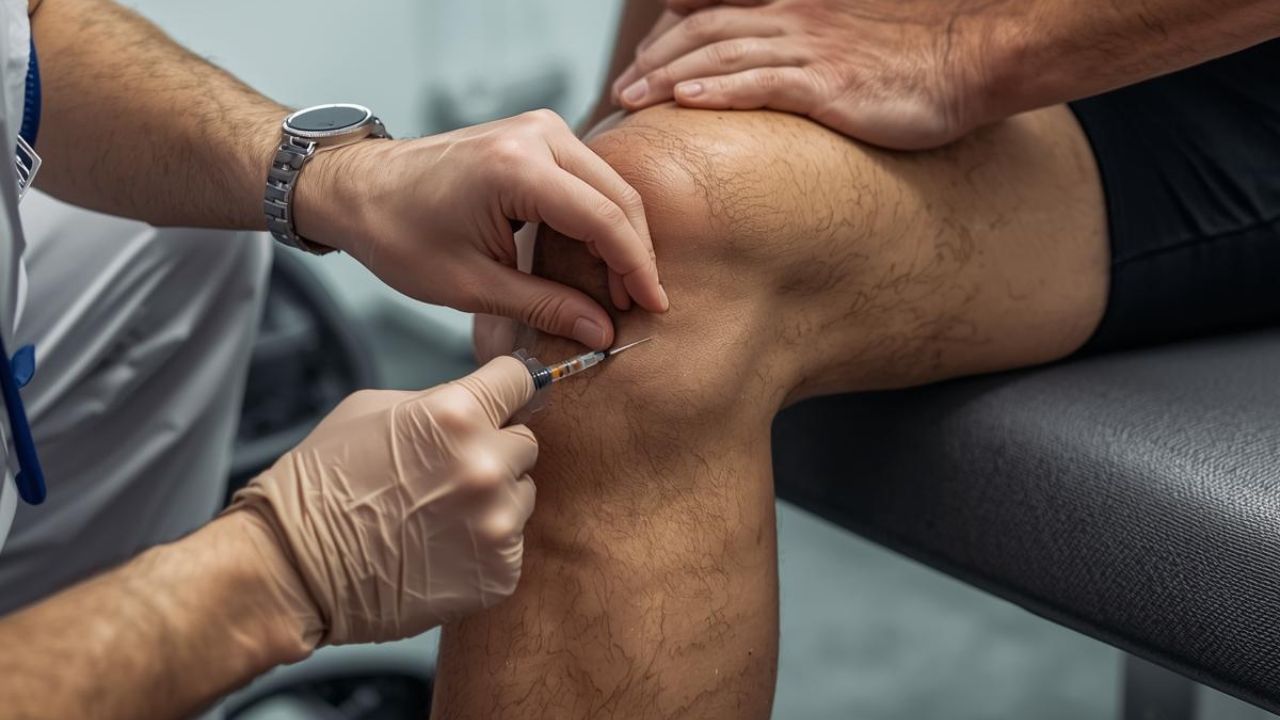
Professional athletes across the NFL, NBA, and MLB are using platelet-rich plasma (PRP) therapy to recover from injuries faster and extend their competitive careers. This regenerative treatment has become standard practice in elite sports medicine, with 93% of team physicians now offering PRP injections for muscle strains, chronic tendinopathies, and ligament sprains. Athletes return to competition weeks sooner than conventional treatments allow, with significantly reduced re-injury rates.
Understanding how athlete PRP works, which injuries respond best, and what the recovery process demands helps athletes make informed decisions about this increasingly common treatment option.
Key Takeaways
- How PRP concentrates healing factors and accelerates tissue repair
- Which athletic injuries respond best to regenerative treatments
- Return-to-play timelines and rehabilitation protocols
- Cost considerations and provider selection criteria
- Evidence comparing PRP to corticosteroids and other options
What Is PRP Therapy In Sports Medicine?
PRP therapy has become a cornerstone of professional sports medicine because it accelerates healing while keeping athletes in competition. Professional teams use platelet-rich plasma to treat injuries that once required lengthy rest periods or surgery. The treatment works by concentrating the body’s natural healing factors and delivering them directly to damaged tissue.
What Does Platelet-Rich Plasma (PRP) Mean And Why Is It Considered Regenerative?
Platelet-rich plasma is blood plasma containing concentrated platelets at five to eight times baseline levels. These platelets release growth factors that trigger your body’s natural healing cascade through cellular regeneration. The concentration and composition vary based on preparation methods, but the goal remains consistent: deliver maximum healing potential to the injury site.
Why PRP Became Common in Athlete Injury Care:
- Widespread adoption across professional sports: 93% of team physicians now use PRP, with 75-85% of NFL teams, 70-80% of NBA teams, and 60-70% of MLB teams offering the treatment
- Non-surgical alternative with proven results: Athletes return to play weeks faster than conventional treatments, avoiding surgery risks and lengthy recovery periods
- Strategic integration with rehabilitation: PRP functions as part of a comprehensive recovery plan, not a standalone quick fix
How Does PRP Work And Which Athletes Benefit Most?
PRP therapy targets specific injury types with measurable outcomes. Professional athletes use it most for muscle strains, chronic tendon problems, and ligament sprains where conventional treatments fall short.
Common PRP Applications And Athletic Outcomes
| Injury Type | Example Conditions | Key Outcomes | Return-to-Play Data |
| Muscle Strains | Hamstring, quadriceps, calf | 30-50% faster recovery; 20-30% reduced re-injury rates | Hamstring: 21 days (PRP) vs 25 days (conventional) |
| Chronic Tendinopathies | Achilles, patellar, tennis elbow | 70-85% improvement; allows continued competition | Tennis elbow: 60 days (PRP) vs 84 days (conventional) |
| Ligament Sprains | High ankle sprains, MCL | Significant return-to-play improvements | High ankle: 41 days (PRP) vs 60 days (conventional) — 19 days faster |
When Is PRP Usually Not Recommended?
- Incomplete diagnosis or situations requiring urgent surgical evaluation
- Expectations of immediate return without following rehabilitation protocols
- Cases where conservative care (rest, physical therapy) hasn’t been attempted
How Is PRP Performed In Sports Medicine?
The PRP procedure combines precision medicine with regenerative biology. Sports medicine physicians follow standardized protocols to ensure consistency and optimal outcomes for injury recovery.
PRP Procedure And Preparation Variables
| Procedure Step | What Happens | Why It Matters |
| Blood Collection | Small blood draw from athlete | Source of platelets and plasma |
| Centrifuge Processing | Spins blood to separate and concentrate platelets | Creates 5-8x platelet concentration (athletic standard) |
| Preparation Variables | Leukocyte content, activation approach, volume | Affects inflammatory response and outcomes; protocols vary by clinic |
| Ultrasound-Guided Injection | Precise placement at injury site | Best practice for accurate targeting; improves consistency |
Note on timing: Full visits include assessment, blood draw and preparation, injection, and post-procedure instructions. Duration varies by clinic and treatment area.
What Are The Benefits, Limitations, And Evidence For PRP?
PRP offers competitive athletes advantages that traditional treatments cannot match, but it requires realistic expectations and proper rehabilitation commitment.
Benefits And Limitations Of PRP In Sports Medicine
| Potential Benefits | Common Limitations |
| Non-surgical option; avoids surgery risks | Variable outcomes; results depend on injury type and protocol |
| Faster return: muscle injuries 2-4 weeks sooner; tendon 4-8 weeks sooner | Delayed benefit; healing occurs over weeks with rehabilitation |
| Reduced re-injury rates (20-30%) | Not insurance-covered ($500-$2,500 per series) |
| Symptom management during competition; extends careers | Protocol differences create inconsistent results across clinics |
Why Do PRP Results Vary And What Does the Evidence Show?
PRP outcomes vary because preparation protocols differ across clinics. Variables like platelet concentration and leukocyte content affect how the treatment performs. Evidence is strongest for tendon and muscle injuries, with mixed results for joint conditions. Meta-analysis data confirm that PRP outperforms corticosteroid injections in reducing pain and improving function, with superior VAS pain scores and WOMAC outcomes.
Standardized protocols would improve consistency, but current research supports PRP as an effective regenerative option when properly administered with comprehensive rehabilitation.
What Should Athletes Expect: Treatment Process And Recovery Timeline?
Recovery from PRP follows a structured timeline spanning 10 weeks. Athletes move through distinct phases, each with specific activity modifications and rehabilitation goals. Understanding this progression helps set realistic expectations and prevents premature return to competition.
PRP Recovery Timeline For Athletes
| Time Period | What Athletes Experience | Activity Modifications | Rehab Focus |
| Days 0-3 | Injection site soreness; localized inflammation | Immobilization; gentle movement only | Protect healing site; pain reduction |
| Days 3-14 | Gradual symptom reduction | Active range of motion 3x/day; maintain fitness in uninjured areas | Progressive movement; keep conditioning |
| Days 14-49 | Healing cascade active; strength returning | Stretching, strengthening, balance training | Functional capacity; sport-specific movements |
| Days 49-70+ | Functional improvements plateau | Return-to-sport program; sport-specific cardio | Full competition load (gradual progression) |
How Is PRP Integrated With Rehabilitation?
PRP works only when combined with structured rehabilitation. The typical multi-phase approach spans 10 weeks, with load management critical throughout every phase. Athletes who treat PRP as a standalone injection without following rehab protocols see poor outcomes. Sports medicine teams strategically time treatments around competitive schedules when possible, allowing adequate recovery without compromising season performance. The injection initiates healing, but progressive rehabilitation completes it.
How Does PRP Compare With Other Sports Medicine Treatments?
Athletes face multiple treatment options when dealing with chronic injuries or failed conservative care. PRP occupies a specific niche between basic therapies and surgical intervention, offering non-surgical regenerative benefits that other conservative options cannot match.
Treatment Comparison For Athletic Injuries
| Treatment | Main Goal | When Used | Key Advantage | Key Drawback |
| PRP | Tissue regeneration | After failed conservative care; chronic issues | 30-50% faster recovery; reduced re-injury | $500-$2,500; not covered; variable protocols |
| Corticosteroid Injections | Inflammation reduction | Acute pain management | Quick symptom relief; often covered | Temporary; may weaken tissue; inferior to PRP in studies |
| Hyaluronic Acid | Joint lubrication | Mild-moderate arthritis | Often insurance-covered ($500-$1,500) | Shorter duration (3-6 months); less effective than PRP at 12 months |
| Physical Therapy | Function restoration | First-line for most injuries | Low risk; builds strength | Time-intensive; may not address tissue damage alone |
Meta-analysis data confirm PRP’s superiority over corticosteroids for both pain reduction and functional outcomes. Studies show mean differences of -1.11 on VAS pain scales and -8.06 on WOMAC scores, both favoring PRP. For athletes with early arthritis, PRP can delay or eliminate surgery, extending competitive careers by months or years.
Cost, Safety, And Provider Selection
Making informed decisions about PRP requires understanding financial investment, safety considerations, and how to identify qualified providers. Athletes should approach PRP as a significant medical decision requiring careful provider evaluation.
What Are The Cost Factors And Is PRP Safe?
PRP treatments cost between $500 and $2,500 per series, with insurance rarely covering the expense. Cost variables include clinic location, ultrasound guidance use, number of injections required, and rehabilitation program integration. Most athletes pay entirely out-of-pocket, making provider selection critical for value optimization. Some team physicians provide PRP as part of contracted sports medicine services, reducing individual athlete costs.
Safety profile remains favorable because PRP uses your own blood, eliminating rejection risks. Common side effects include temporary injection site soreness and localized inflammation lasting 2-3 days. Athletes should delay or avoid PRP with incomplete diagnoses, active infections, or certain blood disorders affecting platelet function. Serious complications are rare when proper protocols are followed and sterile techniques are maintained.
How Should Athletes Choose A PRP Provider?
Provider selection checklist:
- Sports medicine or orthopedic qualifications with injury-specific experience
- Use of ultrasound guidance for precise injection placement (best practice standard)
- Clear rehabilitation integration and structured follow-up planning
- Transparency about protocol specifics (ask about platelet concentration target: 5-8x baseline)
- Willingness to discuss treatment limitations and alternative options
Red flags to avoid:
- Guaranteed outcomes or one-size-fits-all treatment recommendations
- Pressure-selling multiple sessions without establishing clear diagnosis
- Vague answers about preparation protocol or what’s being injected
Common Questions Athletes Ask About PRP Therapy
Can PRP Help Athletes Recover Faster?
Yes, evidence shows muscle injuries recover 30-50% faster with PRP, returning athletes to competition 2-4 weeks sooner than conventional treatment. Tendon injuries enable return to play 4-8 weeks earlier. High ankle sprains show a 19-day advantage with PRP. Results depend on injury type, protocol quality, and rehabilitation adherence. Faster recovery requires combining PRP with structured rehab and appropriate load management.
How Many PRP Injections Do Athletes Usually Need?
Treatment varies by injury and clinic protocol. Some providers use single injections, while others plan series of 2-3 spaced weeks apart. No universal standard exists; decisions depend on tissue type and healing response. Tendon injuries may require fewer injections than chronic degenerative conditions. Athletes should ask providers to explain their specific protocol and expected injection schedule before starting treatment.
Is PRP Allowed Under Anti-Doping Rules?
PRP is not prohibited under current World Anti-Doping Agency (WADA) rules. Athletes should document all treatment details and consult team physicians about any accompanying substances used during the procedure. PRP differs from prohibited growth factor use because it uses naturally concentrated platelets from your own blood rather than synthetic or recombinant growth factors.
Can Amateur Athletes Benefit From PRP Like Professionals?
The same biological mechanisms apply regardless of competition level. Amateur athletes experience identical tissue regeneration and healing benefits. Cost ($500-$2,500) may be more prohibitive without team physician access. Specialized pain management specialists with ultrasound guidance may be limited outside professional team settings. Amateur athletes willing to invest in proper treatment and rehabilitation see comparable outcomes to professional athletes.
What Athletes Should Remember About PRP Therapy
Key takeaways for athletes:
- Diagnosis first: PRP requires a confirmed diagnosis with imaging before treatment; incomplete evaluation leads to poor outcomes
- Rehabilitation essential: PRP works best as part of a structured rehabilitation strategy, not as a standalone injection therapy
- Evidence varies by injury type: Strongest support for muscle strains (30-50% faster recovery) and chronic tendinopathies (70-85% improvement)
- Realistic expectations required: Benefits appear over weeks, not immediately; demands require load management and patience throughout healing
- Cost consideration matters: $500-$2,500 out-of-pocket investment; weigh against competition schedule and recovery goals
Next steps for athletes considering PRP:
- Get a sports medicine evaluation with imaging confirmation
- Discuss alternatives and a comprehensive rehabilitation plan
- Review costs, recovery timeline, and how treatment fits the competition schedule
- Verify the provider uses ultrasound guidance and a standardized protocol
- Commit to a full rehabilitation program for optimal outcomes
Struggling with a chronic injury that’s keeping you from peak performance? Schedule a consultation with our sports medicine specialists to explore whether PRP therapy is right for your recovery goals.

