
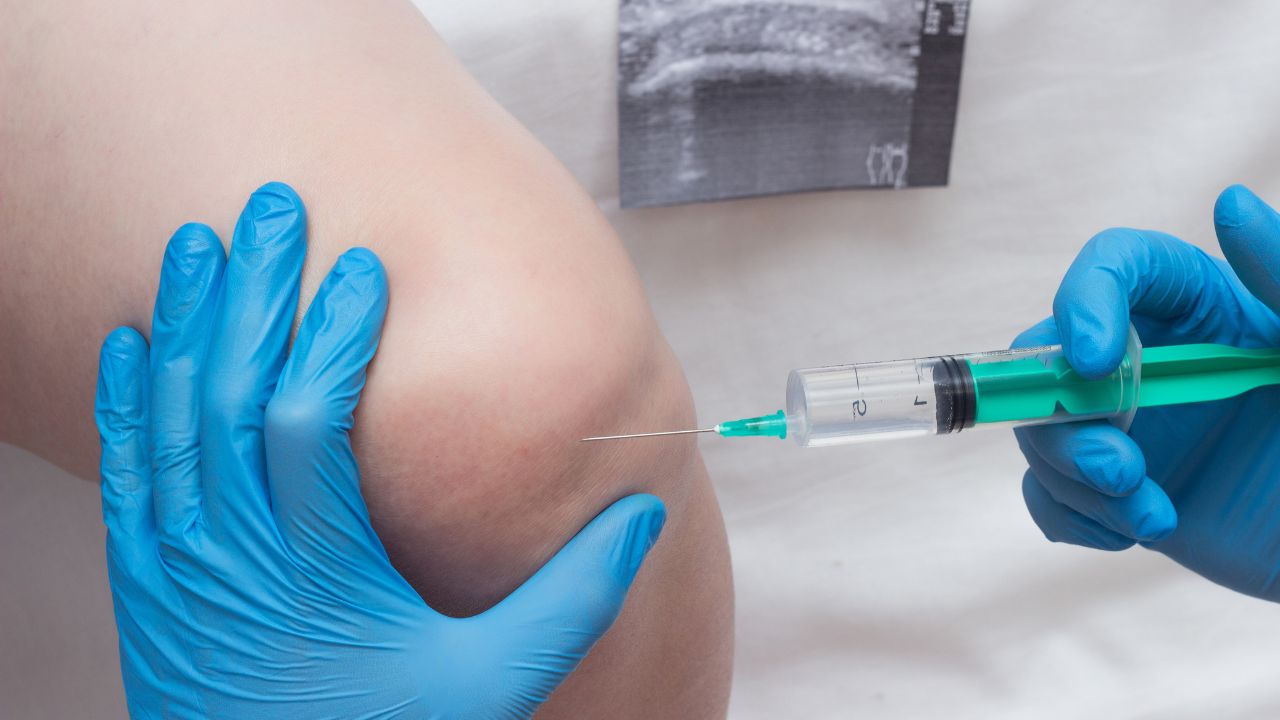
Choosing between PRP therapy and stem cell therapy for arthritis treatment feels overwhelming when faced with conflicting claims and aggressive marketing. You’ve likely encountered promises of cartilage regeneration, miracle cures, and superior outcomes, but what does rigorous clinical evidence actually reveal? Mayo Clinic’s landmark studies comparing these treatments head-to-head provide surprising clarity: neither shows a significant advantage over the other at 12-24 months.
Understanding the real differences in cost comparison, recovery time, and evidence quality helps you make an informed decision aligned with your arthritis severity, budget, and treatment goals.
Key Takeaways
- Mayo Clinic studies show no significant difference between PRP and stem cell outcomes at 12-24 months
- Cost comparison reveals PRP at $500-$2,500 versus stem cells at $3,000-$8,000 per treatment
- Recovery time differs: 24-48 hours for PRP versus 3-7 days for stem cell therapy
- No evidence supports cartilage regeneration claims for either treatment
- Both can delay knee replacement surgery 2-5 years in appropriate candidates
What Is PRP vs. Stem Cell Therapy For Arthritis?
Both PRP therapy and stem cell therapy harness your body’s natural healing mechanisms to treat arthritis. Understanding how each works helps you make an informed treatment decision.
What Is PRP Therapy for Arthritis?
PRP (platelet-rich plasma) therapy concentrates healing factors from your own blood and injects them into arthritic joints. After a simple blood draw, your platelets are separated and concentrated to 5-10 times normal levels. These platelets release growth factors, PDGF, TGF-β, IGF-1, and VEGF, that stimulate cartilage cell production and reduce inflammation. The entire process takes about an hour in the office. PRP works by enhancing your body’s existing repair processes rather than introducing new cells.
What Is Stem Cell Therapy for Arthritis?
Stem cell therapy uses mesenchymal stem cells (MSCs) harvested from your bone marrow or fat tissue. These cells can differentiate into cartilage-producing cells and release anti-inflammatory compounds that modulate your immune response. The procedure extracts cells through a small needle, concentrates them in a lab, and then injects them into the affected joint. MSCs offer multipotency, the ability to become different cell types, along with trophic effects that support tissue healing. Treatment typically takes 2-4 hours, including preparation time.
How PRP And Stem Cell Therapy Differ In Mechanism
| Treatment | Source Material | Processing | Intended Mechanism | Typical Use in Arthritis | Procedure Setting |
| PRP | Patient’s blood (30-60mL) | Centrifuge separation | Growth factor release, enhance cartilage synthesis, reduce inflammation | Mild to moderate osteoarthritis | Outpatient clinic |
| Stem Cell | Bone marrow or adipose tissue | Centrifuge concentration | Cell differentiation, immunomodulation, trophic effects | Moderate to severe osteoarthritis | Outpatient clinic or surgery center |
What Does Current Evidence Say About PRP vs. Stem Cell Therapy Outcomes For Arthritis?
Clinical research reveals important insights about both treatments. Recent studies help clarify what results you can realistically expect.
What Does Current Evidence Suggest About PRP Results For Knee Osteoarthritis?
Mayo Clinic data from over 1,100 patients shows a 60-70% success rate with PRP, defined as at least 50% improvement in pain and function lasting 6-12 months. Some patients experience relief extending 18-24 months. Adverse events remain minimal, typically mild post-injection discomfort and swelling.
A 2022 NIH double-blind study compared PRP to cortisone in 58 arthritic knees. Both treatments proved effective at all measured time points with no statistical difference initially (p=0.84). Cortisone provided better relief in the first 4-6 weeks, but PRP outperformed steroids at 3-6 months. Multiple studies confirm PRP outperforms hyaluronic acid for duration and degree of symptom relief.
What Does Current Evidence Suggest About Stem Cell Therapy Results for Arthritis?
Mayo Clinic published three studies comparing bone marrow aspirate concentrate (BMAC) to other treatments. Their 2017 study found no difference between BMAC and saline in 25 patients with mild-moderate knee arthritis. Two subsequent studies with 90 patients each confirmed no advantage of BMAC over PRP at 12 months (2020) or 24 months (2022). Researchers concluded no evidence supports BMAC regrowing cartilage or providing superior benefits to PRP.
Adipose-derived stem cells show more promise. A systematic review of 339 knees in elderly patients (over 65) demonstrated improved pain and function scores across multiple measures. Only 44 knees experienced adverse events, with no significant complications. Patient satisfaction ranges from 70-85% for moderate arthritis.
An umbrella review analyzing 32,763 participants found both MSCs and PRP significantly improved knee osteoarthritis scores. However, combination therapy showed no significant advantage over individual treatments.
PRP vs. Stem Cell Therapy Outcomes At A Glance
| Outcome Measure | PRP Results | Stem Cell Results | Evidence Quality |
| Success Rate | 60-70% improvement | 70-85% satisfaction | High (multiple RCTs) |
| Duration of Relief | 6-12 months (up to 24 months) | 12-24 months | Moderate (limited long-term data) |
| Head-to-Head Comparison | Equivalent to BMAC at 12-24 months | No advantage over PRP | High (Mayo Clinic RCTs) |
| Cartilage Regeneration | No evidence | No evidence | High (multiple trials) |
| Adverse Events | Minimal (<1%) | Minimal (13% in ADSC review) | High |
Who Is A Good Candidate For PRP vs. Stem Cell Therapy?
Patient characteristics and arthritis severity determine which treatment offers the best chance of success. Your age, condition severity, and treatment goals all factor into the decision.
When To Consider PRP vs. Stem Cell Therapy
| Patient Factor | PRP Better Suited For | Stem Cell Better Suited For |
| Arthritis Severity | Mild to moderate (KL Grade 1-3) | Moderate to severe (KL Grade 2-3) |
| Age | All ages (especially under 65) | All ages (data supports 65+) |
| Budget | $500-$2,500 per treatment | $3,000-$8,000 per treatment |
| Recovery Tolerance | Minimal downtime (24-48 hours) | Short downtime (3-7 days) |
| Treatment Approach | Series of 1-3 treatments + annual maintenance | Often single treatment |
| Timeline Preference | Willing to do multiple sessions | Prefer one comprehensive treatment |
Choose PRP if: You have mild-moderate arthritis, prefer lower upfront costs, need minimal recovery time, and don’t mind multiple treatment sessions.
Choose stem cell therapy when: You have moderate-severe arthritis, can afford higher initial investment, tolerate several days of downtime, and prefer comprehensive single treatment.
Both treatments work best for patients under 65 seeking to avoid surgery. Kellgren-Lawrence Grade 1-3 arthritis responds better than advanced Grade 4 bone-on-bone degeneration.
Who May Not Be A Good Candidate For Either Treatment
- Advanced bone-on-bone arthritis (Kellgren-Lawrence Grade 4) typically requires surgical intervention
- Unrealistic expectations about guaranteed cartilage regrowth, no current evidence supports cartilage regeneration in humans
- Need for urgent surgical evaluation when severe structural damage or instability exists
- Active infection in or around the joint
- Bleeding disorders or use of anticoagulants that cannot be temporarily stopped
- Cancer patients or those with history of malignancy without oncologist clearance
How Do Costs Compare Between PRP And Stem Cell Therapy?
Cost represents a significant consideration since regenerative treatments rarely receive insurance coverage. Understanding the total investment helps you budget appropriately.
What Do PRP And Stem Cell Therapy Typically Cost For Arthritis?
PRP injections range from $500 to $2,500 per treatment. Most patients require 1-3 initial treatments spaced 2-4 weeks apart, followed by potential annual maintenance injections. Total first-year costs typically run $1,500-$7,500.
Stem cell therapy costs $3,000-$8,000 per treatment. Many patients receive benefit from a single procedure, though some require repeat treatments. Both approaches remain predominantly out-of-pocket expenses with limited insurance coverage.
For context, cortisone injections cost $100-$300 and often receive insurance coverage, though benefits last only 6-12 weeks. Total knee replacement surgery costs $30,000-$50,000 but typically receives insurance coverage. Regenerative therapies represent roughly one-third the cost of knee replacement while helping many patients delay or avoid surgery for 2-5 years.
Hidden Costs That Increase The Total Price
- Initial consultation fees ($150-$500) not always included in treatment quotes
- Imaging guidance (ultrasound or fluoroscopy) adding $200-$800 per session
- Follow-up visits for assessment and monitoring ($100-$300 each)
- Physical therapy recommended post-treatment ($75-$200 per session)
- Repeat treatments if initial series provides partial but not complete relief
- Laboratory processing fees for stem cell concentration or culture expansion
Questions To Ask Clinics For Transparent Pricing
- What is the total estimated cost including all consultations, procedures, imaging, and follow-ups?
- Which specific services are included versus which require additional payment?
- How is retreatment priced if initial results are insufficient?
- What is your refund or cancellation policy if circumstances change?
- What do follow-up visits cost and how many are typically needed?
- Do you offer payment plans or financing options to spread costs over time?
How Does Recovery Compare After PRP vs. Stem Cell Therapy?
Recovery timelines differ between treatments, though both offer substantially shorter downtime than surgery. Understanding what to expect helps you plan accordingly.
What Is the Typical Recovery Timeline for Each Treatment?
PRP therapy involves minimal disruption to your routine. Most patients experience 24-48 hours of mild post-injection discomfort and swelling. Infection risk remains under 1%. For PRP for hip pain specifically, expect mild soreness for days 1-3, light walking and gentle stretching during week 1, improved pain levels by weeks 2-4, and return to full activities by week 6 or later.
Stem cell therapy requires slightly more recovery time. The outpatient procedure takes approximately 4 hours, including preparation. Plan for 3-7 days of activity restriction following treatment with temporary activity limits. Total downtime runs 1-2 weeks, substantially less than a knee replacement’s 3-6 month rehabilitation period.
When Do Patients Typically Notice Improvement?
Both treatments produce gradual improvement rather than immediate relief. Maximal improvements typically occur between 6 weeks and 3 months after injection. PRP takes longer initially than cortisone injections but outperforms steroids at the 3-6 month mark. This delayed onset reflects the time your body needs to respond to growth factors and begin tissue repair processes.
What Affects Recovery Success
- Activity modification adherence following post-injection protocols improves outcomes
- Physical therapy integration strengthens supporting muscles and optimizes joint mechanics
- Weight management reduces mechanical stress on treated joints
- Treatment protocol compliance, including avoiding anti-inflammatories during the healing window
- Arthritis severity at baseline, milder disease responds better than advanced degeneration
What Are The Risks And Side Effects Of Each Treatment?
Both regenerative treatments carry significantly lower risk profiles than surgery. Most side effects remain minor and self-limiting.
Common Side Effects And Serious Risks
| Risk/Side Effect | PRP | Stem Cell Therapy | Knee Replacement (Comparison) |
| Injection Site Pain | Common, mild, 1-3 days | Common, mild, 3-7 days | Major surgical pain, weeks to months |
| Swelling | Temporary, minimal | Temporary, moderate | Significant, prolonged |
| Infection Risk | <1% | <1% | 1-2% |
| Serious Complications | Rare | 44 of 339 knees (13%) with adverse events, none significant | Blood clots, implant failure (1% annually) |
| Mortality Risk | Minimal | Minimal | Joint infection mortality 11.6% at 4.1 years |
| Systemic Side Effects | None | None | Anesthesia risks, medication side effects |
PRP produces no systemic side effects since you receive your own concentrated blood platelets. Stem cell therapy using your own cells similarly avoids rejection or allergic reactions.
Warning Signs Requiring Urgent Medical Follow-Up
- Worsening pain beyond the expected post-injection course
- Fever or chills suggesting possible infection
- Significant swelling or redness that increases rather than decreases
- New neurologic symptoms including numbness, tingling, or weakness
- Inability to bear weight when previously able
Can PRP Or Stem Cell Therapy Delay Joint Replacement Surgery?
Many patients successfully postpone or avoid surgery with regenerative treatments. Understanding realistic expectations helps you make an informed decision.
What Does The Evidence Say About Surgical Delay?
Stem cell therapy helps 60-75% of appropriate candidates avoid or delay knee replacement surgery. Successful patients typically gain 2-5 years before requiring surgical intervention. At $5,000-$8,000 for stem cell treatment versus $30,000-$50,000 for knee replacement, the cost savings prove substantial even if surgery eventually becomes necessary.
When surgery does become necessary, modern knee replacements offer excellent outcomes. Patients experience 90-95% pain relief with implant lifespans of 15-20 years. Ten-year survival rates exceed 96%, with 15-year survival around 90% and 25-year survival at 82.3%. Nearly 90% of modern patients report satisfaction with their knee replacement outcomes.
Factors That Determine If Regenerative Therapy Can Delay Surgery
- Age under 65 correlates with better regenerative treatment outcomes
- Kellgren-Lawrence Grade 1-3 arthritis responds to regenerative approaches; Grade 4 typically requires replacement
- Willingness to undergo multiple treatments if the initial series provides partial relief
- Ability to follow rehabilitation protocols, including physical therapy and activity modification
- Realistic expectations understanding regenerative therapy may delay rather than permanently eliminate the need for surgery
How To Choose Between PRP And Stem Cell Therapy (Decision Framework)
No single treatment proves universally superior. Your specific situation determines the optimal approach.
Decision Factors At A Glance
| Factor | PRP | Stem Cell Therapy | What to Consider |
| Evidence Strength | High-quality RCTs | Equivalent to PRP at 12-24 months (Mayo studies) | No significant difference between treatments |
| Cost | $500-$2,500 per treatment | $3,000-$8,000 per treatment | Budget for series vs. single treatment |
| Recovery Time | 24-48 hours | 3-7 days | Work/activity schedule constraints |
| Duration of Benefit | 6-12 months (up to 24) | 12-24 months | Frequency of repeat treatments needed |
| Insurance Coverage | Typically out-of-pocket | Typically out-of-pocket | Both require cash payment |
| Best Candidates | Mild to moderate arthritis | Moderate to severe arthritis | Match severity to treatment intensity |
Questions To Resolve Before Deciding
- What is your arthritis severity? Request Kellgren-Lawrence grading from imaging. Grade 1-3 favors regenerative approaches, Grade 4 typically needs surgery
- What is your budget for total episode of care? Include consultation, imaging, treatments, follow-ups, and potential repeat procedures
- How much downtime can you afford? Consider work obligations and activity requirements when choosing between 2-day and a 7-day recovery
- Are you seeking to delay surgery or improve function? Clarify whether avoiding surgery or returning to activities drives your decision
- What does the Mayo Clinic evidence suggest? Remember that rigorous studies show no advantage of stem cells over PRP at 12-24 months for knee osteoarthritis
Frequently Asked Questions
Can PRP or Stem Cell Therapy Regrow Cartilage in Arthritis?
No definitive human studies demonstrate cartilage regeneration from either treatment. Mayo Clinic’s 2017 study comparing bone marrow aspirate concentrate (BMAC) to saline placebo found no difference in outcomes for patients with mild-moderate knee osteoarthritis. While both treatments improve pain and function significantly, the mechanism appears to involve reducing inflammation and supporting existing tissue rather than growing new cartilage.
Is PRP or Stem Cell Therapy Better for Knee Arthritis?
Neither treatment shows clear superiority. Mayo Clinic studies published in 2020 and 2022 found no advantage of stem cell therapy over PRP at 12 and 24 months respectively. Both significantly improve pain and function scores. PRP demonstrates 60-70% success rates while stem cell therapy shows 70-85% patient satisfaction, a difference not statistically significant in head-to-head trials.
Should You Try PRP Before Stem Cell Therapy?
No evidence supports a mandatory “try PRP first” approach. Both treatments show equivalent results at 12-24 months. PRP costs less ($500-$2,500 versus $3,000-$8,000) and offers faster recovery (24-48 hours versus 3-7 days). Treatment selection should match arthritis severity, PRP suits mild-moderate cases while stem cell therapy targets moderate-severe arthritis. Your budget, recovery tolerance, and disease severity matter more than sequential trial-and-error.
Can PRP or Stem Cell Therapy Be Combined with Other Treatments?
Yes, though combination approaches may not improve outcomes. An umbrella review of 32,763 participants found both MSCs and PRP improved knee osteoarthritis scores, but combining them offered no significant advantage over individual treatments. Both regenerative therapies combine safely and effectively with physical therapy, which remains essential for optimizing joint mechanics and strengthening supporting muscles.
The Bottom Line: PRP vs. Stem Cell Therapy For Arthritis
Current evidence reveals more similarities than differences between these regenerative approaches. Your choice should reflect arthritis severity, budget, and recovery constraints rather than assumptions about superiority.
Key Differences At A Glance
| Factor | PRP | Stem Cell Therapy |
| Success Rate | 60-70% improvement | 70-85% satisfaction |
| Duration of Relief | 6-12 months (up to 24) | 12-24 months |
| Cost Per Treatment | $500-$2,500 | $3,000-$8,000 |
| Treatments Needed | 1-3 initial + annual maintenance | Often single treatment |
| Recovery Time | 24-48 hours | 3-7 days |
| Insurance Coverage | Rarely covered | Rarely covered |
| Evidence Quality | High (1,100+ Mayo patients, multiple RCTs) | High (Mayo head-to-head trials show equivalence to PRP) |
| Best Candidates | Mild to moderate arthritis (KL Grade 1-3) | Moderate to severe arthritis (KL Grade 2-3) |
| Surgical Delay Potential | Can delay replacement 2-5 years | Can delay replacement 2-5 years (60-75% of candidates) |
Research-based takeaways: Mayo Clinic studies demonstrate no significant difference between PRP and stem cell therapy at 12-24 months. Both improve pain and function scores substantially. PRP costs $500-$2,500 per treatment, with 1-3 typically needed, while stem cell therapy costs $3,000-$8,000 for a single procedure. Neither receives regular insurance coverage. PRP requires 24-48 hours of recovery versus 3-7 days for stem cells.
Over 1,100 Mayo Clinic PRP patients achieved 60-70% success rates; stem cell therapy shows 70-85% satisfaction, but no advantage in direct comparisons. Claims about cartilage regrowth lack supporting evidence; no definitive studies demonstrate tissue regeneration.
What To Discuss With Your Clinician Before Booking Either Treatment
- Request diagnosis confirmation and arthritis severity grading using Kellgren-Lawrence classification to determine if you fall within the evidence-supported treatment range
- Ask why they recommend one treatment over the other given Mayo Clinic evidence showing equivalent outcomes at 12-24 months
- Obtain total cost estimate including consultation, imaging guidance, follow-up visits, and potential repeat treatments
- Set realistic outcome expectations focused on pain relief and functional improvement rather than unproven cartilage regrowth
- Establish backup plan if treatment provides insufficient relief or fails to meet the success criteria
- Define criteria for measuring success, including specific pain reduction targets and functional goals within defined timeframes
Ready to explore whether PRP or stem cell therapy fits your arthritis treatment plan? Schedule a consultation with Dr. Khyber Zaffarkhan to discuss your specific condition, review your imaging, and develop a personalized regenerative medicine strategy backed by the latest clinical evidence.

