
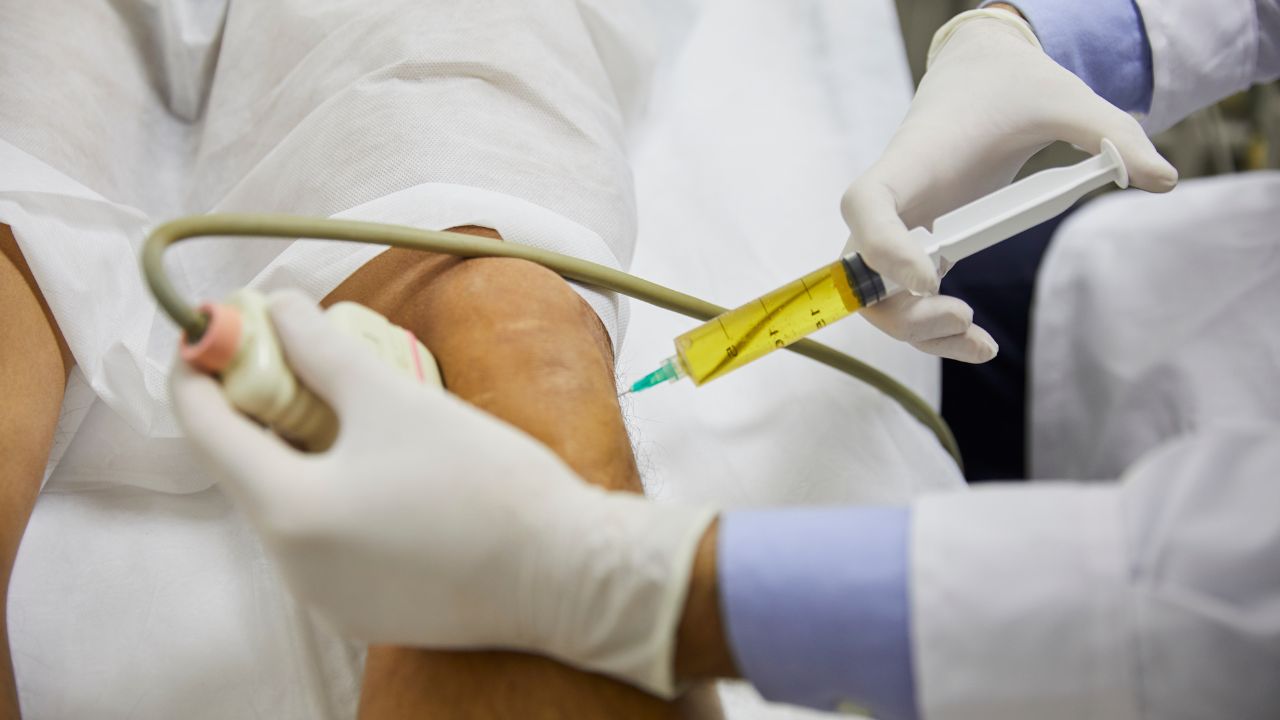
Considering stem cell therapy for chronic pain or joint damage? Your first question should be about stem cell safety, not success stories. Not all stem cell treatments are created equal; the same procedure name can represent vastly different safety profiles depending on who performs it, how cells are processed, and whether protocols follow FDA regulations.
This comprehensive patient education guide helps you evaluate regenerative risk and distinguish evidence-based care from marketing hype.
Key Takeaways
- Common side effects versus serious complications, and when each occurs
- How provider credentials and FDA compliance affect your safety
- Red flags that indicate unqualified clinics or unproven treatments
- Essential questions to ask before consenting to any stem cell procedure
- When to seek emergency care versus routine follow-up after injection
What Is A Stem Cell Injection And Why Is Safety The First Question?
A stem cell injection delivers concentrated cells from your body or a donor into damaged tissue to promote healing. The term covers a wide range of procedures with vastly different evidence levels, regulatory status, and safety profiles. Board-certified doctors emphasize safety first because the procedure name tells you nothing about what cells you’re receiving, how they’re processed, or whether outcomes are backed by evidence.
What Do Patients Usually Mean By “Stem Cell Injection”?
Common patient interpretations:
- Autologous cells from your own bone marrow or fat tissue
- Allogeneic cells from umbilical cord blood or amniotic fluid
- Joint injections for arthritis or sports injuries
- Any injection labeled “stem cells” regardless of regulatory status
What board‑certified doctors prioritize first:
- Diagnosis clarity and appropriate candidacy
- Evidence quality supporting treatment for your specific condition
- Safety risks and complication rates
- FDA compliance and regulatory status
What Side Effects Can Happen After A Stem Cell Injection?
Most patients experience mild, temporary reactions that resolve within days. Injection site pain, swelling, and bruising affect 30-50% of patients, typically resolving within 2-7 days. Temporary inflammation with mild increased pain occurs in 20-40% of patients during the first 24-72 hours. Low-grade fever and fatigue may appear within 24 hours as your immune system responds.
Typical Side Effects vs Usual Timing vs Typical Duration vs What Patients Should Do
| Side Effect | Timing | Duration | Action |
| Injection site pain/swelling/bruising (30-50%) | Immediate to hours | 2-7 days | Ice, rest, OTC pain relief |
| Temporary inflammation (20-40%) | First 24-72 hours | 24-72 hours | Monitor; normal healing response |
| Fever and fatigue | Within 24 hours | 24-48 hours | Rest; OTC fever reducers if needed |
Expected Recovery Symptoms vs Concerning Symptoms
| Symptom | Expected? | Red Flag | Action |
| Mild soreness | Yes, 2-7 days | Severe/increasing pain not responsive to meds | Contact clinic promptly |
| Low-grade fever | Yes, 24-48 hours | Fever >101°F with chills, redness, warmth | Urgent same-day evaluation |
| Swelling at site | Yes, decreasing daily | Severe swelling preventing movement/spreading | Contact clinic same day |
What Are The Most Important Risks Of Stem Cell Injections?
Data from over 3,000 orthopedic stem cell procedures show an overall complication rate of 2.0% and a serious complication rate of 0.13%. This compares favorably to knee replacement surgery’s 8-16% serious complication rate and knee arthroscopy’s 4.7% complication rate.
Infection risk remains below 1% when proper sterile technique is followed. The most common serious adverse events are thromboembolism (blood clots) and fibrosis (excessive scar tissue). Nerve damage occurs in less than 0.1% of procedures with proper injection technique. Tumor formation remains theoretical with no documented cases in orthopedic applications using approved protocols.
How Risk Changes by Injection Location
| Injection Area | Example Complications | Seriousness | Why Technique Matters |
| Knee/hip joint | Infection, cartilage damage, nerve injury | Moderate | Ultrasound guidance reduces nerve damage; sterile technique critical |
| Spine (epidural/intradiscal) | Nerve damage, paralysis, infection, CSF leak | High | Imaging guidance mandatory; specialist experience essential |
| Intravenous | Thromboembolism, pulmonary embolism, systemic reactions | High | Hospital setting; monitoring; screening for clotting disorders |
Why Does FDA Approval Status Matter For Stem Cell Injection Safety?
Regulatory oversight directly affects safety protocols, quality control, and outcome tracking. FDA-approved treatments undergo rigorous testing before reaching patients. Non-FDA-approved treatments may bypass critical safety checkpoints.
Are All Stem Cell Injections FDA-Approved For Every Condition?
Minimally manipulated autologous cells from the same surgical procedure generally do not require FDA premarket approval but must comply with 21 CFR 1271 requirements. Cells that are cultured, expanded, or used for non-homologous purposes require FDA approval through clinical trials. Many regenerative clinics operate outside regulatory oversight. The FDA has issued warning letters to multiple clinics for regulatory violations, and a federal court barred US Stem Cell Clinic from selling stem cell products after patients suffered serious adverse events.
When Should A Stem Cell Injection Be Considered A Clinical Trial Option Instead Of Routine Care?
Risks that increase when treatments are unapproved:
- Uncertain safety profile with limited adverse event data
- Inconsistent protocols across clinics and providers
- Weak or absent evidence for your specific condition
- No systematic adverse event reporting
Practical ways patients can verify treatment status:
- Ask directly whether the treatment has FDA approval for your specific condition
- Search ClinicalTrials.gov to see if the procedure is investigational
- Review the FDA warning letters database for actions against your provider
Who Is More Likely To Have Complications From A Stem Cell Injection?
Certain health conditions and risk factors increase the likelihood. Board-certified doctors use risk stratification to identify patients who need additional precautions or alternative treatments.
Health-history factors that increase risk:
- Active infection anywhere in the body
- Immune disorders or autoimmune conditions
- Cancer history requiring oncology clearance
- Uncontrolled chronic diseases
- Blood clotting disorders
- Pregnancy or breastfeeding
Medication Factors That May Change Injection Risk
| Medication | Why It Matters | Safety Concern | Discussion Point |
| Blood thinners | Affects bleeding/bruising | Increased bleeding, hematoma formation | Timing of medication hold; bridging protocols |
| Corticosteroids | Suppresses immune/inflammation | May interfere with effectiveness; infection risk | Timing of discontinuation before procedure |
| Immunosuppressants | Dampens immune activity | Higher infection risk; altered healing | Candidacy assessment; prophylactic antibiotics |
| NSAIDs (for comparison) | Anti-inflammatory | 1 in 1,200 mortality from GI bleed; 158-407% ↑ heart attack risk | Risk-benefit comparison vs stem cell approach |
What Factors Make A Stem Cell Injection Safer Or Riskier?
Safety depends on cell product quality, processing methods, physician expertise, injection technique, and anatomical complexity, not the marketing label “stem cell.”
Board certification from ABMS-recognized boards in Orthopedic Surgery, Physical Medicine and Rehabilitation, or Sports Medicine indicates rigorous training. Fellowship training in regenerative medicine demonstrates specialized expertise. Physicians with 2-3 years of experience performing 100+ procedures have sufficient volume to recognize and manage complications.
Hospital privileges indicate peer review approval. Lab certifications, including GMP, ISO, and AABB standards, are critical for cell processing quality.
Does Minimal Manipulation Or Cell Processing Method Affect Risk?
Minimally manipulated autologous cells pose lower regulatory and safety concerns. More-than-minimally manipulated cells that are cultured, expanded, or used for non-homologous purposes carry different risk profiles and require FDA approval. Processing quality critically affects safety, bacterial contamination during cell processing represents significant infection risk if quality control is inadequate.
How Can You Vet A Stem Cell Clinic Before You Agree To Treatment?
Use this pre-consent checklist to evaluate safety and credibility before signing anything.
Questions about physician credentials:
- Is the physician board-certified by an ABMS-recognized board in a relevant specialty?
- Has the physician completed fellowship training in regenerative medicine?
- What is the physician’s total procedure volume (minimum 100+ recommended)?
- Does the physician hold hospital privileges?
Questions about clinic safety protocols:
- Is the facility accredited by a recognized accreditation body?
- Is there 24/7 after-hours contact availability for complications?
- Does the provider carry malpractice insurance?
Questions about cell processing and lab standards:
- What lab certifications does the processing facility hold (GMP, ISO, AABB)?
- What processing method is used (minimally manipulated vs cultured/expanded)?
- Is complete chain-of-custody documentation maintained?
Questions about condition-specific evidence:
- What is the documented success rate for my specific condition?
- Can you provide published research supporting this treatment for my diagnosis?
- Does this treatment have FDA approval for my specific condition?
Clinic Red Flags vs Reassuring Signs
| Topic | Red Flag | Reassuring Sign | Why It Matters |
| Outcome claims | 100% success rates; cure guarantees | Realistic expectations; documented outcomes | Unrealistic promises indicate lack of integrity |
| Treatment scope | Treats wide range of unrelated conditions without FDA approval | Focused on 1-2 related conditions with evidence | Legitimate trials study limited diagnoses |
| Sales approach | High-pressure tactics; large upfront payments | Patient-centered; time to decide; second opinion encouraged | Medical decisions require thoughtful consideration |
| Provider credentials | No board certification; vague credentials | ABMS certification; fellowship; hospital privileges | Training directly impacts safety and outcomes |
What Should Informed Consent Include Before A Stem Cell Injection?
Informed consent is both an ethical requirement and a patient education safety measure.
What consent should say about side effects and risks:
- Common immediate side effects with expected duration
- Serious but rare complications specific to the injection type and location
- Long-term risks and potential delayed complications
- The provider’s complication rate data
What consent should say about knowns, unknowns, and uncertainty:
- Level of scientific evidence supporting treatment for your specific condition
- FDA approval status (approved, investigational, or unapproved)
- Gaps in research and long-term outcome data
What consent should say about alternatives:
- Standard-of-care treatment options with risks/benefits
- Non-procedural options including physical therapy, medication
- Comparison data showing how stem cell therapy performs against alternatives
Should The Consent Form Explain Who To Contact If A Bad Reaction Happens?
Emergency contact information should be clearly provided with specific protocols for different severity levels. The consent form should include direct phone numbers and clarify whether 24/7 availability exists. Without clear emergency guidance, patients may delay seeking appropriate care for serious complications.
What Do Board‑Certified Doctors Want You To Know Before You Consent?
Board-certified physicians emphasize that proper patient selection, accurate diagnosis, and realistic expectations matter more than the procedure itself.
Why Is A Clear Diagnosis More Important Than A Marketing Claim?
Treatment appropriateness depends entirely on accurate diagnosis. Stem cell therapy is not one-size-fits-all. Some conditions show strong evidence supporting stem cell treatment, certain tendon and ligament injuries, early-to-moderate knee osteoarthritis, while others lack supporting data. Without a clear diagnosis confirmed by physical examination and imaging, patients may receive inappropriate treatment with unnecessary risks.
Why Is “Regenerative” Or “Natural” Not The Same As “Safe” Or “Proven”?
Marketing terms like “regenerative,” “natural,” or “your body’s own cells” do not guarantee safety or effectiveness. Even autologous cells carry an infection risk if processed improperly. The word “natural” does not mean “FDA-approved” or “evidence-based.” Condition-specific evidence from controlled studies matters more than testimonials and before-and-after stories.
Why Should You Compare Risks And Benefits Against Standard Of Care?
Stem cell injection shows a 2.0% overall complication rate and 0.13% serious complication rate, comparing favorably to knee replacement’s 8-16% rate. However, this comparison only matters if stem cell therapy offers similar benefit potential for your specific condition. Without comparable effectiveness data, lower risk alone does not justify treatment.
Why Is A Second Opinion A Safety Step And Not A Delay Tactic?
Second opinions protect patients from inappropriate treatment recommendations. Reputable providers encourage second opinions. A physician who discourages you from consulting another specialist or creates urgency without medical justification raises serious red flags.
What Should A Safe Pre-Procedure Evaluation Include?
History and medication review:
- Complete medical history including chronic conditions
- Medication review for blood thinners, corticosteroids, immunosuppressants, NSAIDs
- Allergy history and infection screening
- Cancer history and immunological disorders
Exam, imaging, and lab review:
- Physical examination with range of motion and strength testing
- Diagnostic imaging review to confirm diagnosis
- Baseline blood work if indicated
- Anatomical assessment to plan injection approach
Baseline symptoms and function measures:
- Pain level documented on validated scale
- Functional limitations quantified
- Range of motion measurements
- Quality of life assessment
What Should Happen On The Day Of A Stem Cell Injection To Improve Safety?
Identity, product, and procedure verification:
- Patient identity verification using two identifiers
- Confirm the correct procedure site marked
- Verify cell product labeling matches patient
- Review consent and answer final questions
Sterile prep and site preparation:
- Thorough skin preparation with antiseptic solution
- Sterile draping to create aseptic field
- Strict aseptic technique maintained throughout
- Ultrasound probe covered with sterile sheath if imaging used
Monitoring during and immediately after:
- Vital signs monitored before, during, and after injection
- Immediate adverse reaction assessment
- Observation period 15-30 minutes before discharge
Discharge instructions:
- Written aftercare instructions
- Clear emergency contact information
- Warning signs requiring immediate attention listed
- Follow-up appointment scheduled
- Procedure documentation copy provided
What Aftercare And Follow-Up Are Needed After A Stem Cell Injection?
Common aftercare and activity guidance:
- Activity modification for 24-72 hours
- Keep injection area clean and dry for first 48 hours
- Symptom tracking daily
- Gradual return to normal activities over 1-2 weeks
- Avoid NSAIDs initially
Follow-up visit timing and goals:
- 1-2 week check-in for safety assessment
- 1-3 month follow-up for treatment response evaluation
- 3-12 month monitoring for long-term outcomes
- Adverse event discussion at each visit
How Long Should A Clinic Stay Available To Address Delayed Side Effects?
Some complications manifest weeks to months after injection. Fibrosis develops gradually over time. Infection risk remains elevated for 2-4 weeks. Thromboembolism can occur days to months after certain injection types. Clinics should maintain patient access for at least 6-12 months for safety monitoring.
When Should You Call The Doctor Or Seek Urgent Care After A Stem Cell Injection?
Symptoms requiring prompt clinic contact:
- Severe or increasing pain not responsive to medication
- Swelling worsens after 48 hours
- New numbness, tingling, or weakness
- Difficulty moving the treated area
- Bruising spreading beyond the immediate site
Call the Clinic vs Same-Day Urgent Evaluation vs Emergency Care
| Symptom | Contact Clinic | Urgent Same-Day | Emergency |
| Pain | Worsening 24-48 hrs despite meds | Severe pain preventing function | , |
| Fever | Low-grade (<101°F) first 48 hrs | Fever >101°F or persistent >48 hrs | High fever + chills + confusion |
| Redness/warmth | Mild redness at injection site only | Spreading redness with warmth/swelling | Red streaking up limb |
| Chest/leg symptoms | , | , | Chest pain, shortness of breath, calf swelling/pain |
How Do Stem Cell Injection Risks Compare With Other Treatment Options?
Stem Cell Injection vs Other Common Treatments (Safety Comparison)
| Option | Invasiveness | Complication Rate | Key Consideration | When Considered |
| Stem Cell | Minimally invasive | 2.0% overall; 0.13% serious | Long-term outcomes uncertain | Conservative treatments failed |
| Knee Replacement | Major surgery | 8-16% serious complications | Definitive structural correction | Severe structural damage |
| Knee Arthroscopy | Minimally invasive surgery | 4.7% complications | Mechanical repairs | Specific mechanical issues |
| Physical Therapy | Non-invasive | Very low risk | Requires time commitment | First-line many conditions |
| NSAIDs | Non-invasive (oral) | 1 in 1,200 GI bleed mortality; 158-407% ↑ heart attack risk | Significant risks prolonged use | Short-term symptom relief |
When Might Surgery Be More Appropriate Than Another Injection-Based Treatment?
Surgery typically becomes appropriate when structural damage requires mechanical repair that injections cannot address, conservative treatments have failed comprehensively, functional impairment is severe, or the condition is progressive. Complete ligament tears, severe mechanical derangement, and advanced bone-on-bone arthritis often require surgical intervention.
A qualified pain management specialist helps compare benefit magnitude, complication risks, recovery timelines, and uncertainty levels for your individual situation.
What Questions Should You Ask At Your Consultation About Stem Cell Injection Safety?
- What is the expected benefit for my specific condition, and what published data supports it?
- What side effects and complications have you personally seen in patients with my condition?
- What is your plan if I experience a complication during or after the procedure?
- What alternatives exist if I decline this treatment, and how do they compare?
- How will you measure success or failure of this treatment objectively?
- What are your credentials, board certification specialty, fellowship training, years of experience, and total procedure volume?
- What lab certifications does your cell processing facility hold (GMP, ISO, AABB)?
- Is this treatment FDA-approved for my specific condition, or is it investigational/experimental?
- Who should I contact in an emergency, and is this available 24/7?
- What is the total cost, and what happens financially if complications require additional treatment?
Frequently Asked Questions
Are Stem Cell Injections Safe for Everyone?
No. Safety depends on patient health status, specific condition, cell type and source, processing method, provider expertise, and facility standards. Some patients have absolute contraindications, including active infection, pregnancy, certain active cancers, or severe immunocompromise. Comprehensive pre-procedure evaluation determines individual candidacy.
Can Stem Cell Injections Cause Serious Complications?
Yes, though serious complications are rare with a documented rate of 0.13%. Potential serious risks include thromboembolism, infection requiring hospitalization, nerve damage, and tissue fibrosis. Risk varies substantially by injection location, technique quality, and patient-specific factors.
How Soon Can Side Effects Start After an Injection?
Common side effects typically start within hours and peak during the first 24-72 hours before resolving within 2-7 days. Serious complications can occur immediately or develop over weeks to months. Monitor symptoms throughout the entire recovery period.
Do Repeat Stem Cell Injections Increase Risk Over Time?
Insufficient long-term data exist on cumulative risks from repeated injections. Each procedure carries independent procedural risks. Multiple injections to the same location may increase fibrosis risk. Discuss repeat injection protocols and cumulative risk with a board-certified provider before committing to multi-treatment packages.
Can I Get a Second Opinion Before Deciding?
Yes, and you should. Second opinions are strongly encouraged and represent good medical practice. Reputable providers welcome second opinions. Seek evaluation from a board-certified specialist with regenerative medicine experience who can independently assess treatment appropriateness.
Can I Report a Side Effect if I Think a Stem Cell Injection Caused Harm?
Yes. Report adverse events to FDA MedWatch at 1-800-FDA-1088 or www.fda.gov/medwatch. Also, report to the clinic for documentation. Your report helps identify safety patterns and protects other patients. If you believe you experienced medical negligence, consider consulting with professionals who provide legal guidance on medical injury cases.
What Is The Bottom Line On Stem Cell Injection Safety?
Stem cell therapy offers a promising treatment option for certain musculoskeletal conditions with a favorable safety profile compared to traditional surgical procedures (2.0% overall complication rate versus 8-16% for knee replacement). However, stem cell safety depends critically on proper patient selection, qualified providers with appropriate credentials, FDA-compliant processing, comprehensive informed consent, and realistic expectations. Not all stem cell treatments are created equal; regulatory status, cell source, processing methods, and provider qualifications significantly affect regenerative risk.
Next-step actions:
- Consult a board-certified specialist in Orthopedic Surgery, PM&R, or Sports Medicine
- Verify provider credentials through the state medical board website
- Request detailed informed consent reviewing risks, benefits, alternatives
- Compare treatment options using condition-specific evidence
- Seek a second opinion before proceeding
- Search the FDA warning letters database for clinic name
Schedule a consultation with Dr. Khyber Zaffarkhan to discuss whether stem cell therapy is appropriate for your condition. Our board-certified team provides evidence-based regenerative medicine with comprehensive safety protocols. Contact us today.

