
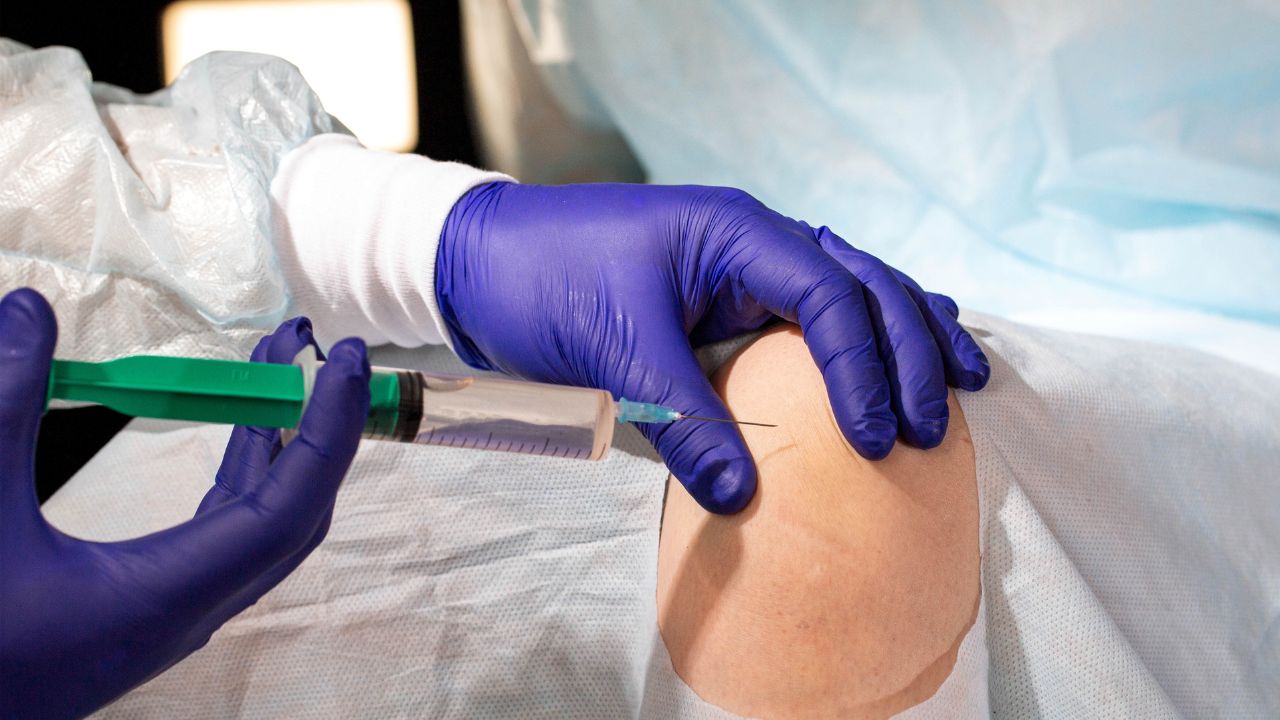
Chronic knee pain from osteoarthritis forces millions of Americans to choose between living with limitations or undergoing major joint replacement surgery. Stem cell therapy has emerged as a third option, a minimally invasive treatment that aims to regenerate damaged cartilage rather than replace it with prosthetic components. But when does regenerative medicine make sense, and when is surgery still the best choice? The answer depends on disease severity, patient age, lifestyle demands, and treatment goals.
This guide breaks down the science, costs, recovery timelines, and effectiveness when evaluating stem cell versus knee replacement to help you make an informed decision about your knee pain treatment.
Key Takeaways
- Stem cell therapy works best for early to moderate osteoarthritis (Kellgren-Lawrence grades I-III) with 80-85% patient satisfaction
- Total knee replacement remains the gold standard for end-stage arthritis (grade IV) with 75-92% satisfaction rates
- Recovery differs dramatically: 1-7 days for stem cells versus 6-12 weeks for surgery
- Cost structures are opposite: $8,000 out-of-pocket for stem cells versus insurance-covered surgery
- Stem cells preserve all future treatment options, including surgery if needed later
Stem cell therapy works best for early to moderate knee osteoarthritis (Kellgren-Lawrence grades I-III). Total knee replacement remains the gold standard for end-stage arthritis (grade IV) with bone-on-bone contact. Patient satisfaction rates run 80-85% for stem cells and 75-92% for surgery. The decision hinges on disease stage, activity goals, and willingness to preserve natural joint tissue.
What Is Stem Cell Therapy And How Does It Work For Knee Pain?
Stem cell therapy is a minimally invasive outpatient procedure performed under local anesthesia. The process takes approximately four hours from start to discharge. Treatment aims to reduce inflammation, promote tissue healing, and slow osteoarthritis progression by introducing regenerative cells directly into damaged knee cartilage.
What Types Of Stem Cells Are Used In Knee Pain Treatment?
Mesenchymal Stem Cells (MSCs) are the most commonly used cells. These multipotent cells differentiate into cartilage, bone, and tendon cells. Adipose-derived stem cells come from fat tissue harvested via mini-liposuction. Bone marrow-derived stem cells are extracted from the iliac crest (hip bone) and provide an autologous (patient’s own) cell source. Umbilical cord-derived MSCs use donor cells that require FDA-compliant processing and screening.
How Are Stem Cells Harvested And Administered For Knee Pain Relief?
Autologous cells are harvested via mini-liposuction for fat-derived cells or bone marrow aspiration from the hip. Harvested cells are concentrated in an on-site laboratory to increase their therapeutic potency. The concentrated cell solution is injected directly into the knee joint using ultrasound or fluoroscopy guidance to ensure precise placement. Patients are discharged the same day with minimal activity restrictions.
What Mechanism Of Action Do Stem Cells Have In Regenerating Cartilage?
Stem cells work through two mechanisms. Differentiation allows MSCs to transform into chondrocytes (cartilage-producing cells) that rebuild damaged tissue. Paracrine signaling involves secreting bioactive molecules that reduce inflammation, modulate immune response, and stimulate the body’s natural repair processes. This dual action addresses both tissue damage and the inflammatory environment that prevents healing.
What Is Knee Replacement Surgery And How Does It Work?
Knee replacement is a major surgical intervention for end-stage osteoarthritis (Kellgren-Lawrence grade IV). The procedure removes damaged joint surfaces and replaces them with prosthetic implants made of metal and plastic. Surgery requires general or spinal anesthesia and a 1-3 day hospital stay.
What Are The Different Types Of Knee Replacement Procedures?
| Procedure Type | Best Candidates | Key Benefits |
| Total Knee Replacement (TKR) | End-stage OA (Grade IV); bone-on-bone arthritis | Eliminates arthritis pain; durable 15-20 years |
| Partial Knee Replacement | Arthritis limited to one knee area | Smaller incision; faster recovery than TKR |
| Unicompartmental Replacement | Single compartment arthritis; preserved ligaments | Preserves more natural bone; feels more natural |
How Is The Knee Replacement Surgery Performed?
The procedure takes approximately two hours. The surgeon removes damaged cartilage and bone from the femur, tibia, and kneecap. Joint surfaces are reshaped to accommodate prosthetic components. Metal and plastic components are secured in place using bone cement or press-fit techniques that allow bone to grow into the implant surface.
What Materials Are Used In Knee Replacements?
Metal alloys (titanium, cobalt-chromium) form the femoral and tibial components. These materials offer high strength, biocompatibility, and corrosion resistance. Polyethylene (medical-grade plastic) creates the bearing surface between metal components and provides wear resistance. Ceramic components offer a smooth surface that reduces friction and wear. Prosthetic components typically last 15-20 years before revision surgery may be needed.
When Is Stem Cell Therapy A Viable Alternative To Knee Replacement?
Assessing regenerative medicine viability requires understanding disease stage and patient factors. Stem cell therapy is best for Kellgren-Lawrence grades I-III (early to moderate osteoarthritis). It is not recommended for grade IV disease with bone-on-bone contact or severe joint deformity. Patients with preserved joint space, localized cartilage damage, and early-stage degeneration see the best outcomes.
What Are The Benefits Of Stem Cell Therapy Over Knee Replacement?
Minimally invasive: Outpatient procedure with local anesthesia versus major surgery requiring hospitalization. Faster recovery: Return to activity in days to weeks versus 3-6 months for surgery. Preserves natural joint: No bone or cartilage removal; joint anatomy remains intact. Lower surgical risks: No deep vein thrombosis, pulmonary embolism, or nerve damage risk. No implant concerns: No future revision surgery needed as implants wear out.
How Do the Results of Stem Cell Therapy Compare to Knee Replacement Surgery?
| Disease Stage | Stem Cell Effectiveness | Surgery Effectiveness |
| Grade I-II (Early OA) | 80% | 45% |
| Grade III (Moderate OA) | 70% | 70% |
| Grade IV (Advanced OA) | 40% | 92% |
Stem cell therapy shows VAS pain improvement lasting up to 24 months with 80-85% patient satisfaction. Knee replacement eliminates arthritis pain entirely, delivers 75-92% satisfaction rates, and provides proven 15-20 year implant durability.
What Conditions Are Best Suited For Stem Cell Therapy Instead Of Surgery?
Early osteoarthritis (Grade I-II) with minimal joint space narrowing responds best to stem cells. Moderate osteoarthritis (Grade III) shows definite narrowing but not bone-on-bone contact. Localized cartilage damage from focal defects or injury sees great improvement. Early-stage joint degeneration where pain impacts activity but mobility remains preserved is ideal for regenerative treatment.
What Are The Key Differences Between Stem Cell Therapy And Knee Replacement Surgery?
The fundamental difference lies in approach: stem cell therapy regenerates damaged tissue while knee replacement removes and replaces it. Stem cells preserve natural joint anatomy; surgery removes bone and cartilage permanently. Recovery time, cost structure, and long-term outcomes differ substantially between the two treatments.
What Is The Recovery Time For Stem Cell Therapy Compared To Knee Replacement?
| Milestone | Stem Cell Therapy | Knee Replacement |
| Return to Daily Activities | 1-7 days | 6-12 weeks |
| Return to Sport/Work | 2-4 weeks | 3-6 months |
| Full Recovery | 1-3 months | 6-12 months |
| Hospital Stay | None | 1-3 days |
Stem cell patients walk out the same day and resume light activity within 48 hours. Knee replacement requires hospitalization, extensive physical therapy, and months of rehabilitation before full function returns.
What Are The Costs Of Stem Cell Therapy And Knee Replacement?
| Treatment | Average Cost | Cost Range | Insurance Coverage |
| Stem Cell Therapy | $8,000 | $3,000-$15,000 | Rarely covered |
| Knee Replacement | $35,000 | $30,000-$70,000 | Typically covered |
The cost-benefit of stem cells includes full out-of-pocket expenses for most patients. Insurance classifies it as investigational or elective. Knee replacement is typically covered by insurance; patients pay deductibles and co-insurance ranging from $2,000-$8,000. Total out-of-pocket costs may be similar despite the large difference in gross procedure costs.
How Do The Long-Term Outcomes Compare Between Stem Cell Therapy And Knee Replacement?
| Outcome | Stem Cell Therapy | Knee Replacement |
| Pain Relief Duration | Up to 24 months documented; may need repeat treatments | 15-20 years (prosthesis lifespan) |
| Need for Follow-Up | May require additional injections | May need revision surgery after 15-20 years |
| Long-Term Data | Limited (most studies ≤24 months) | Decades of proven outcomes |
Knee replacement offers proven long-term durability with 15-20 years of data. Stem cell therapy shows strong short-term results but lacks long-term outcome studies beyond two years. Patients may require repeat stem cell treatments to maintain pain relief.
What Are The Advantages Of Choosing Stem Cell Therapy Over Knee Replacement?
Stem cell therapy preserves natural joint anatomy, avoids major surgery, and offers faster recovery. The treatment works best for patients with early to moderate osteoarthritis who want to delay or avoid implant surgery. Natural joint preservation maintains biomechanics and eliminates implant-related complications.
Can Stem Cell Therapy Restore Knee Function Without Surgery?
Clinical studies show significant improvements in IKDC functional scores sustained up to 24 months post-treatment. A 52-year-old patient with Grade III osteoarthritis achieved 80% pain reduction (VAS score from 8/10 to 1.5/10) after autologous stem cell therapy. The patient successfully avoided knee replacement and returned to recreational cycling and swimming with restored strength and mobility.
How Does Stem Cell Therapy Help Preserve Joint Mobility?
Stem cells maintain natural joint anatomy by regenerating tissue rather than removing bone. The treatment reduces chronic inflammation that drives cartilage breakdown. Evidence suggests stem cells may slow or halt cartilage loss in early to moderate disease stages. Natural proprioception (joint position sense) and biomechanics remain preserved, unlike prosthetic joints that alter normal movement patterns.
Is Stem Cell Therapy Less Risky Than Knee Replacement Surgery?
Stem cell risks include infection at the injection site (minimal), insufficient pain relief, and temporary swelling lasting 1-3 days. Knee replacement risks include deep surgical infection requiring antibiotics or revision, blood clots (DVT/pulmonary embolism), nerve damage causing numbness or weakness, implant failure or loosening requiring revision surgery, and anesthesia complications. The risk profile for stem cell therapy is substantially lower than major joint replacement surgery.
What Are The Potential Risks And Downsides Of Stem Cell Therapy?
Stem cell therapy carries risks common to all injection procedures plus treatment-specific limitations. Infection at the injection site remains possible though rare. Incomplete cartilage regeneration may fail to deliver expected pain relief. Effects may diminish over time, requiring repeat treatments. The therapy works best for specific disease stages and patient profiles.
What Are The Risks Associated With Stem Cell Therapy For Knee Pain?
- Infection at injection site occurs with similar frequency to any joint injection procedure.
- Incomplete regeneration means patients may not achieve expected pain relief or functional improvement.
- Temporary inflammation causes swelling, warmth, and increased pain for 1-3 days post-injection before symptoms improve.
- Need for repeat treatments develops as effects diminish over 18-24 months; maintenance injections may be required.
Why Does Stem Cell Therapy Not Always Work For Everyone?
Disease stage determines success; therapy is most effective for Grades I-III and shows limited benefit for Grade IV bone-on-bone arthritis. Patient age and overall health affect healing capacity and stem cell function. Quality of stem cells and injection technique vary significantly between providers; image-guided precision placement improves outcomes. Individual biological variability in healing response means some patients regenerate tissue effectively while others show minimal improvement despite identical treatment protocols.
What Are The Legal And Ethical Considerations Around Stem Cell Treatments?
The FDA prohibits laboratory expansion of umbilical cord-derived stem cells before use in the United States. Autologous cells must be minimally manipulated and used during the same surgical procedure. International regulatory standards vary significantly; lower prices abroad may indicate compromised safety protocols. Patients should verify clinic FDA compliance, confirm cell sourcing protocols meet regulatory standards, and avoid providers offering unapproved cell manipulation or “stem cell lines” that violate federal guidelines.
What Factors Should Be Considered When Choosing Between Stem Cell Therapy And Knee Replacement Surgery?
Understanding patient decision factors, including disease severity, age, overall health, and lifestyle demands, guides treatment selection. Kellgren-Lawrence grade remains the most critical factor. Patient preferences regarding recovery time, cost structure, and natural joint preservation also drive the choice.
How Do Age, Severity Of Knee Damage, And Overall Health Affect The Decision?
Younger patients (under 50) may prefer stem cells to delay surgery and preserve their natural joint for decades. Older patients (over 65) often choose surgery for a definitive solution with proven 15-20 year outcomes. Severity by Kellgren-Lawrence scale determines effectiveness: Grades I-II show stem cells 80% effective versus surgery 45%; Grade III shows both equally effective at 70%; Grade IV shows surgery 92% effective versus stem cells 40%. Health status matters for surgical risk; poor surgical candidates may find stem cells safer with local anesthesia and no DVT risk, while good candidates can choose based on disease stage and personal preferences.
What Is The Role Of The Patient’s Lifestyle In Choosing The Best Treatment Option?
Highly active patients and athletes may prefer stem cells to preserve natural joint mechanics and return to sport in 2-4 weeks versus 3-6 months for surgery. Sedentary patients may prioritize the proven pain relief of surgery over recovery speed. Work demands influence timing: physical labor requires 2-4 week return with stem cells versus 6-12 weeks for surgery; desk jobs make recovery time less critical to the decision. Activity goals should match treatment choice, patients wanting to return to high-impact sports benefit more from preserved natural joints.
How Does The Decision Between Stem Cell Therapy And Knee Replacement Impact Long-Term Health?
Stem cells preserve all future treatment options; patients can still have surgery later if needed. Surgery is irreversible and removes natural joint tissue permanently. Stem cell therapy may slow disease progression in early to moderate osteoarthritis. Knee replacement provides a durable 15-20 year solution but may require revision surgery as the prosthesis wears out. The stepwise approach (stem cells first, surgery if needed) allows patients to postpone or avoid major surgery while maintaining the surgical option as a backup plan.
How To Make An Informed Decision: Stem Cell Therapy vs. Knee Replacement
Making an informed decision requires accurate diagnosis, understanding treatment-specific risks and benefits, and consulting specialists from both fields. Patients should ask targeted questions about success rates for their specific condition, costs, and long-term expectations. Second opinions provide a valuable perspective, especially for borderline cases.
What Questions Should You Ask Your Doctor About Stem Cell Therapy?
- “What is my Kellgren-Lawrence grade, and what are my success odds based on that?” establishes realistic outcome expectations.
- “What are the specific risks for my condition and health status?” identifies individual risk factors.
- “How long do effects typically last, and will I need repeat treatments?” clarifies maintenance requirements and long-term costs.
- “What is your experience and complication rate with this procedure?” verifies provider expertise.
- “What is included in the quoted price, and what additional costs should I expect?” prevents surprise expenses for imaging, follow-up, or physical therapy.
What Questions Should You Ask Your Surgeon About Knee Replacement Surgery?
- “What type of knee replacement is best for me and why?” determines whether total, partial, or unicompartmental replacement is appropriate.
- “What are my specific surgical risks given my age and health conditions?” identifies individual complication risks.
- “What is your revision surgery rate?” assesses surgical expertise and outcomes.
- “How long will the prosthesis last before potential revision?” sets realistic durability expectations.
- “Would you recommend trying stem cells first, or is surgery clearly needed?” determines whether regenerative medicine is worth exploring before committing to irreversible surgery.
Can a Second Opinion Help In Choosing Between The Two Treatments?
Second opinions provide different perspectives on disease severity and treatment urgency. They may reveal regenerative options not discussed by the first physician. Second opinions are especially recommended if you have Grade I-III arthritis but were immediately told you need surgery without exploring alternatives. Seek opinions from different specialist types, an orthopedic surgeon and a regenerative medicine specialist, to understand the full treatment spectrum available for your condition.
What Is The Future Of Stem Cell Therapy For Knee Pain?
The future of stem cell therapy includes improved cell sources, standardized protocols, and combination therapies that enhance outcomes. The field is shifting from experimental to evidence-based practice. Stem cells are becoming a standard intermediate option between conservative care and surgery rather than a replacement for surgical intervention.
What Recent Advances In Stem Cell Therapy Could Improve Treatment For Knee Pain?
- Improved cell sources include Wharton’s jelly MSCs from umbilical cord tissue with enhanced donor screening protocols.
- Better preparation methods involve enhanced concentration techniques and standardized processing protocols for consistent cell quality.
- Advanced injection techniques use 3D imaging and multiple targeted injection sites for precise cell delivery.
- Combination therapies pair stem cells with PRP for synergistic healing effects.
- Scaffold technologies employ biodegradable matrices that hold cells in place at the injury site, preventing cell migration and improving engraftment rates.
How Are Stem Cells Changing The Landscape of Orthopedic Treatments?
Orthopedic care is shifting from “repair and replace” to “regenerate and restore” philosophy. A stepwise treatment approach is becoming standard: conservative care → regenerative therapy → surgery. Stem cells may become first-line treatment for early to moderate osteoarthritis as long-term evidence matures. Surgery will remain the gold standard for end-stage disease with bone-on-bone contact. The integration of regenerative medicine expands patient options and allows individualized treatment plans based on disease stage and patient goals.
Is Stem Cell Therapy The Future Of Knee Pain Treatment Or A Supplement To Surgery?
Stem cell therapy is not the future “replacement” for knee surgery, it is a valuable addition to the treatment spectrum. The therapy offers an option between conservative care and major surgery for appropriately selected patients with Grades I-III osteoarthritis. Surgery remains essential for end-stage disease. The optimal approach uses stem cells to delay or avoid surgery in early disease while reserving replacement for advanced cases.
Should You Consider Stem Cell Therapy Over Knee Replacement?
- Choose stem cells if you have Kellgren-Lawrence Grades I-III (early to moderate OA), want to preserve your natural joint, can afford the $8,000 out-of-pocket cost, and value faster recovery (weeks versus months).
- Choose knee replacement if you have Grade IV (bone-on-bone) arthritis, want a proven 15-20 year solution, have insurance coverage, and severe pain limits all daily activities.
The stepwise approach progresses from conservative care → PRP therapy → stem cell therapy → surgery (if needed), allowing patients to preserve options and delay major surgery.
Exploring knee arthroplasty alternatives through regenerative medicine offers hope for patients seeking to avoid invasive procedures. Understanding your options through comprehensive pain management solutions helps you make the best choice for your long-term health and mobility.
What Are The Next Steps In Exploring Stem Cell Therapy And Knee Replacement Options?
Get an accurate diagnosis, including your Kellgren-Lawrence grade from current imaging. Consult both a regenerative medicine specialist and an orthopedic surgeon to understand all options. Understand costs and insurance coverage for each treatment option before committing. Make your decision based on disease stage, overall health status, and lifestyle goals rather than cost or recovery time alone.
Ready to explore regenerative medicine options for your knee pain? Contact the Regenerative Institute of Newport Beach to schedule a consultation with Dr. Khyber Zaffarkhan.

