
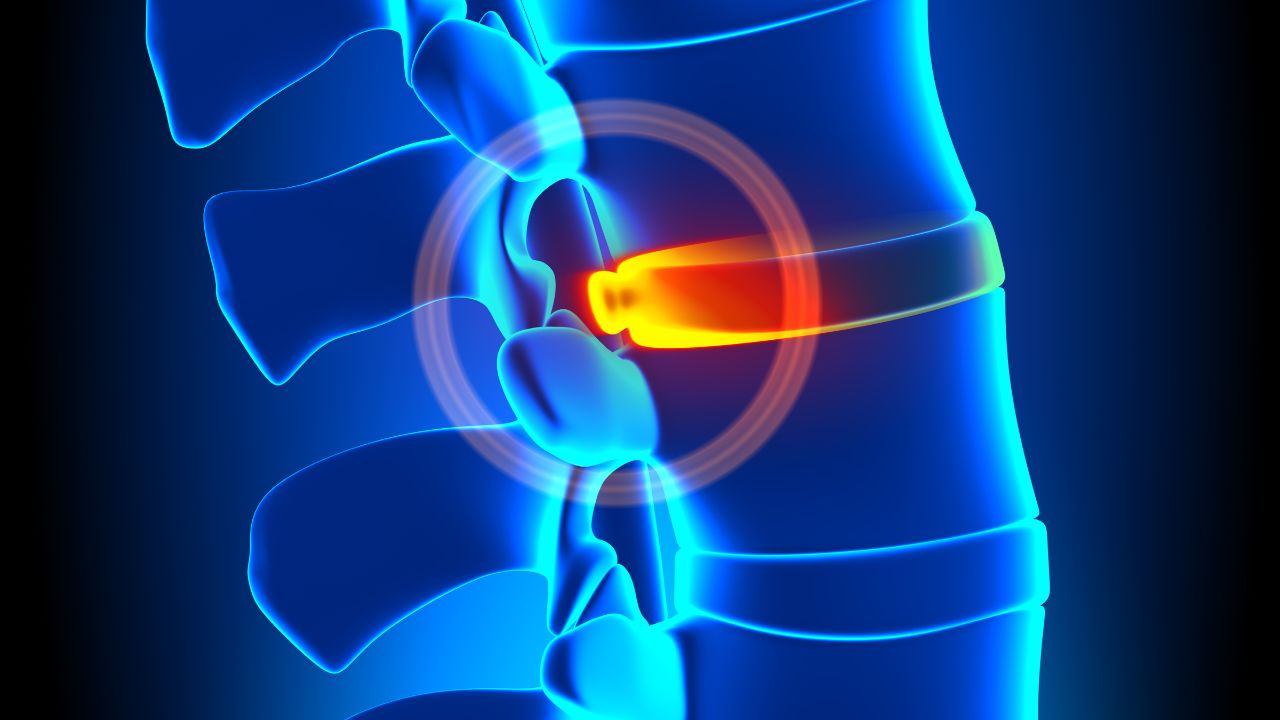
Disc degeneration involves the gradual breakdown of intervertebral discs that cushion spinal vertebrae. This progressive condition reduces disc height, disrupts nutrient flow, and triggers inflammation that radiates pain. Biological therapies aim to restore cellular function rather than merely address mechanical symptoms through traditional surgical intervention.
Regenerative medicine for disc repair introduces growth factors and viable cells to degraded tissue. These treatments target underlying causes by stimulating extracellular matrix production and reducing inflammatory signaling within the disc.
Key Takeaways
- Disc degeneration reduces disc height, causes inflammation, and creates mechanical pain throughout the spine
- Regenerative therapies deliver concentrated platelets or stem cells directly into damaged discs to promote healing
- Clinical evidence shows that approximately 50% of patients experience significant pain relief from regenerative treatments
- Minimally invasive procedures preserve natural spinal anatomy and require shorter recovery times than fusion surgery
- Treatment access varies by geography, with non-white and low-income communities facing reduced conservative care options
What Is Disc Degeneration and Its Impact on Spinal Health?
Disc degeneration occurs when intervertebral discs lose water content and structural integrity over time. This process compromises the disc’s ability to absorb shock and maintain proper spacing between vertebrae. Degenerated discs often develop tears in the outer layer, allowing inner material to bulge or herniate outward. Nerve compression from this displacement creates radiating pain, numbness, and weakness in affected limbs.
What Causes Degenerative Changes in Intervertebral Discs?
Age-related cellular depletion represents the primary driver of disc degeneration. Reduced nutrient supply and accumulated mechanical stress accelerate the breakdown of disc proteins and water retention. Genetic factors also influence how quickly discs deteriorate, with some individuals experiencing premature degradation before age 40. Adjacent segment disease affects vertebrae next to fused segments and develops at roughly 6% per year.
How Does Disc Degeneration Affect Spine Function and Pain?
Damaged discs reduce spinal flexibility and create abnormal motion patterns between vertebrae. This instability forces surrounding muscles to compensate, leading to chronic tension and fatigue. The global age-standardized incidence rate for neck pain is 519 per 100,000 population, reflecting widespread spinal dysfunction. Inflammation from degenerating discs sensitizes nearby nerves, amplifying pain signals and limiting daily activities.
How Does Regenerative Medicine Aim to Treat Disc Degeneration?
Regenerative medicine addresses biological deficits within damaged discs using concentrated growth factors and cells. Traditional surgeries remove or fuse problematic segments, while stem cell therapy spine approaches attempt to reverse degenerative processes at the cellular level. These treatments inject biologics directly into affected discs to stimulate repair mechanisms and restore extracellular matrix integrity.
Outpatient regenerative medicine procedures minimize tissue disruption compared to open surgical techniques. Patients typically return home the same day with limited activity restrictions during initial healing.
What Are Common Regenerative Therapies for Disc Repair?
Platelet-Rich Plasma (PRP) is a regenerative therapy using concentrated platelets harvested from the patient’s blood. Physicians spin whole blood in a centrifuge to isolate growth factors that promote tissue healing. Mesenchymal Stem Cell (MSC) injections aim to restore tissue by introducing multipotent cells capable of differentiating into disc cells. These cells may also secrete anti-inflammatory molecules that reduce localized pain signals.
Regenerative therapies involve intradiscal injection of concentrated biologics guided by fluoroscopy or ultrasound imaging. The goal is to restore extracellular matrix proteins and reduce inflammation that perpetuates disc breakdown. Most procedures are completed within an hour, allowing patients to avoid prolonged hospital stays.
How Do Platelet-Rich Plasma and Stem Cell Injections Work?
PRP therapy delivers concentrated growth factors directly to degenerating disc tissue. These proteins stimulate fibroblast activity and collagen synthesis to strengthen the disc’s outer layer. Stem cell therapy introduces mesenchymal cells that can differentiate into chondrocyte-like cells to replenish disc populations. Injected cells also modulate local immune responses, reducing chronic inflammation that accelerates tissue breakdown.
Both therapies attempt to shift degenerative discs toward a regenerative state rather than continued decline. The biological mechanisms take weeks to months to produce measurable improvements in pain and function.
What Are the Main Treatment Options for Disc Degeneration?
Treatment selection depends on degeneration severity, symptom intensity, and patient’s functional goals. Conservative management, including physical therapy and medication, remains the first-line approach for mild-to-moderate cases. Surgical interventions become necessary when conservative methods fail to control pain or neurological symptoms worsen. Regenerative medicine occupies a middle ground by offering biological repair without permanent anatomical alteration.
Each treatment category carries distinct risks, costs, and recovery timelines that influence decision-making. Patient preferences increasingly favor less invasive options that preserve natural spinal motion.
How Does Spinal Fusion Address Advanced Disc Disease?
Spinal fusion joins two or more vertebrae to eliminate painful motion at degenerated segments. Surgeons use bone grafts and hardware, including screws, rods, and cages, to create permanent stability. Posterior Lumbar Interbody Fusion (PLIF) accesses the spine from the back to remove the disc and insert a bone graft. Transforaminal Lumbar Interbody Fusion (TLIF) approaches through the side to reduce nerve manipulation during graft placement.
Anterior Lumbar Interbody Fusion (ALIF) enters from the abdomen, allowing larger grafts and better lordosis restoration. Fusion eliminates motion-related pain but increases stress on adjacent segments, potentially accelerating degeneration at neighboring levels. Recovery typically requires 8 to 12 weeks before returning to normal activities.
What Are Minimally Invasive Surgery Alternatives?
Minimally Invasive Spine Surgery (MISS) uses specialized retractors and endoscopes to access damaged discs through small incisions. Minimally invasive techniques use specialized retractors and endoscopic cameras to visualize the surgical field without large muscle dissection.
Surgeons access the spine through small incisions to minimize muscle damage and preserve surrounding tissue integrity. Minimally invasive surgery has reduced blood loss versus open surgery, lowering transfusion requirements and complications. Minimally invasive approaches have lower infection rates than open surgery due to smaller wounds and shorter operative times.
These techniques allow faster recovery and earlier return to work compared to traditional open procedures. Hospital stays are often reduced to one or two days rather than extended admissions.
How Is Conservative Care Used for Cervical Arthritis?
Cervical spondylosis is neck arthritis characterized by degenerative disc and facet joint changes. Conservative management includes physical therapy, NSAIDs, targeted injections, and lifestyle modifications to reduce mechanical stress. Physical therapy strengthens supporting muscles and improves posture to unload arthritic segments. Epidural steroid injections deliver anti-inflammatory medication directly to inflamed nerve roots around degenerated discs.
NSAIDs reduce systemic inflammation and provide temporary pain relief during conservative treatment phases. Lifestyle modifications such as ergonomic adjustments and activity pacing prevent symptom exacerbation during daily routines.
What Are the Benefits and Limitations of Regenerative Medicine?
Regenerative therapies offer biological repair potential without permanent anatomical changes to the spine. These treatments preserve natural disc structure and motion, avoiding complications associated with hardware implantation. However, clinical evidence remains limited compared to decades of fusion surgery data. Insurance coverage often excludes regenerative procedures, creating financial barriers for many patients seeking PRP for back pain relief.
Success rates vary based on degeneration severity, patient age, and treatment protocol specifics. Realistic expectations require understanding that regenerative medicine may not fully reverse advanced disc disease.
What Clinical Evidence Supports Regenerative Therapies?
Currently, 13 low-to-moderate quality trials exist for regenerative medicine applications in disc degeneration. Regenerative medicine success rates reach approximately 50% for significant pain relief lasting six months or longer. Current regenerative human trials show modest improvements without compelling imaging proof of biological repair or disc height restoration. Pain reduction and functional gains represent primary outcome measures rather than structural reversal of degeneration.
Preclinical animal studies demonstrate more dramatic tissue regeneration than human clinical applications to date. The gap between laboratory results and clinical translation highlights challenges in replicating controlled conditions within human patients.
What Are the Challenges in Widespread Adoption?
Clinical evidence is still emerging for regenerative medicine, limiting insurance coverage and physician adoption rates. Success rates remain variable for regenerative medicine, with some patients experiencing minimal benefit despite appropriate candidate selection. Regenerative medicine insurance coverage often remains limited due to classification as experimental or investigational treatments. Standardization of cell processing, injection techniques, and patient selection criteria varies significantly across treatment centers.
Long-term outcome data beyond two years remain scarce, making it difficult to compare durability against established surgical options. Cost barriers exclude many patients from accessing regenerative medicine in Orange County, where providers offer these specialized treatments.
How Do Patient Preferences Influence Treatment Decisions?
Patient priorities significantly shape treatment selection in spine care. Long-term outcomes, surgeon recommendations, and complication risks consistently rank as top decision factors. When educated about available options, patients increasingly favor treatments that preserve natural anatomy and minimize recovery time. Awareness of non-surgical treatments for back pain has grown through direct-to-consumer marketing and online health information.
Treatment choice also reflects personal values regarding surgical intervention, medication use, and time away from responsibilities. Shared decision-making between patients and physicians produces better satisfaction and adherence to treatment plans.
Why Do Patients Prefer Minimally Invasive Treatments?
80.0% of patients prefer minimally invasive approaches over open surgery when both options are presented. 83.8% perceive open surgery as more painful based on recovery experiences shared by peers and family. 78.5% see open surgery as having increased complication risk due to extensive tissue disruption and hardware placement. 89.3% believe open surgery requires a longer recovery time, affecting work and personal obligations significantly.
68.1% think open surgery is more expensive due to hospital stays and rehabilitation requirements. These perceptions drive patients to seek alternative interventions before consenting to traditional fusion procedures.
How Does Awareness of Treatment Options Affect Choices?
76.9% of the public remains aware of spinal fusion as a treatment option for disc problems. 79.3% recognize disc replacement as an alternative to fusion that preserves spinal motion. Only 19.7% know the term laminectomy despite its common use for spinal stenosis treatment. Just 10.9% know AR-assisted spine surgery terminology, reflecting the limited penetration of emerging technologies into public consciousness.
Marketing terms like minimally invasive and laser spine surgery appeal most to patients seeking modern alternatives. However, understanding clinical distinctions between various minimally invasive techniques remains limited among the general population.
What Role Do Demographics and Geography Play in Treatment Access?
Age, gender, and geographic location significantly influence disc degeneration incidence and treatment availability. Older populations experience higher rates of degenerative spine conditions, while gender differences affect pain reporting and healthcare utilization. Regional disparities in specialist access create unequal opportunities for advanced conservative and surgical interventions. Socioeconomic factors determine whether patients can afford neck and back pain treatments not covered by insurance.
Healthcare deserts in rural areas limit access to specialists trained in regenerative or minimally invasive techniques. Urban centers concentrate advanced treatment options, creating geographic inequities in care quality.
How Do Age and Gender Affect Neck and Disc Degeneration Incidence?
Neck pain incidence peaks between the ages 40 and 44 for both sexes as degenerative changes accumulate. Years Lived with Disability (YLDs) reach their highest point between ages 55-59 when degeneration limits functional capacity. Cervical spondylosis incidence increases with age up to 50, then decreases after 60 due to survival bias and adaptation. Women consistently bear a higher burden of neck pain than men across all age groups, possibly due to anatomical differences and hormonal factors.
Female patients report more severe pain and functional limitations compared to their male counterparts with similar imaging findings. These gender disparities influence treatment-seeking behavior and healthcare resource utilization patterns.
What Regional Disparities Impact Care Availability?
The Islamic Republic of Iran reports the highest age-standardized incidence rates globally for neck pain and disc degeneration. New Zealand reports the lowest incidence rates globally, possibly reflecting lifestyle factors and healthcare system characteristics. Non-white, low-income zip codes have reduced access to conservative care providers such as physical therapists and chiropractors. Rural and suburban adults remain 60% more likely to experience chronic pain than urban residents due to limited specialist access.
Lower-SDI countries have higher incidence rates than high-SDI countries, though disability rates remain elevated in wealthier nations. Geographic barriers prevent many patients from accessing specialists who offer cutting-edge biological and surgical interventions.
How Does the Landscape of Spine Treatment Markets Reflect Emerging Trends?
Market growth projections reveal shifting priorities within spine care delivery systems. Traditional fusion procedures maintain a stable market share while newer modalities experience rapid expansion. Investment in regenerative technologies reflects both scientific promise and patient demand for biological solutions. The comparison between stem cell therapy and PRP highlights growing consumer interest in understanding treatment options.
Healthcare systems increasingly adopt minimally invasive techniques to reduce costs and improve patient satisfaction scores. Market dynamics indicate continued diversification of treatment options for chronic low back pain recovery over the next decade.
What Are the Growth Projections for Regenerative Medicine?
Regenerative medicine markets demonstrate a CAGR of 16.83%, reflecting rapid clinical adoption and research investment. The sector is expanding from $35.47 billion in 2024 to $90.01 billion by 2030 across all medical applications. Spine-specific regenerative treatments represent a growing subset driven by aging populations and surgical alternative demand. Venture capital and pharmaceutical companies are funding clinical trials to establish efficacy and secure regulatory approvals.
Increased reimbursement approval from insurance carriers would accelerate market growth beyond current projections. Patient willingness to pay out-of-pocket currently sustains many regenerative medicine practices despite coverage limitations.
How Is Minimally Invasive Surgery Changing Clinical Practice?
Minimally invasive spine surgery markets grow at a CAGR of 8.3%, outpacing traditional open surgery adoption. The sector is projected to reach $7.2 billion by 2032 as training programs expand and technology improves. Surgical equipment manufacturers develop specialized retractors, endoscopes, and navigation systems to facilitate minimally invasive approaches. Hospital systems invest in these technologies to attract patients preferring less invasive options and shorter stays.
Surgeon training programs increasingly incorporate minimally invasive techniques into residency and fellowship curricula. Insurance reimbursement generally covers minimally invasive procedures at rates comparable to open surgery, removing financial barriers to adoption.
The Future of Disc Degeneration Treatment and the Promise of Regenerative Medicine
The treatment landscape for disc degeneration continues evolving as regenerative therapies mature alongside surgical innovations. Biological interventions may eventually shift from alternative options to first-line therapies for appropriate candidates. Ongoing clinical trials will determine whether regenerative medicine can consistently reverse degenerative processes or merely slow progression. Patient education remains critical to ensure realistic expectations and informed decision-making regarding all available treatment modalities.
The Regenerative Institute of Newport Beach helps patients explore comprehensive treatment options tailored to individual degeneration severity and functional goals. Advances in cell processing, delivery techniques, and combination therapies may improve regenerative medicine outcomes in the coming years. Integrating biological repair with mechanical stabilization could provide superior results compared to either approach alone. The future of spine care likely involves personalized treatment algorithms selecting optimal interventions based on genetic, cellular, and biomechanical patient profiles.
Ready to Explore Regenerative Options for Disc Degeneration?
Disc degeneration doesn’t have to mean a lifetime of pain or an inevitable path to surgery. At the Regenerative Institute of Newport Beach, Dr. Khyber Zaffarkhan develops personalized, non-surgical treatment plans using advanced regenerative therapies — including PRP and stem cell therapy — to address the biological root causes of spinal degeneration and restore your quality of life. Schedule a consultation today and take the first step toward lasting relief.

