
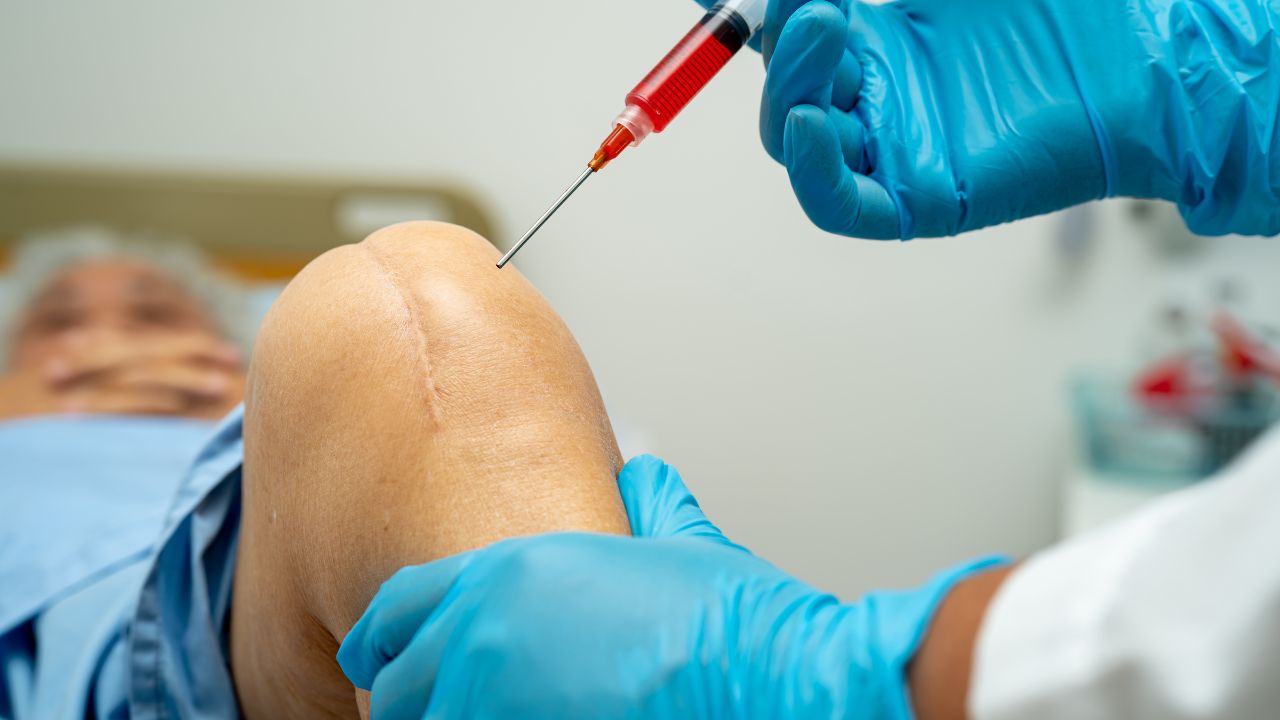
Joint degeneration from osteoarthritis progressively depletes the natural lubricating fluid that cushions cartilage surfaces during movement. Hyaluronic acid joint injections restore this protective layer, offering sustained pain relief without surgical risks. This therapy has become the leading non-surgical intervention for knee osteoarthritis, capturing over 66% of the global joint injection market.
Key Takeaways
- Hyaluronic acid injections account for 66.38% of the joint therapy market, providing 3-6 months of pain relief
- Cross-linked HA formulations allow single-injection convenience versus multi-dose regimens requiring weekly visits
- Medicare covers 80% of approved HA injection costs, with 93% of patients paying zero out-of-pocket costs
- Bio-fermented HA brands eliminate avian allergy risks compared to rooster comb-derived formulations
- PRP therapy offers 6-12 months of relief, but remains completely out-of-pocket without insurance coverage
What Are Hyaluronic Acid Joint Injections?
Hyaluronic acid injections deliver a viscoelastic gel directly into arthritic joints to replace degraded synovial fluid. These non-surgical treatments for knee arthritis function as a mechanical lubricant and biochemical protectant simultaneously. The supplementation mimics the body’s natural joint cushioning while reducing inflammatory cytokines.
Joint surfaces require adequate viscosity to distribute mechanical loads and prevent bone-on-bone friction. When osteoarthritis depletes this protective fluid, patients experience progressive stiffness and cartilage erosion. HA injections restore the shock-absorbing and gliding properties necessary for comfortable movement.
What Is Hyaluronic Acid and Its Role in Joints?
Hyaluronic acid viscosupplementation introduces a viscoelastic gel that supplements natural joint fluid in deteriorated articular spaces. Healthy synovial fluid maintains an average molecular weight of 6,000 kDa, providing optimal lubrication. Osteoarthritis degrades this high-molecular-weight structure, reducing viscosity and protective capacity.
The injected HA forms a protective coating over exposed cartilage surfaces and stimulates endogenous hyaluronan production. This dual mechanism provides immediate mechanical cushioning while promoting longer-term joint homeostasis, addressing both symptom relief and disease modification.
Which Joint Conditions Are Treated with HA Injections?
Osteoarthritis represents the primary indication, affecting 15% of the global population over age 30. Within this demographic, 73% of people with osteoarthritis are older than 55 years. Gender disparities show 60% of osteoarthritis patients are female, reflecting hormonal and biomechanical differences.
Age distribution reveals 88% of osteoarthritis diagnoses occur in individuals aged 45 or older. Hip osteoarthritis is projected to increase 78.6% by 2050 as populations age. Knee joints account for 48.32% of the market share, driven by the joint’s high mechanical stress exposure.
How Do HA Injections Differ from Other Joint Therapies?
Corticosteroids provide immediate relief within 24-72 hours, while HA demonstrates a delayed onset requiring 4-6 weeks. The trade-off manifests in duration, as corticosteroids offer short-term benefit lasting 2-4 weeks. HA injections deliver long-lasting pain relief extending 3-6 months per treatment cycle.
PRP therapy provides relief lasting up to 12 months, exceeding corticosteroids’ 2-4 week window. However, PRP therapy for joint pain remains completely out-of-pocket without insurance coverage, creating financial barriers. Each modality occupies a distinct clinical niche based on onset speed, duration, and reimbursement status.
How Do Hyaluronic Acid Injections Provide Relief?
HA injections restore joint lubrication through viscoelastic supplementation, reducing friction between damaged cartilage surfaces. The gel forms a protective coating that distributes mechanical loads evenly across the joint. This physical cushioning combines with anti-inflammatory signaling to suppress pain-generating cytokines.
The molecular structure determines both joint residence time and therapeutic efficacy. Formulations mimic healthy synovial fluid’s viscoelastic properties, absorbing shock during weight-bearing activities. The gel also stimulates chondrocytes to increase endogenous hyaluronan synthesis, creating sustained biochemical effects.
What Are the Key Properties of HA Formulations?
Cross-linked HA undergoes chemical cross-linking using agents like divinyl sulfone to create stable 3D gel networks. This structural modification resists enzymatic degradation by endogenous hyaluronidase enzymes in inflamed joints. Enhanced stability allows single-injection regimens rather than weekly series.
Non-cross-linked HA maintains a natural linear chain structure without chemical modification, preserving biological signaling capacity. These formulations degrade more rapidly but demonstrate superior biocompatibility in sensitive patients. Molecular architecture determines both mechanical performance and immunological profile.
How Does Molecular Weight and Cross-Linking Affect Efficacy?
Low MW HA brands include Hyalgan at 500-730 kDa and Supartz FX at 620-1,170 kDa. Intermediate and high MW brands reach closer to native parameters, with Euflexxa at 2,400-3,600 kDa. Synvisc achieves 6,000 kDa, matching healthy joint fluid’s molecular weight exactly.
Cross-linked brands include Synvisc, Synvisc-One, and Gel-One, offering extended joint residence through chemical stabilization. Non-cross-linked brands comprise Hyalgan, Supartz, Orthovisc, and Euflexxa, providing linear chain configurations. Molecular weight correlates with viscosity, while cross-linking determines degradation resistance and injection frequency.
What Are the Sources and Purity Differences in HA Products?
Avian-derived brands source material from rooster combs, including Synvisc, Hyalgan, Supartz, and Orthovisc. Bio-fermented brands utilize bacterial fermentation to produce Euflexxa, Gel-One, Monovisc, and Durolane. Production method determines allergenicity profiles and cultural acceptability.
Bio-fermented HA eliminates avian allergy risks compared to avian-derived formulations. Purification processes remove bacterial endotoxins to pharmaceutical-grade standards, ensuring safety profiles comparable to rooster-derived products. Manufacturing origin affects immunological compatibility and regulatory approval pathways across global markets.
Who Is a Candidate for Hyaluronic Acid Joint Injections?
Patients with radiographically confirmed osteoarthritis who fail conservative therapy represent ideal candidates. Medicare criteria require 3 months of documented conservative treatment failure before approving coverage. The therapy particularly benefits individuals seeking to postpone knee arthroplasty and alternative procedures while maintaining activity levels.
Clinical guidelines recommend HA for mild-to-moderate osteoarthritis, as severe bone-on-bone degeneration shows reduced responsiveness. Age alone does not disqualify candidacy, with successful outcomes reported from age 40 through 85. Contraindications include active joint infection, skin disease at injection sites, and documented hypersensitivity to HA formulations.
Which Patient Demographics Benefit Most from HA Therapy?
Adults aged 45-65 with early-stage osteoarthritis demonstrate the highest response rates. This demographic maintains sufficient residual cartilage to benefit from mechanical cushioning and biochemical modulation. Active individuals prioritizing mobility preservation show strong satisfaction.
Female patients comprise 60% of osteoarthritis cases, creating proportionally higher demand. Geographic and socioeconomic factors influence access patterns, with urban centers demonstrating greater adoption. Patients with financial resources or comprehensive insurance coverage utilize HA therapy at elevated rates.
How Do Consumer Preferences Influence Treatment Choice?
Urban adoption rates reach 85%, reflecting greater access to specialized providers and advanced imaging. Rural adoption remains limited at 30%, constrained by provider availability and transportation barriers. Geographic disparities create significant outcome differences, with rural patients experiencing delayed diagnosis and reduced treatment options.
Consumer decision-making prioritizes clinical efficacy as the dominant factor, followed by treatment convenience and duration. Discrete choice experiments reveal that patients value long-lasting relief over rapid onset. Out-of-pocket costs influence final selection, particularly for premium single-injection formulations versus multi-dose regimens.
Which Joints Are Most Commonly Treated with HA Injections?
Knee joints dominate clinical applications, accounting for 48.32% of all HA injections administered globally. The knee’s high mechanical stress and superficial anatomy facilitate straightforward injection techniques. Hip injections constitute the second most common target, though deeper anatomy necessitates imaging guidance.
Shoulder joints respond favorably to HA therapy for glenohumeral osteoarthritis, particularly in overhead athletes. Hand and wrist joints represent emerging treatment areas as awareness increases. Ankle injections treat post-traumatic arthritis following ligamentous injuries or fracture malunion.
What Does the Injection Procedure Involve?
Clinical administration begins with sterile skin preparation using chlorhexidine or iodine-based antiseptic solutions. The provider palpates anatomical landmarks to identify optimal needle entry for accurate intra-articular delivery. Ultrasound-guided injection techniques improve accuracy for deep joints and reduce procedural pain.
Local anesthesia may be administered to minimize discomfort during needle insertion. The HA gel is delivered slowly to prevent pressure-related discomfort within the joint capsule. Post-injection protocols recommend avoiding strenuous activity for 48 hours while the gel distributes throughout joint surfaces.
How Are HA Injections Administered Clinically?
Knee injections utilize lateral suprapatellar, medial midpatellar, or anterolateral approaches depending on patient anatomy and effusion presence. Hip injections almost always require fluoroscopy or ultrasound guidance due to joint depth and neurovascular proximity. The greater trochanter serves as the primary landmark for identifying femoral head position.
Aspiration of excess synovial fluid or inflammatory effusion precedes HA injection to optimize therapeutic volume distribution. Needle gauge selection balances ease of insertion with adequate bore diameter for viscous gel delivery. The procedure typically requires 5-15 minutes from skin preparation through post-injection bandaging.
What Are the Typical Injection Schedules and Dosages?
Single-injection brands include Synvisc-One, Monovisc, and Durolane, delivering the full therapeutic dose in one session. HA multiple injection brands require 3-5 weekly visits versus single injection convenience. Hyalgan and Supartz follow 5-injection protocols, while Euflexxa and Orthovisc utilize 3-injection series.
Dosing volumes range from 2 mL for single-injection formulations to 2.5 mL per syringe for weekly regimens. Total course volumes typically reach 6-10 mL regardless of injection frequency or brand. Repeat courses become eligible after 6 months, with how long joint injections last varying by patient response and activity demands.
How Do Imaging Techniques Support Accurate Injection?
Fluoroscopy provides real-time X-ray visualization, confirming intra-articular needle placement through contrast dye injection before HA delivery. Ultrasound guidance offers radiation-free visualization of soft tissue anatomy, joint space, and needle trajectory. Image guidance reduces failed injections and improves outcomes by ensuring proper gel deposition.
Blind anatomical landmark-based injections demonstrate 77-95% accuracy for knee joints, while hip accuracy drops below 70%. Imaging techniques increase hip injection accuracy to 97-99%, justifying additional procedural complexity. Real-time visualization also enables aspiration of joint effusions that would otherwise dilute the injected HA concentration.
What Are the Expected Benefits and Risks?
HA injections provide sustained pain relief, improved joint function, and cartilage repair support without systemic drug exposure. Clinical trials demonstrate functional improvements in walking distance, stair climbing, and quality-of-life metrics. The therapy allows patients to reduce or eliminate oral analgesics, avoiding gastrointestinal and cardiovascular side effects.
Risks remain minimal, with the most common adverse event being temporary injection site pain lasting 24-48 hours. Rare complications include pseudoseptic reactions characterized by acute inflammation without bacterial infection. These flares typically resolve within 72 hours using ice application and oral anti-inflammatory medications.
How Long Does Pain Relief Last After HA Injections?
HA injections provide 28% to 54% improvement from baseline pain scores at 5-13 weeks post-injection. Duration varies by molecular weight, cross-linking status, and individual patient factors, including activity level. Average relief extends 3-6 months, with some patients reporting benefits lasting up to 9 months.
Repeat injection cycles maintain efficacy without tachyphylaxis or diminished response. Patients typically schedule maintenance injections biannually to sustain pain control and functional capacity. Clinical response prediction remains imperfect, with approximately 60-70% of patients achieving clinically meaningful improvement.
What Side Effects or Allergic Reactions Can Occur?
Avian-derived HA carries a minor risk of avian protein allergies and pseudoseptic joint flares in sensitized individuals. Injection site reactions include transient warmth, swelling, and tenderness occurring in 2-5% of procedures. These local effects resolve spontaneously within 24-72 hours.
True allergic reactions remain extremely rare, occurring in fewer than 1 in 10,000 injections.
Infection risk mirrors standard joint aspiration procedures at approximately 1 in 50,000 when sterile technique is maintained. Patients with documented bird egg allergies should consider bio-fermented formulations to eliminate cross-reactivity potential.
How Do HA Injections Compare with Corticosteroids and PRP?
PRP demonstrates a success rate of 60% to 70% for achieving 6-12 months of relief in appropriate candidates. PRP vs cortisone injections reveal distinct onset and duration profiles favoring each modality in specific scenarios. Corticosteroids show 60.4% of patients experience relief within 3 days, with 93.7% obtaining benefit within 1 week.
Duration comparison favors PRP and HA over corticosteroids, which provide only 2-4 weeks of symptom control. Knee injections explained through comparative effectiveness studies guide selection based on individual patient priorities. Cost, insurance coverage, and desired onset speed create a decision matrix for optimal therapeutic matching.
How Much Do Hyaluronic Acid Injections Cost and Are They Covered?
Treatment costs vary based on brand selection, injection frequency, facility fees, and insurance coverage. Total expenses include the HA product, physician administration fees, and facility charges. Geographic location significantly impacts pricing, with urban specialty centers charging premium rates.
Insurance reimbursement transforms patient financial responsibility from thousands of dollars to minimal copayments for approved indications. Coverage criteria require extensive documentation of conservative therapy failure and radiographic confirmation of osteoarthritis. Prior authorization processes add administrative burden but secure substantial cost savings.
What Are the Price Ranges and Insurance Criteria?
Single-injection HA online pricing ranges from USD 100-150 per syringe versus offline retail costs of USD 300-350. Multi-injection course total product costs reach USD 300-600 for 3-5 syringe series before administration fees. Physician fees add USD 150-400 per injection, depending on geographic market and provider specialty.
Facility fees at hospital-affiliated clinics contribute an additional USD 200-800 per procedure versus office-based settings. Total out-of-pocket expenses without insurance range from USD 700 to USD 2,500 per treatment course. Price transparency remains limited, with significant negotiation occurring between insurers and providers.
How Do Medicare and Private Insurance Affect Access?
93% of over 40,000 Medicare patients paid $0 out-of-pocket for knee gel injections at specialized clinics. Medicare covers 80% of approved costs with 20% patient responsibility, typically absorbed by supplemental insurance. Medicare requires a confirmed osteoarthritis diagnosis with radiographic evidence demonstrating joint space narrowing or osteophyte formation.
Medicare mandates 3 months of failed conservative therapy documentation, including physical therapy, weight management, and oral medications. Medicare also requires a failed trial or contraindication to corticosteroid injections before approving HA viscosupplementation. These stepwise criteria ensure appropriate patient selection while controlling program expenditures.
When Is Out-of-Pocket Payment Required?
PRP therapy is not covered by Medicare or private insurance, requiring 100% out-of-pocket payment, averaging USD 750-2,500. Private insurers require strict prior authorization with extensive documentation mirroring Medicare’s conservative therapy failure requirements. Private insurers enforce step therapy protocols mandating cheaper treatments first before approving premium HA brands.
Off-label joint applications beyond FDA-approved knee indications typically receive coverage denials despite clinical effectiveness evidence. Patients seeking shoulder, hip, or ankle HA injections often pay cash regardless of insurance status. Regenerative medicine modalities face the steepest reimbursement barriers, creating socioeconomic access disparities.
What Are the Emerging Alternatives and Future Directions?
Advanced biologic therapies promise to surpass HA’s mechanical lubrication through genuine tissue regeneration and disease modification. Platelet-rich plasma harnesses concentrated growth factors to stimulate endogenous repair cascades. Stem cell interventions introduce multipotent cells capable of differentiating into cartilage, potentially reversing osteoarthritic degeneration.
Combination therapies pairing HA with PRP or bone marrow concentrate demonstrate synergistic benefits in preliminary studies. Precision medicine approaches using genetic markers and inflammatory profiles may enable patient-specific treatment selection. Technological advances in injection accuracy and sustained-release formulations continue improving outcomes.
How Do PRP and Stem Cell Therapies Compare to HA?
Platelet-rich plasma consists of autologous platelets concentrated from patient blood through centrifugation protocols. Bone Marrow Concentrate involves concentrated mononuclear cells, including mesenchymal stem cells from bone marrow aspiration. Stem cell therapies are not covered by insurance, remaining completely out-of-pocket at USD 5,000-30,000 per course.
PRP provides growth factor delivery, stimulating natural healing responses, while stem cells offer cellular regeneration potential. Both modalities target disease modification rather than symptom management alone, representing paradigm shifts in orthopedic care. Clinical evidence remains less robust than for HA, though emerging studies suggest superior long-term outcomes.
What Are Current Trends in Consumer Demand and Market Growth?
The global joint pain injections market was valued at USD 6.34 billion in 2025 and continues to experience rapid expansion. Market projections indicate USD 15.67 billion by 2034, driven by aging demographics and surgical avoidance preferences. Growth rate calculations show 10.70% CAGR between 2026 and 2034, outpacing broader orthopedic device markets.
Hyaluronic acid accounts for 66.38% market share, maintaining dominance despite emerging regenerative competitors. North America dominated with 45.52% share in 2025, reflecting favorable reimbursement and high diagnostic rates. Asia Pacific demonstrates the fastest regional growth as healthcare infrastructure expands and populations age.
How Is Technology Improving Injection Accuracy and Outcomes?
Point-of-care ultrasound systems provide real-time needle visualization, increasing accuracy from 70% to 97% for deep joints. Fluoroscopy integration with digital subtraction enables immediate confirmation of intra-articular placement. Robotic guidance systems under development promise automated trajectory planning based on patient-specific 3D joint reconstructions.
Extended-release HA formulations using microencapsulation technology sustain therapeutic concentrations for 9-12 months from single injections. Combination products incorporating HA with anti-inflammatory peptides or growth factors enter clinical trials targeting enhanced efficacy. Wearable sensors tracking joint loading patterns may enable personalized injection timing optimization.
Hyaluronic Acid Joint Injections Through Market, Patient, and Clinical Perspectives
HA viscosupplementation represents a mature, evidence-based intervention offering predictable pain relief for millions of osteoarthritis patients globally. The therapy bridges conservative management and surgical intervention, providing sustained symptom control. Market dynamics reflect strong patient demand for minimally invasive options that preserve joint function while delaying replacement surgery.
Clinical effectiveness varies by formulation, patient selection, and procedural technique, requiring individualized treatment planning. Insurance coverage significantly impacts access, with Medicare beneficiaries enjoying near-universal approval while younger patients face authorization barriers. Future directions combining HA with regenerative biologics may deliver disease-modifying benefits beyond current symptomatic relief.
Comprehensive understanding of hyaluronic acid joint therapy empowers patients to make informed decisions aligned with their functional goals and financial circumstances. As technology advances and clinical evidence expands, HA injections will continue evolving as foundational components of comprehensive arthritis management. At the Regenerative Institute of Newport Beach, our board-certified specialists provide personalized assessments to determine whether HA viscosupplementation aligns with your specific joint health objectives.
Is Hyaluronic Acid the Right Option for Your Joints?
Hyaluronic acid injections can offer meaningful relief, but they are not the only path forward. At the Regenerative Institute of Newport Beach, Dr. Khyber Zaffarkhan, DO, FAAPMR, evaluates each patient individually to determine whether HA therapy, PRP, stem cell treatment, or a combination approach will deliver the best long-term outcome for your specific condition. If you are ready to move beyond temporary fixes and explore what your body is capable of healing, contact the Regenerative Institute of Newport Beach today to schedule your consultation.

