
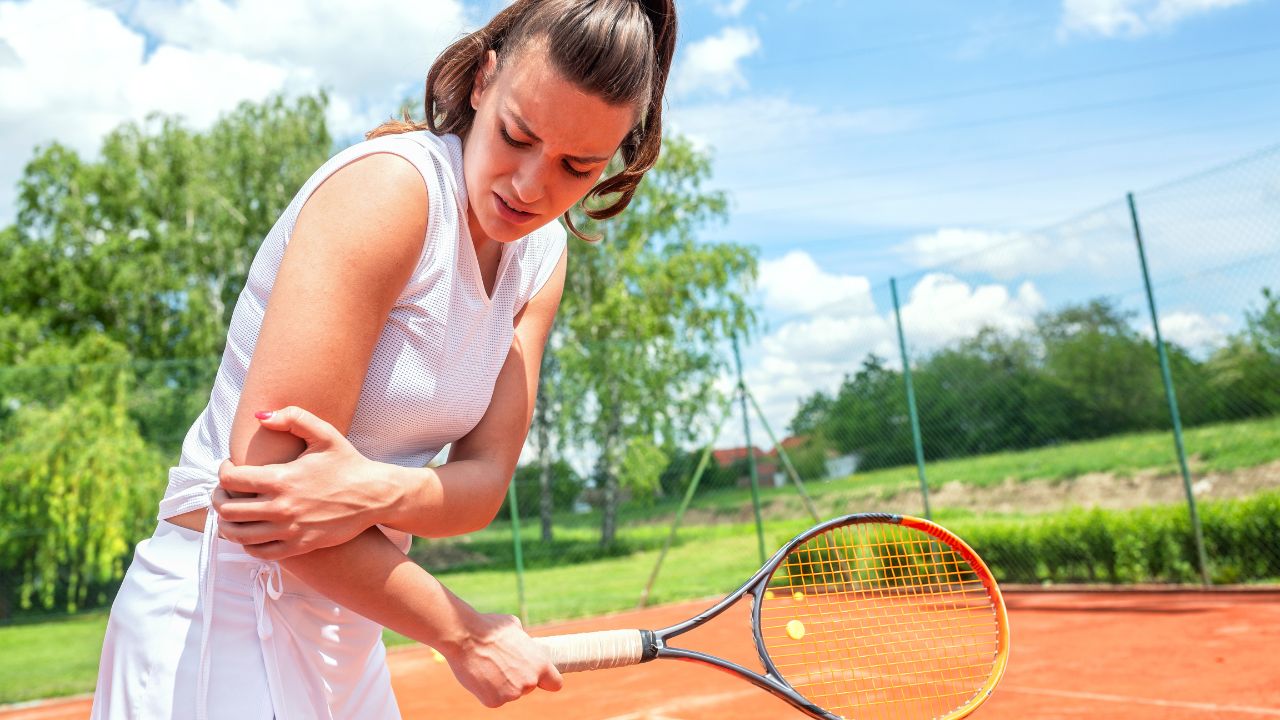
Chronic elbow pain disrupts daily activities and limits your ability to perform valued tasks. Tennis elbow treatment using regenerative medicine addresses tissue damage at the cellular level rather than temporarily masking symptoms.
PRP therapy and stem cell therapy represent advanced biological approaches that harness your body’s natural healing capacity. These minimally invasive treatments offer alternatives to prolonged medication use or invasive surgical procedures for persistent elbow pain.
Key Takeaways
- PRP therapy delivers concentrated growth factors directly to damaged elbow tendons using your own blood
- Stem cell therapy uses bone marrow cells to regenerate tissue and reduce chronic inflammation
- 70% of tennis elbow patients achieve significant pain relief within 12 weeks using PRP treatment
- Treatment costs range from $500-$2,500 for PRP and $3,000-$25,000 for stem cell therapy
- Ultrasound guidance ensures precise delivery of regenerative biologics to injured tendons
What Is Tennis Elbow and Why Does It Occur?
Lateral epicondylitis is tennis elbow, a degenerative condition affecting the common extensor tendon attachment point. This overuse injury develops when repetitive wrist and forearm movements create microscopic tears in tendon fibers.
The condition predominantly affects individuals aged 30-50 who perform repetitive gripping or wrist extension activities. Poor biomechanics, inadequate rest periods, and age-related tendon degeneration contribute to chronic inflammation and progressive tissue breakdown.
How Do PRP and Stem Cell Therapies Differ?
What Is Platelet-Rich Plasma (PRP) Therapy?
PRP is an autologous biotherapeutic derived from the patient’s own blood, concentrated to deliver high levels of growth factors. The treatment stimulates tissue repair by releasing proteins that accelerate cellular regeneration and reduce inflammation.
Clinical preparation involves extracting 15-60 milliliters of blood and processing it through specialized centrifugation systems. The concentrated platelet solution contains 3-5 times the normal platelet count found in whole blood.
What Is Stem Cell Therapy (BMAC)?
BMAC utilizes autologous mesenchymal stem cells and hematopoietic stem cells harvested from the patient’s bone marrow. These cells possess unique abilities to differentiate into various tissue types and modulate inflammatory responses.
The procedure extracts 30-60 milliliters of bone marrow from the posterior superior iliac spine. Specialized centrifugation isolates mononuclear cells containing the highest concentration of regenerative stem cells.
How Do Bioinductive Implants Complement These Treatments?
Bioinductive implants are advanced biomaterials designed to stimulate the body’s natural healing response and support new tissue growth. These scaffolds provide mechanical support while recruiting native cells to regenerate damaged tendon structures.
The implants consist of purified collagen matrices that integrate with existing tissue over 6-12 months. Complete absorption occurs as new tendon tissue replaces the scaffold material without leaving permanent foreign material.
How Are PRP and Stem Cell Treatments Administered for Tennis Elbow?
What Is the PRP Preparation and Injection Process?
Venipuncture to draw 15-60 milliliters of peripheral blood initiates the PRP injection procedure. Centrifugation using single or double spin techniques separates blood components based on density gradients.
Extraction of the buffy coat containing concentrated platelets occurs under sterile conditions before activation. Ultrasound-guided injection into the target tendon or ligament ensures precise delivery to damaged tissue areas.
PRP takes under 45 minutes versus the more invasive BMAC procedure requiring sedation and bone marrow harvesting. The outpatient treatment allows immediate ambulation with minimal activity restrictions following the injection.
How Is Bone Marrow Aspirate Concentrate (BMAC) Harvested and Delivered?
Local anesthesia and conscious sedation for BMAC provide patient comfort during bone marrow extraction. Bone marrow aspiration of 30-60 milliliters from the posterior superior iliac spine uses specialized needles.
Centrifugation of aspirate to isolate and concentrate mononuclear cells occurs immediately following harvest. Ultrasound-guided injection or direct surgical delivery places concentrated cells precisely at injury sites.
BMAC must be minimally manipulated and same-day use according to FDA regulatory requirements. The procedure typically requires 90-120 minutes, including preparation, harvest, processing, and injection phases.
What Role Does Ultrasound Guidance Play in Treatment?
Ultrasound guidance ensures accurate needle placement within damaged tendon fibers rather than surrounding structures. Real-time imaging allows practitioners to visualize needle trajectory and confirm proper biologics delivery location.
The technology reduces risk of inadvertent injection into blood vessels or nerve structures. Precise targeting maximizes therapeutic concentration at injury sites while minimizing waste of expensive biological materials.
Who Should Consider PRP or Stem Cell Therapy for Tennis Elbow?
What Are the Indications and Patient Selection Criteria?
Ideal candidates have persistent symptoms exceeding three months despite conservative physical therapy and activity modification. Patients should demonstrate commitment to post-procedure rehabilitation protocols and realistic outcome expectations.
Contraindications include active infection, certain blood disorders, and concurrent use of anti-inflammatory medications. Pre-treatment evaluation includes diagnostic imaging to confirm tendon pathology severity and rule out alternative diagnoses.
How Do Age and Activity Level Influence Treatment Choice?
Younger patients under 40 with high athletic demands often benefit from stem cell therapy for superior tissue regeneration potential. Older individuals may achieve excellent results with PRP therapy at a lower cost and procedural invasiveness.
Activity level determines appropriate recovery timelines and return-to-sport protocols following regenerative treatments. Competitive athletes require more aggressive rehabilitation compared to recreational participants seeking pain relief.
What Are the Expected Outcomes and Recovery Timelines?
90% patient satisfaction rate at 6 months post-treatment for PRP or BMAC joint treatments reflects strong clinical performance. 70% of tennis elbow patients experience significant pain relief by 12 weeks with PRP therapy.
Over 75% of runners return to pre-injury mileage within 12 to 16 weeks with PRP treatment. Initial improvement typically appears at 4-6 weeks with progressive gains continuing through 6-month follow-up.
What Are the Benefits and Limitations of PRP and Stem Cell Treatments?
What Are the Safety Profiles and Risks?
Virtually zero risk of rejection with autologous PRP eliminates concerns about allergic reactions or disease transmission. The use of your own biological material provides inherent safety advantages over synthetic alternatives.
Temporary post-injection pain flare-ups with PRP for tendonitis typically resolve within 48-72 hours using ice and rest. Recovery from harvest site pain with BMAC usually subsides within one week.
Corticosteroid injections increase the risk of tendon rupture and long-term failure compared to regenerative alternatives. Traditional steroid treatments provide temporary symptom relief while potentially accelerating underlying tissue degeneration.
How Do Costs and Insurance Coverage Affect Accessibility?
PRP costs USD 500-2,500+ versus BMAC costs USD 3,000-25,000+, depending on facility and treatment complexity. Geographic location, provider experience, and included services significantly influence final pricing.
PRP is not covered by most commercial insurance or Medicare and requires out-of-pocket payment by patients. Some health savings accounts and flexible spending accounts allow reimbursement for regenerative medicine treatments.
What Is the Current Evidence on Clinical Effectiveness?
60% to 70% success rate for chronic tendinopathies treated with PRP at Mayo Clinic demonstrates reproducible clinical outcomes. Overall, 78% success rate for autologous stem cell treatments in chronic sports injuries exceeds conventional therapy results.
PRP achieved 72.4% complete healing rate for chronic tendon ulcers and tears in controlled clinical studies. The control group with standard physical therapy alone achieved 52.5% healing rate at identical time intervals.
Leukocyte-rich PRP preferred over leukocyte-poor PRP for chronic tendinopathies based on inflammatory modulation effects. The inclusion of white blood cells enhances tissue remodeling in degenerative conditions.
How Does the Regenerative Medicine Market Influence Tennis Elbow Treatment Options?
Who Are the Major Industry Players?
Arthrex Autologous Conditioned Plasma double-syringe system dominates the PRP preparation device market. Zimmer Biomet GPS III Platelet Concentration System offers an alternative processing technology for clinical applications.
Smith+Nephew REGENETEN Bioinductive Implant leads the surgical tendon augmentation segment with proven outcomes. Inovedis SINEFIX Rotator Cuff Repair System represents emerging technologies in regenerative orthopedic surgery.
Andrews Celltex Biologics partnership bridges elite sports medicine and cellular therapy research advancement. The collaboration focuses on securing FDA approvals for expanded mesenchymal stem cell therapies.
What Are the Emerging Technologies and Trends?
The global regenerative medicine market, valued at USD 35.47 billion in 2024, reflects substantial industry growth. Market expanded to USD 45.43 billion in 2025, representing 28% year-over-year increase.
The projected CAGR of 16.83% from 2025 to 2030 indicates accelerating adoption of biological treatments. Market projected to reach USD 90.01 billion by 2030, driven by regulatory approvals and expanding indications.
The PRP market, growing at 13.2% CAGR, demonstrates sustained demand for minimally invasive orthopedic solutions. Technological improvements in preparation systems and delivery methods enhance clinical efficacy and consistency.
How Do Patient Preferences and Geographic Factors Affect Adoption?
84.5% of patients believe there is convincing scientific evidence supporting stem cell therapies despite variable regulatory status. 65.0% of patients incorrectly believe stem cell treatments are fully FDA-approved for all applications.
63.3% of patients would undergo stem cell therapy if recommended by a physician, regardless of insurance coverage. Rural areas have severe access disparities to regenerative medicine due to limited specialist availability.
Rural populations less likely to adopt new medical technologies because of distance barriers and lower health literacy. Urban centers provide greater access to advanced pain management options and specialized regenerative medicine clinics.
Integrating PRP and Stem Cell Therapies into Comprehensive Tennis Elbow Care
Successful tennis elbow treatment requires combining regenerative injections with structured rehabilitation and biomechanical correction. Physical therapy protocols emphasize eccentric strengthening exercises and progressive loading to optimize tissue remodeling.
Patient education about realistic timelines prevents premature return to aggravating activities that compromise healing. Combining PRP for elbow pain with ergonomic modifications addresses both symptoms and underlying causative factors.
Long-term success depends on addressing contributing factors, including poor technique, inadequate rest, and equipment modifications. Comprehensive care integrates regenerative biologics, targeted rehabilitation, and lifestyle adjustments for optimal outcomes.
The evolution of regenerative medicine continues to expand treatment options for chronic tendon conditions previously resistant to conservative management. These biological therapies offer hope for individuals seeking to avoid surgery while achieving lasting pain relief.
Is Tennis Elbow Holding You Back? There Is a Better Way Forward.
Tennis elbow does not have to be a long-term sentence. At the Regenerative Institute of Newport Beach, Dr. Khyber Zaffarkhan, DO, FAAPMR, uses advanced PRP and stem cell therapies to address the root cause of your pain, not just the symptoms. Patients across Orange County are getting back to the activities they love without surgery, without extended downtime, and without relying on medications that only mask the problem. If you are ready to move better and live better, contact the Regenerative Institute of Newport Beach today to schedule your consultation.

