
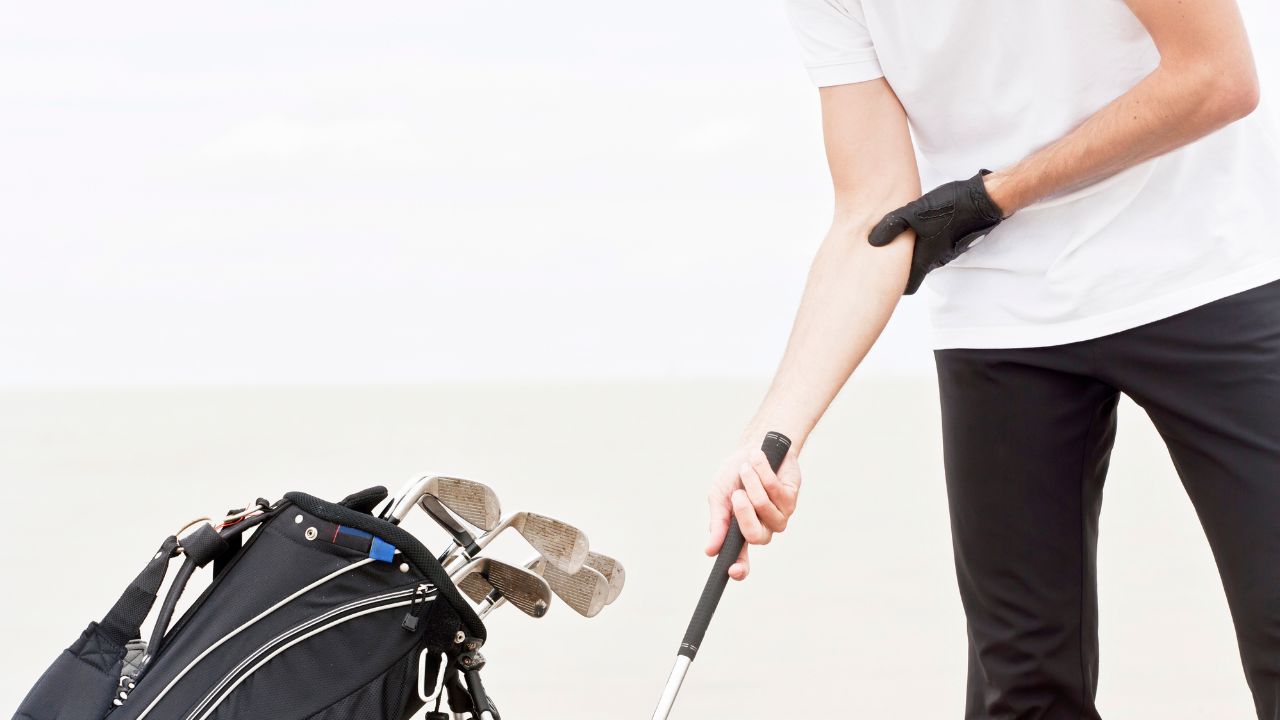
Golfer’s elbow causes chronic pain on the inside of your elbow that worsens with gripping, lifting, or rotating your forearm. Regenerative medicine treatments like PRP therapy offer minimally invasive alternatives that address the root cause of tendon degeneration rather than masking symptoms.
Traditional treatments for medial epicondylitis often provide only temporary relief through rest, ice, and anti-inflammatory medications. PRP therapy accelerates your body’s natural healing by concentrating platelets from your own blood and injecting them into damaged tissue to stimulate new collagen formation.
Key Takeaways
- PRP therapy for golfer’s elbow delivers concentrated growth factors directly to damaged tendons, promoting natural healing without surgery
- Clinical studies show that PRP patients achieve pain scores of 3.7 compared to 4.7 for surgical patients, with significantly shorter recovery times
- Stem cell therapy costs $3,000–$8,000 and is reserved for severe cases, while PRP ranges from $500–$2,500 per treatment
- Physical therapy integrated with regenerative treatments holds 45.2% market share and significantly improves long-term outcomes
- 86.1% of patients prefer cell-based therapies over surgery when presented with effective regenerative medicine options
What Is Golfer’s Elbow and How Does It Affect the Tendons?
Golfer’s elbow develops when repetitive stress causes tiny tears in the tendons connecting forearm muscles to the bony bump on the inside of your elbow. These tears trigger inflammation and degeneration that weaken the tendon structure over time.
The condition causes pain that radiates from the medial epicondyle down the forearm during gripping activities like shaking hands or turning doorknobs. Chronic cases develop scar tissue that further limits blood flow and prevents natural healing without medical intervention.
Causes and Symptoms of Medial Epicondylitis
Medial epicondylitis results from overuse of forearm muscles during repetitive wrist flexion, pronation, or gripping motions common in golf swings. Desk workers who type extensively and weightlifters performing pull exercises also develop this elbow injury through cumulative microtrauma.
Symptoms include tenderness over the medial epicondyle, stiffness that worsens after rest, and weakness when attempting to grip objects firmly. Pain typically intensifies during activities requiring wrist flexion or when resisting extension movements with the affected arm.
How Does Golfer’s Elbow Differ From Tennis Elbow?
Tennis elbow affects the lateral epicondyle on the outside of your elbow, where extensor tendons attach to the bone. Golfer’s elbow targets the medial epicondyle on the inside, where flexor tendons connect to the same bony prominence.
Lateral epicondylitis typically results from backhand tennis strokes and repetitive wrist extension during computer use or manual labor. Both conditions involve tendon degeneration but require different injection sites and rehabilitation protocols for optimal joint pain recovery.
Traditional Treatment Options and Their Limitations
Conservative treatments include rest, ice application, counterforce bracing, and nonsteroidal anti-inflammatory drugs to reduce acute inflammation. Physical therapy exercises strengthen surrounding muscles but require months of consistent effort before patients notice significant improvement.
Corticosteroid injections provide temporary pain relief but can weaken tendon tissue with repeated use and increase rupture risk. Surgery becomes necessary when conservative treatments fail after six to twelve months of consistent application without meaningful progress.
What Is Platelet-Rich Plasma (PRP) Therapy?
PRP therapy uses your own blood cells to create a concentrated solution of healing growth factors and proteins. Physicians extract a small blood sample, process it through centrifugation to separate platelets, and inject the concentrated plasma into degenerated tendon tissue.
The concentrated platelets release growth factors that stimulate cellular repair, reduce inflammation, and promote new blood vessel formation within damaged tissue. This biological approach supports natural healing mechanisms rather than relying on synthetic medications or invasive surgical procedures.
How Is PRP Prepared and Administered?
Medical staff draws approximately 30–60 milliliters of blood from your arm using standard venipuncture techniques identical to routine blood tests. The sample undergoes centrifugation for 10–15 minutes to separate red blood cells from platelet-rich plasma containing concentrated healing factors.
Physicians use ultrasound guidance to precisely inject the concentrated plasma into areas of maximum tendon degeneration at the medial epicondyle. Autologous tissue from your own body eliminates rejection risks and allergic reactions common with synthetic treatments or donor materials.
What Are the Advantages and Disadvantages of PRP for Golfer’s Elbow?
PRP therapy offers significant advantages, including minimal invasiveness, use of your body’s natural healing mechanisms, and FDA clearance for orthopedic applications. Treatments typically require 30–45 minutes, including preparation time, and cause only localized soreness lasting 24–48 hours after injection.
Disadvantages include variable results depending on individual healing capacity, the potential need for multiple injections spaced weeks apart, and limited insurance coverage. PRP costs $500–$2,500 per treatment compared to stem cell therapy’s more invasive harvesting procedures and higher expense.
What Does Clinical Evidence Say About PRP Effectiveness?
Clinical trials measuring pain using the Visual Analog Scale found that PRP patients achieved scores of 3.7 compared to surgical patients’ scores of 4.7. Both groups experienced excellent outcomes with return to full movement, but PRP avoided surgical risks and lengthy rehabilitation periods.
The global PRP therapy market reached $652.4 million in 2024 and holds 22.1% market share of regenerative sports medicine applications. Projected growth rates of 10.6%–15.3% annually reflect increasing physician adoption and patient demand for golfer’s elbow treatment alternatives to traditional surgery.
How Does Stem Cell Therapy Compare to PRP in Treating Golfer’s Elbow?
Stem cell therapy introduces undifferentiated cells capable of developing into specific tissue types needed for repair and regeneration. PRP delivers concentrated growth factors that signal your existing cells to accelerate healing without introducing new cellular material.
Both treatments fall under regenerative medicine but serve different clinical purposes based on injury severity and tissue damage extent. Comparing PRP and stem cell approaches helps patients understand which option best addresses their specific condition and recovery goals.
What Are the Biological Mechanisms Behind Stem Cell Therapy?
Stem cell therapy harvests undifferentiated cells from bone marrow or adipose tissue through minimally invasive extraction procedures. Technicians process these cells in specialized laboratories to concentrate viable stem cells before injection into damaged tendons or cartilage.
These undifferentiated cells can differentiate into tendon fibroblasts, producing new collagen and elastin to replace degenerated tissue over several months. PRP uses autologous tissue processing, while stem cells offer potential for actual tissue regeneration in severe cases.
When Is Stem Cell Therapy Recommended Over PRP?
Physicians recommend PRP for mild to moderate tendinopathy where existing cells retain regenerative capacity with appropriate growth factor stimulation. Stem cells become necessary for severe cartilage damage, advanced joint degeneration, or complex ligament tears exceeding PRP’s reparative capabilities.
PRP typically requires multiple injections spaced 4–6 weeks apart to maintain therapeutic growth factor concentrations in damaged tissue. Stem cells potentially provide longer-lasting effects through actual tissue replacement rather than enhanced healing of existing structures.
What Are the Cost and Accessibility Differences?
PRP treatments range from $500–$2,500 per session in the United States, compared to stem cell therapy’s $3,000–$8,000 cost. International pricing shows significant variation, with PRP costing $1,800 domestically versus $400 in Turkey and stem cells ranging from $5,500 in the US to $2,500 in Turkey.
Stem cell therapy requires more invasive harvesting procedures from bone marrow or fat tissue compared to simple blood draws for PRP. Patient guides to regenerative stem cell treatments explain processing requirements and help individuals evaluate cost-benefit ratios for their specific conditions.
How Is Physical Therapy Integrated With Regenerative Treatments?
Physical therapy combined with regenerative injections maximizes functional recovery by strengthening surrounding muscles and correcting movement patterns that caused the initial injury. Therapists design progressive exercise protocols that protect healing tissue while gradually restoring strength and range of motion.
Integration of these modalities produces superior outcomes compared to injections alone by addressing biomechanical deficiencies that contribute to chronic overuse injuries. Physical therapy programs typically begin 1–2 weeks after PRP injections once acute inflammation subsides and tissue repair mechanisms activate.
What Role Does Physical Therapy Play in Recovery and Prevention?
Physical therapy holds 45.2% market share in sports medicine treatment protocols and provides essential support for long-term success. Structured rehabilitation requires significant time commitment and patient compliance but prevents reinjury by correcting faulty movement patterns and muscle imbalances.
Therapy costs average $150 per session in the United States, $180 in Germany, $80 in Mexico, $60 in Thailand, and $50 in Turkey. Multiple sessions over 6–12 weeks build tissue tolerance and restore functional capacity needed for return to athletic activities.
How Can AI and Wearable Technology Support Rehabilitation?
Artificial intelligence in physical therapy was valued at $178 million in 2025 and is projected to reach $1.06 billion by 2033. AI systems analyze movement patterns through sensor data and provide real-time feedback to correct form during therapeutic exercises.
Wearable injury prevention technology holds 8.7% market share within the broader $82.33 billion wearable technology sector. These devices require consistent use and data interpretation expertise but offer objective metrics for tracking progress and preventing overtraining during recovery.
What Is the Typical Recovery Process After PRP Treatment for Golfer’s Elbow?
Recovery begins with 24–48 hours of localized soreness and inflammation as concentrated platelets initiate healing cascades within damaged tissue. Most patients notice gradual pain reduction over 4–6 weeks as new collagen fibers form and tendon structure improves.
Optimizing recovery after PRP treatment requires avoiding anti-inflammatory medications that could interfere with the natural inflammatory healing process. Progressive loading through structured rehabilitation prevents re-injury while building tissue tolerance necessary for return to full activity.
What Are the Expected Side Effects and Timeline?
Patients experience temporary soreness, swelling, and stiffness at the injection site that typically resolves within 2–3 days. Serious complications remain extremely rare due to the use of autologous tissue that eliminates rejection and allergic reaction risks.
Recovery timelines for athletes over 60 extend 1.5 times longer than those of athletes under 40 due to decreased cellular turnover and tissue elasticity. Full recovery typically requires 8–12 weeks for younger patients and up to 18 weeks for older individuals with more advanced degeneration.
How Does Recovery Compare to Surgical Alternatives?
PRP patients achieve Visual Analog Scale pain scores of 3.7 compared to 4.7 for surgical patients with medial epicondylitis. Recovery after PRP injections allows return to light activities within days and full function within weeks versus months of immobilization after surgery.
Surgical interventions require general anesthesia, tissue debridement, and prolonged rehabilitation with a restricted range of motion during initial healing phases. PRP for golfer’s elbow avoids these risks while delivering comparable long-term pain relief and functional restoration.
What Factors Influence Patient Preferences for PRP and Regenerative Medicine?
Patient demographics, injury severity, cost considerations, and prior treatment failures all influence regenerative medicine treatment selection and timing. Surveys show 86.1% of patients prefer cell-based therapies over surgery when presented with effective non-surgical alternatives.
Safety concerns drive 88% of patient decision-making, while efficacy ratings score 95% importance in treatment selection processes. Understanding these priorities helps physicians recommend appropriate interventions aligned with individual patient values and recovery goals.
How Do Age and Demographics Affect Treatment Choices?
Younger demographics aged 18–39 prefer wearable technology and traditional physical therapy approaches for injury prevention and recovery. Patients over 40 increasingly select regenerative treatments as decreased tissue elasticity and slower cellular turnover reduce the effectiveness of conservative approaches.
Adults over 40 experience physiological changes that impair natural healing and increase vulnerability to chronic overuse injuries requiring biological intervention. This demographic shift explains the rising demand for PRP and stem cell therapies among aging athletes maintaining active lifestyles.
What Are the Safety and Efficacy Considerations From a Patient Perspective?
Safety and minimal risk factors score 88% importance in patient surveys evaluating regenerative medicine treatment options. Efficacy considerations rate 95% importance as patients prioritize treatments delivering meaningful functional improvement and pain reduction.
Survey data shows 82.4% of patients believe regenerative medicine is safe, while 69.1% cite improvement in quality of life as the primary motivation. Cost affordability scores 75% importance, indicating patients value effectiveness and safety over price when selecting appropriate interventions.
How Do Costs and Regional Availability Affect Treatment Decisions?
Treatment costs vary significantly across global markets, with PRP ranging from $400 in Turkey to $2,200 in Germany. Regional pricing disparities drive substantial medical tourism as patients seek comparable quality care at reduced costs.
Accessibility depends on regulatory approval, insurance coverage, and local availability of trained physicians capable of performing advanced regenerative procedures. These factors combine to influence where and when patients pursue treatment for chronic conditions like golfer’s elbow.
What Are Typical Price Ranges for PRP and Stem Cell Therapies?
PRP costs $500–$2,500 per treatment in the United States, while stem cell therapy ranges from $3,000–$8,000 per session. International markets offer significantly lower pricing, with PRP averaging $600 in Mexico and $500 in Thailand.
Cost affordability receives 75% importance scores in patient surveys but remains secondary to efficacy and safety considerations. Multiple PRP injections spaced weeks apart may ultimately cost less than single stem cell treatments while delivering comparable outcomes for appropriate conditions.
How Does Medical Tourism Impact Access to Regenerative Treatments?
Medical tourism enables patients to access high-quality regenerative treatments at substantially reduced costs compared to domestic pricing. Countries like Mexico, Thailand, and Turkey attract international patients seeking PRP and stem cell therapies at 25%–40% of US prices.
Quality standards vary internationally, requiring careful research to identify accredited facilities with experienced physicians and proper laboratory capabilities. Cost savings must be balanced against travel expenses, follow-up care logistics, and potential complications occurring after returning home.
Integrating PRP and Regenerative Medicine Into Golfer’s Elbow Treatment Plans
Comprehensive golfer’s elbow treatment combines PRP injections, targeted physical therapy, and activity modifications to address both symptoms and underlying causes. This integrated approach treats degenerated tissue while correcting biomechanical factors that contributed to initial injury development.
Physicians at facilities like the Regenerative Institute of Newport Beach develop personalized protocols based on injury severity, patient age, activity goals, and previous treatment responses. Long-term success requires patient commitment to rehabilitation exercises and gradual return to activities that initially caused tendon damage.
Regenerative medicine represents a significant advancement in treating chronic elbow injuries without surgical intervention or prolonged recovery periods. Evidence-based protocols continue evolving as clinical research expands our understanding of optimal injection techniques, platelet concentrations, and rehabilitation timelines.
Ready to Heal Your Golfer’s Elbow Without Surgery?
Chronic elbow pain shouldn’t dictate whether you can grip a golf club, lift a coffee cup, or finish a full workday. At the Regenerative Institute of Newport Beach, Dr. Khyber Zaffarkhan, DO, FAAPMR, develops personalized PRP and regenerative treatment plans that address the underlying tendon damage behind medial epicondylitis rather than masking the symptoms. His patient-first protocols combine ultrasound-guided injections with structured rehabilitation, helping you return to the activities you love without the long recovery of surgery.
Schedule a consultation with Dr. Z today to find out whether PRP therapy is the right next step for your elbow recovery.

