
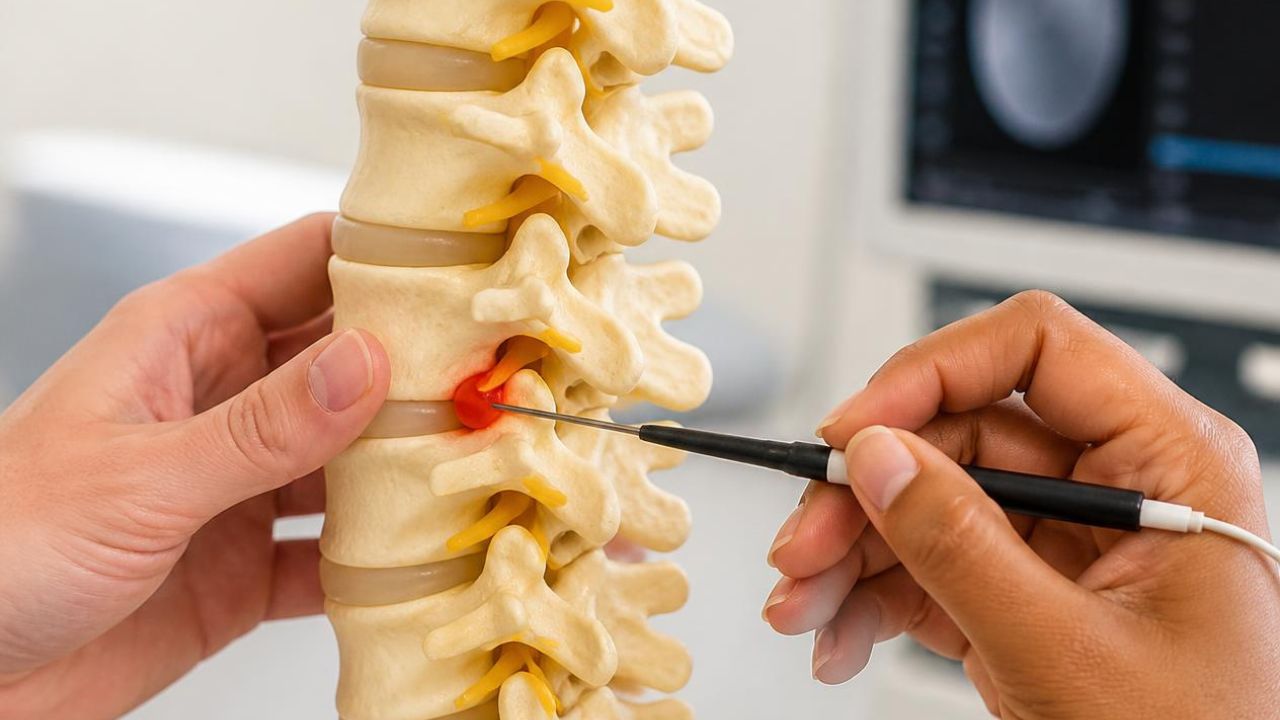
Chronic spine pain forces difficult decisions between ongoing medication, invasive surgery, or continued suffering. Radiofrequency ablation in Orange County and across California offers a minimally invasive option when conservative care fails. Understanding insurance coverage and cost in 2026 helps you prepare financially and avoid surprise bills.
This guide explains what determines your RFA cost, when Medicare and commercial plans cover the procedure, and which questions to ask. We include diagnostic block requirements, billing codes, and coverage documentation so you can approach scheduling with confidence.
Key Takeaways
- Insurance coverage for radiofrequency ablation depends on medical necessity documentation, conservative treatment history, and diagnostic nerve block results.
- Medicare Part B covers RFA when LCD criteria are met; patients typically pay 20% coinsurance after the deductible.
- Commercial plans often require prior authorization, diagnostic blocks, and may limit the number of spinal levels treated per session.
- Out-of-pocket cost varies by deductible status, network participation, facility setting, number of levels, and whether anesthesia is used.
- California patients should verify CPT codes, facility fees, diagnostic block charges, and expected patient responsibility before scheduling.
What Is Radiofrequency Ablation and How Does It Work for Pain Management?
Radiofrequency ablation uses radiofrequency energy to heat targeted nerve tissue and interrupt pain signals. Medial branch nerves send pain signals from facet joints to the brain. By disrupting the nerve’s ability to transmit pain, radiofrequency ablation reduces chronic pain without cutting or removing tissue.
The procedure targets specific nerves identified through diagnostic testing. RFA is performed using fluoroscopy to ensure precise electrode placement. Heat is applied to create a lesion blocking pain transmission while preserving surrounding structures.
Which Pain Conditions Can RFA Treat?
RFA may address chronic conditions when the pain generator is diagnosed through clinical evaluation and nerve blocks. Treatable conditions include chronic neck pain, facet joint dysfunction, back pain, knee pain with osteoarthritis, hip pain, shoulder pain, peripheral nerve pain, and sacroiliac joint pain.
Pain must persist for at least three months and significantly limit daily function before RFA is considered. Providers evaluate imaging, physical examination, conservative treatment history, and diagnostic block response before recommending ablation.
Why Is RFA Considered Minimally Invasive?
RFA does not require surgical incisions or general anesthesia. The procedure is typically performed outpatient with local anesthesia and mild sedation if needed. Patients often return to normal activities within days rather than the weeks required for surgical recovery.
The approach preserves surrounding tissue and bone while addressing the pain source. Recovery time is shorter because no muscle cutting or joint opening occurs. Most patients experience minimal post-procedure discomfort compared to traditional spine surgery.
How Does RFA Compare to Other Pain Management Options?
Conventional thermal RFA differs from pulsed radiofrequency, which is considered experimental by major insurers. Thermal RFA creates a heat lesion to disrupt nerve function, while pulsed radiofrequency applies electromagnetic fields without thermal damage.
RFA fits between conservative care and surgery in the treatment continuum for chronic pain management. Compared to repeat injections, RFA offers longer-lasting relief because nerve regeneration takes months. Compared to fusion surgery, RFA involves lower risk and faster recovery but does not address structural spine issues.
What Factors Determine Your RFA Cost in California for 2026?
Your final RFA cost depends on your insurance plan, deductible status, network participation, and procedure complexity. Out-of-pocket responsibility ranges from a specialist copay to several thousand dollars if you have not met your deductible. California patients face varying costs based on whether they have Medicare, Medicare Advantage, employer-sponsored coverage, HMO plans, or cash-pay arrangements.
The procedure setting significantly affects total charges because hospital outpatient departments bill separately for facility use. The number of spinal levels treated, bilateral versus unilateral ablation, and sedation use all influence final billing.
What Are the Typical Cost Components of RFA?
Cost components include consultation and exam, diagnostic nerve blocks, RFA procedure fee, facility fee, imaging guidance, sedation or anesthesia, and follow-up care. Your total out-of-pocket amount depends on whether these services are bundled or billed individually.
Consultation establishes medical necessity and may involve specialist visit copays. Diagnostic nerve blocks are often required by insurance and billed separately. Facility fees from surgery centers or hospital outpatient departments can equal or exceed the physician procedure fee.
| Cost Component | What It Covers | Typically Billed By |
| Consultation and exam | Establishes medical necessity and the treatment plan | Physician office |
| Diagnostic nerve blocks | Confirms the nerve source of pain before RFA is approved | Physician or surgery center |
| RFA procedure fee | Physician charge for performing the ablation | Physician |
| Facility fee | Use of the surgery center or hospital outpatient department | Facility |
| Imaging guidance | Fluoroscopy used to confirm electrode placement | Facility or physician |
| Sedation or anesthesia | Conscious sedation or monitored anesthesia care, if used | Anesthesia provider |
| Follow-up care | Post-procedure visits to assess pain relief | Physician office |
How Do Procedure Setting and Level of Treatment Affect Price?
Bilateral intervention is considered a single level intervention when coding. Each unilateral or bilateral intervention at any level reports as one unit, with bilateral intervention signified by modifier -50. Hospital outpatient settings may add copayment or coinsurance beyond 20% Medicare cost-sharing.
The number of spinal levels treated directly affects total procedure cost because additional levels require add-on codes. Cervical and thoracic levels use different CPT codes than lumbar levels, and insurers may have different coverage policies. Treating three bilateral lumbar levels generates higher charges than a single unilateral cervical level.
Why Does Insurance Plan and Network Status Impact Your Out-of-Pocket Cost?
California payer scenarios include Medicare, Medicare Advantage, employer or commercial PPO, HMO or EPO, cash pay or high-deductible plan, and accident or medical-legal contexts. Each scenario creates different coverage rules, prior authorization requirements, network restrictions, and patient cost-sharing structures.
Out-of-network providers can bill above the allowed amount, leaving you responsible for the balance after insurance pays. In-network providers accept negotiated rates and typically cannot balance-bill beyond your plan’s deductible and coinsurance. HMO plans may not cover out-of-network RFA without formal referral and authorization.
When Does Insurance Cover Radiofrequency Ablation?
Insurance covers radiofrequency ablation when medical necessity criteria are met, and proper documentation supports the diagnosis and treatment plan. Coverage requires proof that pain is chronic, functionally limiting, and has not responded adequately to conservative care. Most plans require diagnostic nerve block confirmation before approving ablation.
Prior authorization processes vary by insurer but generally require clinical notes, imaging reports, pain scores, functional assessments, and conservative treatment history. Submitting incomplete documentation can delay approval or result in denial.
What Does Medical Necessity Mean for Insurance Coverage?
Medical necessity means the procedure is appropriate for your diagnosed condition and supported by clinical evidence and payer policy. Pain must be present at least three months according to CMS LCD L38803 criteria. Insurers require documentation of moderate to severe pain, functional deficit measured on validated scales, and failure to improve with noninvasive conservative management.
Your provider must document that RFA is likely to improve function based on your specific diagnosis. Generic pain complaints without objective findings often lead to coverage denials.
Why Are Diagnostic Nerve Blocks Often Required Before RFA?
CMS LCD L38803 lists four types of facet procedures: intra-articular facet joint injections, medial branch blocks, radiofrequency ablations, and facet cyst rupture or aspiration. Medial branch blocks serve as a diagnostic tool to confirm that facet joint nerves are the pain source. Temporary relief from the nerve block indicates that ablating those same nerves will likely provide longer-lasting benefit.
Most commercial insurers require at least one diagnostic block showing significant pain relief before approving RFA. Some plans require two separate blocks to confirm consistent response. Without documented positive block results, insurers typically deny RFA authorization.
How Do Documentation and Conservative Treatment History Influence Approval?
Insurers expect documentation of medication trials, physical therapy, activity modification, injections, or other noninvasive treatments before covering interventional procedures. Your provider must show that conservative care was attempted for a reasonable period and did not provide adequate relief.
Clinical notes should specify which medications were tried, therapy duration and results, and why each conservative option was insufficient. Comprehensive documentation demonstrates that RFA is medically appropriate rather than premature intervention.
How Does Medicare and Medicare Advantage Cover RFA Procedures?
Medicare Part B covers pain management services including RFA when local coverage determination criteria are satisfied. Medicare patients pay 20% of the Medicare-approved amount after the Part B deductible. Hospital outpatient settings may add copayment or coinsurance, creating higher patient responsibility than procedures in physician offices or ambulatory surgery centers.
Medicare Advantage plans must cover everything Original Medicare covers but may impose additional requirements like network restrictions and prior authorization. Verify whether your specific Advantage plan requires referrals, which providers and facilities are in-network, and whether prior authorization is needed.
What Are Medicare Part B Coverage and Cost-Sharing Rules?
Medicare patients pay 20% of the Medicare-approved amount after the Part B deductible for most covered pain management services. The 2026 Part B deductible and Medicare-approved amounts for specific CPT codes can be verified through the official Medicare Procedure Price Lookup tool.
Facility fees from hospital outpatient departments may generate separate copayments under the Outpatient Prospective Payment System. These copayments can exceed 20% of the facility charge, potentially creating a higher total cost than the same procedure in an ambulatory surgery center.
What Is the Role of Local Coverage Determinations (LCD) Like L38803?
CMS LCD L38803 is titled ‘Facet Joint Interventions for Pain Management’ and governs coverage for facet-related procedures, including RFA. CMS Article A58405 is titled ‘Billing and Coding: Facet Joint Interventions for Pain Management’ and provides coding guidance. These documents define when Medicare considers facet interventions medically reasonable and necessary.
LCD L38803 specifies that facet joint interventions can be covered for chronic moderate to severe axial neck or back pain. The policy requires documented functional deficit, pain duration of at least three months, and failure to respond to conservative management.
How Should Patients Verify Medicare Network and Prior Authorization?
Original Medicare does not require prior authorization for most RFA procedures, but confirm the provider accepts Medicare assignment. Providers who accept assignment agree to Medicare’s approved amounts and cannot balance-bill beyond allowed cost-sharing.
Medicare Advantage plans often require prior authorization even when Original Medicare does not, and network participation rules vary by plan. Call the member services number on your insurance card to verify network status for both physician and facility.
What Should Commercial Insurance Patients in California Know About RFA Coverage?
Commercial insurance coverage for RFA depends on plan-specific medical policies, prior authorization requirements, and network participation. Preauthorization processes can take one to three weeks, and some plans require peer-to-peer review. Missing a preauthorization deadline or submitting incomplete clinical documentation can delay your procedure or result in coverage denial.
Plan-specific rules vary significantly between insurers and even between different employer groups using the same carrier. Some plans limit the number of spinal levels treated per session or restrict repeat ablation frequency.
How Do Preauthorization and Plan-Specific Rules Affect Approval?
Aetna Clinical Policy Bulletin 0016 covers ‘Back Pain – Invasive Procedures’ and outlines medical necessity criteria for facet interventions, including RFA. Aetna Clinical Policy Bulletin 0735 covers ‘Pulsed Radiofrequency’ and states that pulsed radiofrequency is considered experimental, investigational, or unproven for all indications.
Preauthorization requires your provider to submit clinical documentation demonstrating that plan-specific criteria are met. Insurers review diagnostic codes, CPT codes, procedure necessity, conservative treatment history, and diagnostic block results during authorization.
What Are Typical Repeat Treatment and Level Limits?
Repeat facet denervation procedures may require intervals of at least six months per level per side according to Aetna policy. Insurers typically require documentation of significant pain relief duration from the prior RFA before approving repeat treatment.
Some commercial plans limit the number of spinal levels treated in a single session to two or three levels. Treating more levels requires clinical justification and may trigger additional utilization review or denial.
How Does Commercial Policy Differ from Medicare Coverage?
Medicare coverage is administered through local coverage determinations that apply regionally, while commercial plans use proprietary medical policies. Commercial policies may be more restrictive, requiring multiple diagnostic blocks where Medicare requires one or limiting repeat procedures more strictly.
Appeals processes differ significantly between Medicare and commercial plans. Medicare administrative law judges provide an independent appeal pathway, while commercial plan appeals remain within the insurer’s internal review structure.
What Essential Cost and Coverage Questions Should California Patients Ask Before Scheduling RFA?
California patients should request a benefits check before scheduling RFA to understand expected coverage and out-of-pocket responsibility. Your provider’s billing team can verify active coverage, deductible status, prior authorization requirements, and network participation. A comprehensive benefits check includes physician fees, facility fees, imaging guidance, anesthesia charges, and diagnostic block costs.
Confirming procedure codes and expected fees prevents confusion when the final bill arrives. Your insurer can provide an estimate of allowed amounts and your cost-sharing responsibility based on specific CPT codes and diagnosis codes.
How Can You Confirm Procedure Codes and Expected Fees?
CPT 64633 describes destruction by neurolytic agent of paravertebral facet joint nerves in the cervical or thoracic spine for the first level. CPT 64634 is the add-on code for each additional cervical or thoracic facet joint level. CPT 64635 covers lumbar or sacral facet joint nerves for the first level, and CPT 64636 is the add-on code for each additional lumbar or sacral level.
Your provider should confirm which CPT codes will be billed based on the planned number of levels and spinal region. Asking whether the procedure will be unilateral or bilateral helps clarify billing.
| CPT Code | Description | Spinal Region |
| 64633 | First facet joint nerve destruction | Cervical or thoracic |
| 64634 | Add-on code for each additional level | Cervical or thoracic |
| 64635 | First facet joint nerve destruction | Lumbar or sacral |
| 64636 | Add-on code for each additional level | Lumbar or sacral |
What Should You Verify About Facility, Anesthesia, and Diagnostic Block Charges?
Facility fees are billed separately from physician procedure fees when RFA is performed in a hospital outpatient department or ambulatory surgery center. Confirm whether your cost estimate includes both the physician fee and facility fee or only one component.
Anesthesia charges may apply if conscious sedation or monitored anesthesia care is used.
Diagnostic blocks required before RFA approval create additional patient responsibility. Asking for an itemized estimate that includes consultation, diagnostic blocks, the RFA procedure, facility fees, imaging, anesthesia, and follow-up visits provides a complete financial picture.
How Can a Benefits Check Help You Prepare Financially?
A benefits check confirms your deductible amount, remaining deductible balance, coinsurance percentage, out-of-pocket maximum, and network status. Your insurer can estimate patient responsibility based on the planned CPT codes and your current benefit usage.
Benefits checks also reveal whether prior authorization is required and the typical approval timeline for your plan. Learning about authorization requirements before scheduling prevents last-minute delays or claim denials.
How Does Radiofrequency Ablation Fit Into a Minimally Invasive Pain Management Strategy?
Radiofrequency ablation fits between conservative care and surgery in the treatment continuum for chronic spine pain. When medication, therapy, and activity modification provide insufficient relief, RFA offers an option that does not require general anesthesia or long recovery periods. Patients seeking to avoid surgical risks often consider RFA as a bridge to maintain function while exploring regenerative or non-surgical pain management options.
The procedure aligns with a comprehensive pain management strategy that prioritizes function restoration. RFA addresses the pain signal pathway without altering spine anatomy or limiting future treatment options.
When Is RFA Recommended Before Considering Surgery?
RFA is recommended when chronic pain originates from a confirmed nerve source and conservative treatments have been exhausted. Candidates typically have moderate to severe pain limiting daily activities despite at least three months of noninvasive care. Choosing the right pain treatment requires accurate diagnosis through clinical examination, imaging, and diagnostic blocks.
Surgery may still be necessary if RFA provides inadequate relief, or if structural spine problems like stenosis require decompression. RFA does not address disc herniation, spinal instability, or nerve compression from bone or soft tissue.
What Are the Expected Benefits and Limitations of RFA?
RFA can provide months of pain relief when the pain generator is accurately identified, and the procedure is technically successful. Many patients experience significant functional improvement, allowing return to work, exercise, and daily activities. Relief duration varies, with some experiencing several months and others a year or more before nerve regeneration restores pain signals.
RFA is not permanent because medial branch nerves can regenerate over time, requiring repeat procedures. The procedure addresses pain signal transmission but does not reverse underlying degenerative changes. Realistic expectations about relief duration help patients make informed decisions.
How Does Orthorepair Support Patients Through RFA Decision and Insurance Navigation?
Orthorepair’s pain management services include diagnostic evaluation, conservative care trials, diagnostic nerve blocks, and radiofrequency ablation when appropriate. The practice emphasizes thorough diagnosis and individualized treatment plans that prioritize minimally invasive approaches before recommending surgery.
The team assists with insurance verification, prior authorization documentation, and benefits checks to reduce surprise billing. Providers coordinate care between diagnostic testing, conservative treatment, and interventional procedures to meet payer requirements. This integrated approach helps California patients access expert pain management while understanding coverage rules and cost expectations.
RFA Cost and Insurance in California: Navigating Coverage, Documentation, and Procedure Choices in 2026
Understanding RFA cost and insurance coverage in California requires knowledge of your specific plan, medical necessity criteria, and procedure billing. Medicare and commercial insurers use different policies, and even plans from the same carrier may have distinct requirements. Successful coverage depends on thorough documentation of pain duration, functional limitation, conservative treatment trials, and diagnostic nerve block results.
Out-of-pocket costs vary based on deductible status, network participation, procedure setting, number of levels treated, and whether anesthesia is used. Patients who verify coverage, obtain preauthorization when required, and understand billing components before scheduling face fewer financial surprises. RFA offers a minimally invasive option for appropriately selected chronic pain patients, and thorough preparation maximizes both clinical outcomes and insurance benefits.
California patients navigating chronic neck and back pain deserve clear information about treatment options, expected costs, and insurance requirements. The Regenerative Institute of Newport Beach provides comprehensive pain management services with transparent communication about coverage and costs. When conservative care has failed and you want to explore options before surgery, radiofrequency ablation may offer significant relief with minimal downtime.
Ready to Understand Your RFA Cost and Coverage Options?
The Regenerative Institute of Newport Beach helps California patients understand radiofrequency ablation cost and insurance requirements before scheduling a procedure. Dr. Khyber Zaffarkhan and the clinical team verify benefits, submit prior authorization documentation, and walk through diagnostic block and CPT code requirements so you know what to expect before you commit to treatment.
Call (949) 438-1888 or request a consultation to review your coverage and discuss whether radiofrequency ablation fits your pain management plan. To live better, contact the Regenerative Institute of Newport Beach today!
Frequently Asked Questions About RFA Cost and Insurance in California
Q1. How much does radiofrequency ablation cost without insurance in California?
A. Self-pay cost for radiofrequency ablation varies based on the number of spinal levels treated, the procedure setting, and whether diagnostic blocks and imaging are billed separately. Patients without insurance, or those choosing a cash-pay arrangement, should request an itemized estimate covering the physician fee, facility fee, imaging guidance, and any sedation charges. A hospital outpatient department typically adds more to the total than an ambulatory surgery center. Contact the Regenerative Institute of Newport Beach for a personalized estimate before scheduling.
Q2. Does Medicare cover radiofrequency ablation for back pain?
A. Medicare Part B covers radiofrequency ablation when the criteria in Local Coverage Determination L38803 are met, including at least three months of documented pain and a positive diagnostic nerve block. Medicare patients typically pay 20% of the Medicare-approved amount after the Part B deductible. Hospital outpatient settings may add a separate facility copayment under the Outpatient Prospective Payment System. Medicare Advantage plans must cover the same services but may add prior authorization and network requirements.
Q3. How long does prior authorization take for RFA with commercial insurance?
A. Preauthorization with commercial insurers in California generally takes one to three weeks, though timing depends on the plan and how complete the submitted documentation is. Some insurers require a peer-to-peer review between your provider and the plan’s medical director before approving the procedure. Missing a preauthorization deadline or submitting incomplete records can delay scheduling or lead to a denial. Starting the benefits check and authorization process early helps avoid last-minute delays.
Q4. Is a diagnostic nerve block required before RFA is approved?
A. Most commercial insurers and Medicare require at least one diagnostic medial branch block showing significant pain relief before approving radiofrequency ablation. Some commercial plans require two separate blocks to confirm a consistent response before authorizing the procedure. The block confirms that the targeted facet joint nerves are the actual source of pain. Without documented positive block results, insurers typically deny the RFA request.
Q5. How often can radiofrequency ablation be repeated?
A. Radiofrequency ablation is not permanent because medial branch nerves can regenerate over time, which allows pain signals to return. Many commercial plans, including Aetna, require an interval of at least six months per level per side before approving a repeat procedure. Insurers also typically require documentation showing that the prior RFA provided significant, measurable relief. Your provider will track your response to guide the timing of any repeat treatment.

