
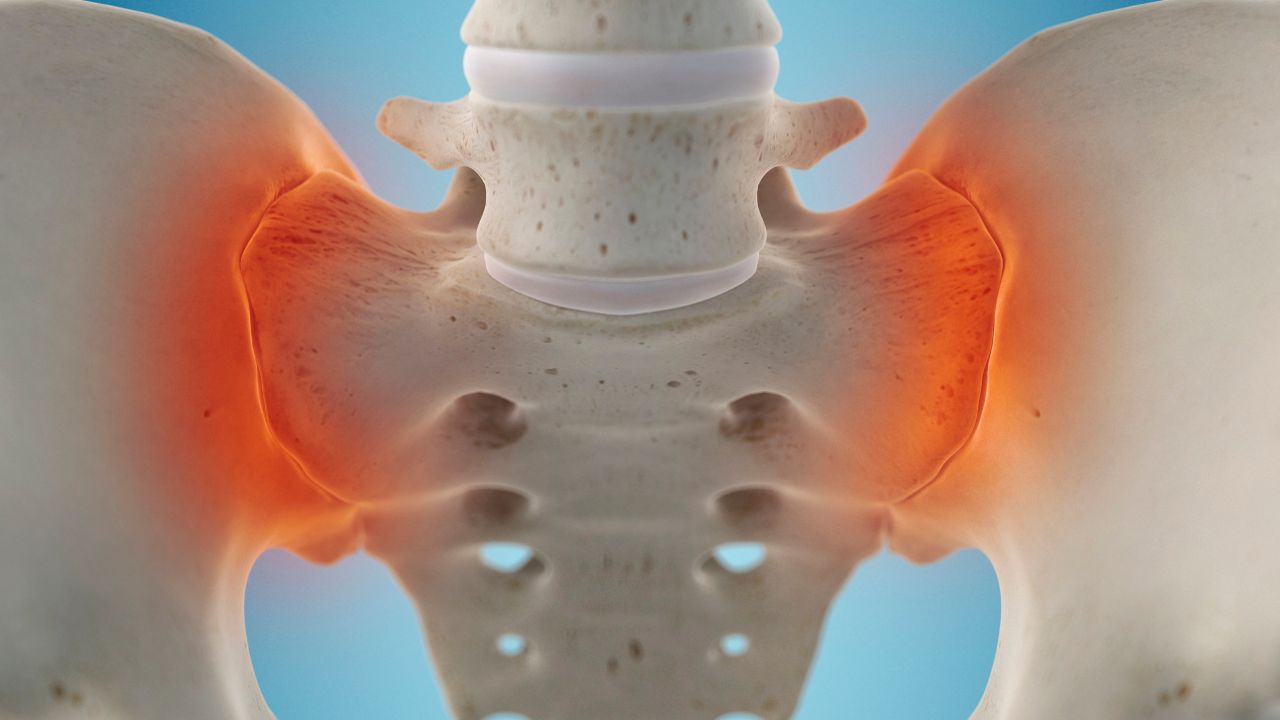
Sacroiliac joint pain represents a significant source of chronic lower back discomfort affecting millions of people worldwide. Up to 30% of individuals experiencing lower back pain have symptoms originating from the SI joint rather than the lumbar spine. Understanding how this critical joint functions, recognizing pain patterns, and exploring evidence-based treatment options empowers patients to make informed decisions about their care. The sacroiliac joint fusion market is growing at 19.8% annually, reflecting increased awareness of this previously underdiagnosed condition.
Key Takeaways
- Sacroiliac joint dysfunction causes up to 30% of chronic lower back pain cases
- Non-surgical treatments, including physical therapy, injections, and regenerative medicine, offer effective relief for most patients
- Diagnostic tests and imaging help differentiate SI joint pain from other back conditions
- Minimally invasive procedures provide faster recovery times compared to traditional open surgery
- Treatment selection depends on age, gender, pain severity, and individual lifestyle priorities
What Is the Sacroiliac Joint and How Does It Function?
Anatomy and Role in the Lower Back
The sacroiliac joint connects the base of the spine to the pelvis, transferring weight from the upper body to the legs. This L-shaped articulation features strong ligaments and minimal movement, functioning primarily as a shock absorber during walking and standing. The joint surface contains both smooth cartilage and roughened areas that interlock to provide stability. When inflammation or damage occurs, this normally stable structure becomes a pain generator affecting daily activities.
How the Sacroiliac Joint Contributes to Pain
Sacroiliac joint dysfunction develops when normal motion becomes either excessive or restricted, causing inflammation and discomfort. The joint’s extensive nerve supply means even small mechanical changes produce significant pain signals. Abnormal movement patterns create stress on surrounding muscles and ligaments, perpetuating the pain cycle. Pregnancy, arthritis, injury, and leg length discrepancies commonly trigger SI joint problems.
What Are the Common Causes of Sacroiliac Joint Pain?
Degenerative Conditions and Aging
Age-related changes significantly impact sacroiliac joint health as cartilage wears and ligaments lose elasticity. Pain prevalence increases from 8.5% in the 18-29 age group to 30.8% in those 65 and older. Osteoarthritis develops within the joint surfaces, reducing smooth gliding motion and causing bone-on-bone contact. Hormonal changes during menopause accelerate cartilage breakdown, explaining why women report higher chronic pain rates at 21.7% compared to 19% in men.
Injury and Sports-Related Factors
Sudden trauma from falls, car accidents, or direct blows damages the sacroiliac joint structure and supporting ligaments. Repetitive stress from running, golf swings, or tennis strokes gradually destabilizes the joint over time. Heavy lifting with poor form concentrates force through the SI joint, creating microtears in surrounding tissues. Athletes in contact sports face higher injury risks due to twisting motions and impact forces.
Inflammatory and Structural Issues
Ankylosing spondylitis and other inflammatory conditions cause progressive sacroiliac joint fusion and stiffness. Leg length discrepancies create uneven pelvic alignment, placing asymmetric stress on both SI joints. Scoliosis and other spinal deformities alter normal biomechanics, increasing SI joint strain. Infections, though rare, can cause severe joint inflammation requiring immediate medical intervention.
How Can Sacroiliac Joint Pain Be Identified?
Typical Symptoms and Pain Patterns
Lower back pain concentrated on one side near the dimples above the buttocks indicates possible SI joint involvement. Pain radiates down the back of the thigh but rarely extends below the knee, distinguishing it from sciatica. Patients report increased discomfort when standing from a seated position or climbing stairs. Morning stiffness, pain with prolonged sitting, and difficulty finding comfortable sleep positions characterize SI joint dysfunction.
Diagnostic Tests and Imaging Techniques
Physical examination includes provocative tests that stress the SI joint to reproduce pain symptoms. The FABER test, Gaenslen’s test, and distraction test help identify SI joint involvement with reasonable accuracy. X-rays reveal structural abnormalities and arthritis, while MRI scans show inflammation and soft tissue damage. Diagnostic sacroiliac joint injection under fluoroscopic guidance confirms the pain source when an anesthetic provides temporary relief.
Differentiating SI Joint Pain from Other Back Issues
Lumbar disc herniation produces leg pain that extends below the knee and follows specific nerve distributions. Hip arthritis causes groin pain and limited hip rotation rather than lower back symptoms. Piriformis syndrome creates buttock pain but lacks the characteristic SI joint tenderness points. Careful clinical examination combined with imaging helps distinguish these overlapping conditions and guide appropriate treatment.
What Are the Non-Surgical Treatment Options for Sacroiliac Joint Pain?
Conservative Therapies: Physical Therapy and Medications
Physical therapy strengthens core muscles and corrects movement patterns that stress the sacroiliac joint. Over 90% of patients begin with conservative approaches, including exercise, manual therapy, and anti-inflammatory medications. NSAIDs reduce inflammation and pain, though long-term use carries gastrointestinal side effects requiring monitoring. Research shows 76% of patients prefer over-the-counter options to opioid-based treatments due to safety concerns.
Average 12-month physical therapy costs reach $11,151, approaching some minimally invasive intervention expenses. Topical analgesics provide localized relief without systemic medication risks. Non-surgical treatments for back pain offer effective alternatives for many patients seeking to avoid surgical intervention. SI joint rehabilitation protocols target specific muscle imbalances contributing to joint instability.
Injection Treatments: Corticosteroids, Hyaluronic Acid, and PRP
Corticosteroid injections provide rapid anti-inflammatory effects lasting three to six months on average. Between 60-70% of SI joint pain patients receive intra-articular injection therapy during their treatment course. Hyaluronic acid injections lubricate the joint surface and may extend pain relief duration. Corticosteroid injections cost $150-$500 per session, but only mask pain rather than address underlying tissue damage.
The joint pain injections market is growing from $6.34 billion in 2025 to $15.67 billion by 2034. Platelet-rich plasma injections use the patient’s own blood components to stimulate natural healing processes. PRP therapy works by concentrating growth factors that promote tissue repair and regeneration. PRP treatments range from $500 to $2,500 per session, though insurance coverage remains limited.
Role of Regenerative Medicine: PRP and Stem Cell Therapies
Platelet-rich plasma represents an autologous therapy delivering concentrated healing factors directly to damaged tissue. The PRP market is expanding from $650.1 million in 2025 to $1.75 billion by 2033, reflecting growing adoption. Regenerative medicine approaches achieve 15-25% adoption rates as patients seek root-cause treatments rather than symptom masking. Stem cell therapy harnesses the body’s natural repair mechanisms to rebuild damaged cartilage and ligaments.
Stem cell treatments cost $4,000 to $50,000, depending on the protocol complexity and cell source. Variable results with stem cell therapies reflect differences in cell quality, delivery methods, and patient selection criteria. Minimal side effects characterize properly administered regenerative treatments using autologous biological materials. High out-of-pocket costs remain a barrier despite growing evidence supporting regenerative medicine efficacy.
When Are Minimally Invasive Procedures Recommended?
Overview of Sacroiliac Joint Fusion and Other Techniques
Sacroiliac joint fusion stabilizes the joint using small implants inserted through minimal incisions. Radiofrequency ablation heats nerves supplying the SI joint, interrupting pain signals for extended periods. Endoscopic discectomy removes disc material, compressing adjacent nerves through tiny portals. Between 30-40% of chronic SI joint pain patients ultimately require minimally invasive interventions when conservative measures fail.
The minimally invasive spine surgery market is growing from $2.59 billion in 2024 to $4.80 billion by 2033. Vertiflex interspinous spacers treat lumbar stenosis with outpatient procedures requiring minimal recovery time. Advanced imaging guidance ensures precise implant placement while minimizing tissue disruption. Patients typically transition to these procedures after six months of unsuccessful conservative treatment.
Patient Selection and Expected Outcomes
Ideal candidates have localized SI joint pain confirmed through diagnostic injections and imaging studies. Patients with severe osteoporosis, active infections, or unrealistic expectations face higher complication risks. The Vertiflex procedure achieves 90% patient satisfaction at 60 months following implantation. Careful patient selection based on specific diagnostic criteria optimizes long-term outcomes and minimizes revision surgery rates.
Recovery Times and Safety Profiles
Minimally invasive procedures allow recovery measured in weeks rather than the months required for open surgery. Conservative therapies may require weeks to show noticeable results, extending the total treatment timeline. Outpatient surgery centers enable same-day discharge for most minimally invasive SI joint procedures. Infection risks remain below 1% with proper sterile technique and antibiotic protocols.
What Are the Considerations for Surgical Intervention?
Traditional Sacroiliac Joint Fusion Vs. Minimally Invasive Approaches
Open SI joint fusion requires larger incisions and more extensive muscle dissection than minimally invasive techniques. Traditional approaches provide direct joint visualization but increase tissue trauma and recovery time. Minimally invasive fusion uses fluoroscopic guidance to place implants through small stab incisions. Both techniques stabilize the joint, though minimally invasive methods reduce postoperative pain and hospital stays.
Risks, Benefits, and Long-Term Efficacy
Surgical risks with open interventions include increased blood loss, muscle damage, and prolonged rehabilitation. Infection risk with surgical procedures ranges from 1-3%, depending on technique and patient factors. Complications from traditional spine surgeries include hardware failure, nonunion, and adjacent segment degeneration. Long-term efficacy studies show 70-85% of properly selected patients achieve significant pain reduction.
Cost and Insurance Factors
Sacroiliac joint fusion costs range from $21,685 to $42,607 for uninsured patients. Traditional lumbar spinal fusion averages $28,463 to $85,956, depending on hospital charges and complexity. Minimally invasive procedures cost $15,000 to $60,000, generally falling between conservative therapy and open surgery. Insurance coverage varies significantly based on medical necessity documentation and prior treatment failures.
How Do Demographic Factors Influence Treatment Choices?
Impact of Age and Gender on Healing and Preferences
Women experience higher chronic pain rates and greater sensitivity to inflammatory conditions, affecting treatment outcomes. The elderly population shows 11.8% prevalence of high-impact chronic pain limiting daily activities. Younger patients prioritize faster recovery, enabling return to work and athletic activities. Older adults often prefer less invasive options due to medical comorbidities increasing surgical risks.
Regional Variations in Treatment Access and Adoption
North America accounts for 45.52% of the global joint pain injections market. The region also represents 41.1% of sacroiliac joint fusion procedures performed worldwide. Advanced healthcare infrastructure and favorable insurance policies drive higher treatment adoption in developed markets. Asia Pacific regions show the fastest growth as healthcare access expands and populations age.
Consumer Priorities: Efficacy, Safety, Recovery, and Cost
Efficacy ranks highest at 37.5% weighting when patients evaluate SI joint treatment options. Safety profile considerations account for 27.5% of treatment selection decisions. Recovery time influences 22.5% of patient choices, particularly among working-age individuals. Cost factors represent 17.5% of decision-making despite significant price variations between treatment categories.
Integrating Treatment Strategies for Effective Sacroiliac Joint Pain Management
Comprehensive treatment combines multiple modalities tailored to individual patient needs and response patterns. The global pain management market is projected to reach $106.86 billion by 2031, growing at 4.53% annually. Chronic lower back pain treatments represent $2.69 billion in 2024, expanding to $6.69 billion by 2034. Successful outcomes require proper diagnosis, stepwise treatment escalation, and realistic patient expectations.
Physical therapy establishes proper movement patterns before introducing interventional procedures or regenerative therapies. Injection treatments bridge the gap between conservative care and surgical intervention for appropriate candidates. Neck and back pain management requires a comprehensive evaluation addressing all potential pain generators. Multimodal approaches addressing inflammation, biomechanics, and tissue healing produce superior long-term results compared to single-treatment strategies.
The Regenerative Institute of Newport Beach specializes in helping active individuals regain function without invasive surgery. Our treatment protocols combine advanced diagnostics, regenerative medicine, and personalized rehabilitation programs. Schedule a consultation to discover which SI joint treatment options align with your lifestyle goals and recovery priorities.
Ready to Treat Your Sacroiliac Joint Pain Without Surgery?
Sacroiliac joint pain doesn’t have to be a permanent barrier to the life you want. At the Regenerative Institute of Newport Beach, Dr. Khyber Zaffarkhan specializes in non-surgical, regenerative treatments—including PRP therapy and stem cell injections—designed to address the root cause of SI joint dysfunction and restore lasting function.
Schedule a consultation today to find out which treatment approach fits your condition, lifestyle, and recovery goals.