
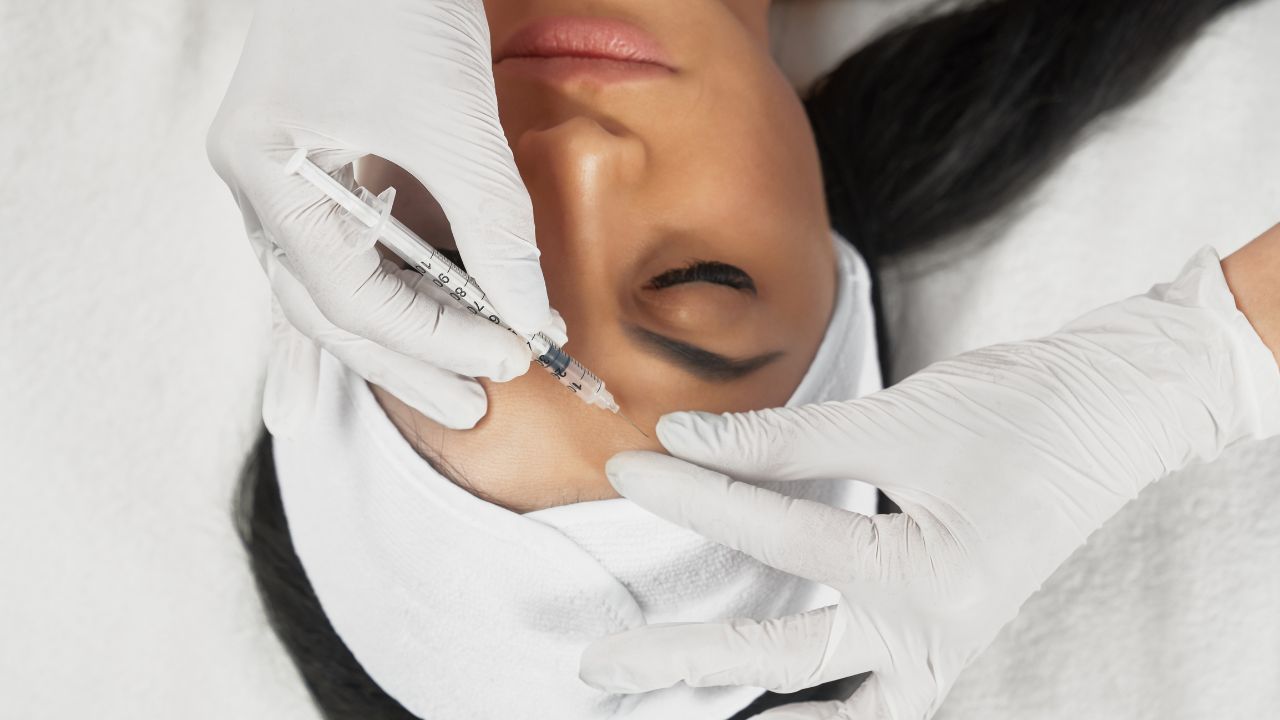
Chronic migraine affects approximately 3.2 million adults in the United States, defined as 15 or more headache days per month for at least three months. For decades, treatment relied on daily oral medications that often carry significant side effects and high discontinuation rates. OnabotulinumtoxinA (Botox), FDA-approved in October 2010, changed that landscape as the first injectable preventive therapy specifically approved for chronic migraine.
The short answer: yes, botox migraine treatment works for many patients with headache disorders. Clinical trials enrolling 1,384 adults demonstrated a 47% responder rate (patients achieving ≥50% reduction in headache days), with an average reduction of 8.4 headache days per month. This guide synthesizes clinical evidence and patient-reported outcomes to help you determine if Botox is right for your chronic migraine relief.
Key Takeaways
- Botox achieves a 47.1% responder rate for chronic migraine, with patients experiencing an average reduction of 8.4 headache days per month; superior to most oral preventive medications and comparable to newer CGRP monoclonal antibodies.
- Benefits are cumulative across treatment cycles; patients often see minimal response after the first injection but substantial improvement by cycles 2-3, which is why committing to at least 9 months of treatment is essential for proper evaluation.
- Side effects are predominantly mild and localized (neck pain 9%, eyelid ptosis 4%), with serious adverse events rare; Botox’s locally-administered mechanism avoids the cognitive slowing, weight changes, and chronic fatigue associated with oral preventives.
- Botox shows superior real-world persistence compared to alternatives; 40.7% of patients remain on treatment at 12 months vs. 25.5-33.7% for CGRP mAbs, suggesting better tolerability and perceived benefit in clinical practice.
- Most insurance plans cover Botox with prior authorization; requirements include a chronic migraine diagnosis (15+ headache days/month for 3+ months), a documented headache diary, and failed trials of 2-3 oral preventive medications.
What Is Botox And How Is It Used To Treat Chronic Migraines?
Preventive migraine treatments such as Botox (onabotulinumtoxinA) modulate pain pathways over weeks and months rather than stopping an active migraine attack. Understanding the science behind how Botox stops chronic migraines reveals why this mechanism offers advantages over traditional oral medications.
Key Details About Botox and Its Use for Chronic Migraines:
What Botox Is:
- OnabotulinumtoxinA, FDA-approved October 15, 2010, for chronic migraine prevention
- A preventive treatment, not an acute treatment, modulates pain pathways over weeks and months
- Specifically approved for patients with 15+ headache days per month
How Botox Works for Chronic Migraines:
- Blocks the release of CGRP (calcitonin gene-related peptide) and Substance P from nerve endings
- Reduces peripheral and central sensitization in the nervous system
- Interrupts the cycle of frequent migraine attacks
Areas of the Head Commonly Treated:
- Standard PREEMPT protocol: 31 injection sites across 7 muscle groups (forehead, temples, back of head, neck, upper shoulders)
- Total dose: 155 units (fixed sites) + up to 40 additional units (“follow-the-pain” approach)
- Maximum dose: 195 units
- Treatment is administered every 12 weeks by a qualified neurologist
How Effective Is Botox For Chronic Migraines?
Botox demonstrates superior efficacy compared to many traditional oral preventive medications, with the advantage of quarterly dosing rather than daily pills. The landmark PREEMPT trials established Botox as a first-line injectable preventive, showing statistically significant reductions in headache days, cumulative headache hours, and acute medication use. These botox success rates position it among the most effective preventive therapies available.
Success Rates of Botox vs. Other Treatments:
| Treatment | 50% Responder Rate | Mean Reduction in Headache Days/Month | Study Source |
| Botox | 47.1% | −8.4 days | PREEMPT 1&2 (1,384 patients) |
| Erenumab (Aimovig) | 39.9% | −6.6 days | ARISE Trial |
| Topiramate | 36.8% | −5.6 days | Brandes et al. 2004 |
| Propranolol | 43.0% | −4.5 days | Holroyd et al. 2010 |
Factors That Affect Botox’s Effectiveness:
Frequency of Migraines:
- Must have 15+ headache days per month to qualify for FDA-approved use
- “The more frequent the headaches, the better the patient does with Botox” (Dr. Andrew Blumenfeld, American Migraine Foundation)
Duration of Treatment:
- Benefits are cumulative across treatment cycles; the first cycle rarely produces the maximum effect
- “I look to the second and third treatments to maximize effects” (Dr. Andrew Blumenfeld)
- At least 3 treatment cycles (9 months) are recommended before evaluating full response
Patient Factors:
- Approved for adults 18+ with documented chronic migraine diagnosis
- Contraindicated in pregnancy, neuromuscular disorders, and botulinum toxin allergies
- Insurance typically requires failed trials of 2-3 oral preventive medications first
Typical Improvement Timelines:
- After 4 weeks: First statistically significant reduction; mean headache days drop from 19.9 (baseline) to 16.8 days per month
- After 2 months (Cycle 2-3): Maximum effect for many patients; 47% achieve ≥50% reduction in headache days
- Long-term (108 weeks): Average 10.7 fewer headache days per month sustained; patients report progressive improvement over years
What Do Patients Report About Botox Treatment For Chronic Migraines?
Patient-reported outcomes consistently show high satisfaction rates and meaningful quality-of-life improvements. Real-world persistence data reveals that 40.7% of Botox patients remain on treatment at 12 months, compared to 25.5-33.7% for CGRP alternatives. These patient reports botox consistently demonstrate meaningful improvement beyond just headache frequency reduction.
Common Patient Experiences:
Relief of Migraine Symptoms:
- “Pain cut down to a third after years of suffering” (Drugs.com review)
- “From 25 migraines a month to 5” (InjectCo review)
- Case example: 67% reduction by third cycle (18 headache days/month reduced to 6)
Duration of Relief:
- Treatment cycle lasts 12 weeks (3 months) between injections
- 62.9% of patients experience “wear-off” phenomenon 2-4 weeks before next scheduled injection
- If treatment stops completely, patients return to baseline headache frequency within 4-8 weeks
- Some patients qualify for shortened 10-week interval if wear-off is documented
Treatment Experience:
- 10-15 minute in-office procedure with “small pinprick” sensations
- No anesthesia required; patients return to normal activities immediately
- Most common post-procedure effect: mild neck soreness for 1-2 days (manageable with ice packs)
Duration of Relief by Patient Group:
| Patient Group | Duration of Relief | Notes |
| Standard protocol | 10-12 weeks | Majority maintain benefit through full 12-week cycle |
| Wear-off patients | 8-10 weeks | 62.9% experience early symptom return in weeks 10-12 |
| Adjusted protocol | 10 weeks consistently | Some require shortened interval with insurance pre-authorization |
Reported Side Effects:
Common (from PREEMPT trials):
- Neck pain: 9% (vs. 3% placebo); manageable with ice packs for 1-2 days
- Eyelid ptosis (drooping): 4%; temporary, resolves in 2-4 weeks
- Headache post-injection: 5%
- Injection site pain: 3%
Comparative Safety:
- 48% of Botox patients report treatment-emergent adverse events vs. 79% of topiramate patients
- 85.7% of Botox patients complete treatment courses vs. 43.7% of topiramate patients
- 21% lower odds of headache-related emergency department visits compared to oral preventives
What Does The Research Say About Botox And Chronic Migraines?
The clinical evidence base for Botox in chronic migraine spans over a decade of randomized controlled trials and real-world registry data. The landmark PREEMPT trials (1,384 patients across 122 sites) established Botox’s superiority over placebo, demonstrating statistically significant reductions in headache days. This extensive research supports Botox as a comprehensive pain management solution for chronic migraine patients.
Key Research Studies:
| Study | Sample Size | Key Results | Duration |
| PREEMPT 1&2 Pooled | 1,384 patients | 47% achieved ≥50% reduction; −8.4 days vs. −6.6 placebo | 24 weeks |
| COMPEL Long-term | Long-term cohort | −10.7 headache days/month sustained | 108 weeks (9 cycles) |
| Real-World Meta-Analysis | 10-year data | −10.64 days at 24 weeks; −10.32 at 52 weeks | 52+ weeks |
Botox vs. Other Treatments:
| Treatment | Effectiveness | Key Side Effects | Cost | Frequency |
| Botox | −8.4 days/month | Neck pain (9%), ptosis (4%) | ~$3,000/year | Every 12 weeks (office) |
| CGRP mAbs | −4.6 to −6.6 days | Constipation (>20%), injection reactions | $600–700/month | Monthly (self) |
| Topiramate | −5.6 days | Cognitive slowing, weight loss | Low | Daily oral |
| Nerve Blocks | −3.8 days | Local soreness | Low–Moderate | Every 4–12 weeks |
Key Finding: Botox had 40.7% treatment persistence at 12 months vs. 25.5%–33.7% for CGRP mAbs, suggesting superior real-world tolerability. The Number Needed to Treat (NNT) for Botox is 5-8.
What Is The Treatment Timeline For Botox In Chronic Migraines?
Botox’s therapeutic effects are cumulative and progressive rather than immediate. Patients who see minimal response after the first cycle often achieve substantial benefit by cycles two or three, which is why headache specialists recommend committing to at least 9 months before determining effectiveness. Understanding the treatment timeline botox follows helps set realistic expectations.
Botox Treatment Schedules:
- Standard: Every 12 weeks (3 months) in-office procedure
- Adjusted for wear-off: Every 10 weeks for patients experiencing symptom return in weeks 10-12 (requires insurance authorization)
- Minimum commitment: At least 3 cycles (9 months) before evaluating full effectiveness
Timeline for Full Effects:
- Week 4: 16.8 headache days (−3.1 from baseline of 19.9); first statistically significant reduction
- Week 12 (Cycle 2): 12.8 headache days; cumulative benefit begins to build
- Week 24 (Cycle 3): 11.5 headache days; peak early response; ~47% achieve ≥50% reduction
- Week 108 (Cycle 10): 8.7 headache days; sustained long-term benefit
Follow-Up Treatments:
- Treatment every 12 weeks (or 10 weeks if experiencing wear-off)
- First appointment: consultation, headache history review, first injection series (~20 minutes total)
- Subsequent appointments: 10-15 minutes for injections only
- Maintain a headache diary tracking frequency, severity, duration, and medication use
What Are The Advantages Of Botox For Chronic Migraines?
Botox offers several clinically meaningful advantages over both traditional oral preventive medications and newer CGRP monoclonal antibody injections. The most significant advantage is its superior tolerability profile; 85.7% of Botox patients complete treatment courses compared to 43.7% for topiramate. Similar to how PRP injections offer targeted regenerative treatment for conditions like knee pain, Botox provides localized therapy that minimizes systemic exposure.
Advantages Comparison:
| Feature | Botox | Oral Preventives | CGRP mAbs |
| Treatment Frequency | Every 12 weeks | Daily | Monthly |
| Side Effect Rate | 48% | 79% (topiramate) | Variable |
| Treatment Completion | 85.7% | 43.7% (topiramate) | 25.5-33.7% at 12 months |
| Mean Reduction | −8.4 days | −4.5 to −5.7 days | −4.6 to −6.6 days |
Benefits Over Traditional Treatments:
Longer-Lasting Relief:
- Quarterly injections vs. daily medication eliminates compliance issues
- Sustained benefit through long-term treatment; up to 108 weeks demonstrated with no tolerance
- Single 10-15 minute office visit every 12 weeks vs. 365 daily doses per year
Fewer Side Effects:
- Locally administered vs. systemic oral medications
- Avoids cognitive slowing, weight changes, chronic fatigue, and mood disturbances
- 85.7% treatment completion vs. 43.7% for topiramate
Quality of Life:
- Depression decreased from 22.6% to 8.8% over 36 weeks
- MIDAS disability scores dropped from median 54 to 16
- Work productivity and activity impairment significantly improved vs. topiramate
What Are The Risks And Side Effects Of Botox For Chronic Migraines?
Botox has an extensively studied safety profile, with long-term data now available for up to 11 years of continuous treatment. The vast majority of adverse events are mild, transient, and localized to the injection area.
Common Side Effects:
- Neck pain/stiffness: 9% (manageable with ice)
- Mild headache: 5%
- Injection site pain: 3%
Serious Risks:
FDA Boxed Warning:
- Distant spread of toxin (rare at migraine dosage): generalized weakness, difficulty swallowing, respiratory issues
- Severe migraine worsening requiring hospitalization: 1% (vs. 0.3% placebo)
Other Serious Risks:
- Temporary muscle paralysis (eyelid ptosis: 4%, resolves in 2–4 weeks)
- Allergic reactions in patients with botulinum toxin hypersensitivity
Managing Risks:
- Regular follow-ups every 12 weeks
- Adjust dosage if side effects occur (standard 155 units; reduce if needed)
- Seek immediate medical attention for breathing/swallowing difficulties
- Avoid blood thinners before procedure to minimize bruising
- Long-term safety established through 11 years of data
Who Is A Good Candidate For Botox Treatment For Chronic Migraines?
Botox is FDA-approved specifically for chronic migraine (15+ headache days per month), not episodic migraine. Most insurance companies require documented failure of at least 2-3 oral preventive medications before approving coverage. Ideal candidates are adults who meet diagnostic criteria and are willing to commit to at least three treatment cycles (9 months).
Criteria for Suitability:
Failed Previous Treatments:
- Must have tried and failed 2-3 oral preventives (insurance requirement)
- Examples: beta-blockers, anticonvulsants, antidepressants
Migraine Frequency:
- 15+ headache days per month
- At least 8 days with migraine characteristics
- Sustained for 3+ months
- Documented in headache diary
Other Requirements:
- Adults 18+
- No contraindications
- Willing to commit to 3+ treatment cycles (9 months)
Disqualifying Conditions:
- Pregnancy
- Neuromuscular disorders (myasthenia gravis, Lambert-Eaton syndrome)
- Allergies to botulinum toxin or components
- Active infection at injection sites
- Episodic migraine (14 or fewer headache days/month); NOT approved
Botox For Chronic Migraines
Botox represents a paradigm shift in chronic migraine prevention, offering a non-oral, locally-administered alternative to traditional daily medications. With 47.1% of patients achieving ≥50% reduction in headache days and an average reduction of 8.4 days per month, Botox demonstrates superior efficacy compared to many oral preventives while avoiding systemic side effects. The cumulative nature of Botox’s benefits means patients often see increasing improvement across treatment cycles, with maximum effect typically reached by the second or third injection (6-9 months).
Key Takeaways:
- Effectiveness: 47.1% achieve ≥50% reduction in headache days; mean reduction of 8.4 headache days per month vs. 6.6 for placebo
- Timeline: Benefits build across cycles; commit to at least 3 cycles (9 months) for full evaluation
- Safety: Most side effects mild (neck pain 9%, eyelid ptosis 4%); serious risks rare; 11 years of long-term safety data
- Persistence: 40.7% still on treatment at 12 months; higher than CGRP mAbs and oral preventives
- Insurance: Most plans cover with prior authorization, requiring a chronic migraine diagnosis, 15+ headache days/month, and failed trials of 2+ oral preventives
For patients with chronic migraine who have not responded to traditional oral preventives or cannot tolerate their side effects, Botox offers a proven, FDA-approved option with over a decade of clinical evidence. If you’re experiencing chronic migraines and seeking evidence-based treatment, contact the Regenerative Institute of Newport Beach to schedule a consultation with Dr. Khyber Zaffarkhan.
Frequently Asked Questions
Can Botox cure chronic migraines completely?
No, it’s a preventive treatment, not a cure. Reduces frequency and severity while continuing treatment. If stopped, patients return to baseline within 4–8 weeks.
How much does Botox for chronic migraines cost?
~$3,000/year; most insurance covers with prior authorization requiring: diagnosis, 15+ headache days/month, failed 2+ preventives
How does Botox compare to other non-invasive treatments?
Highest mean reduction (−8.4 days vs. −4.5 to −6.6 for alternatives), best treatment persistence (40.7% at 12 months), quarterly vs. daily/monthly dosing, and fewer systemic side effects than oral medications.

