
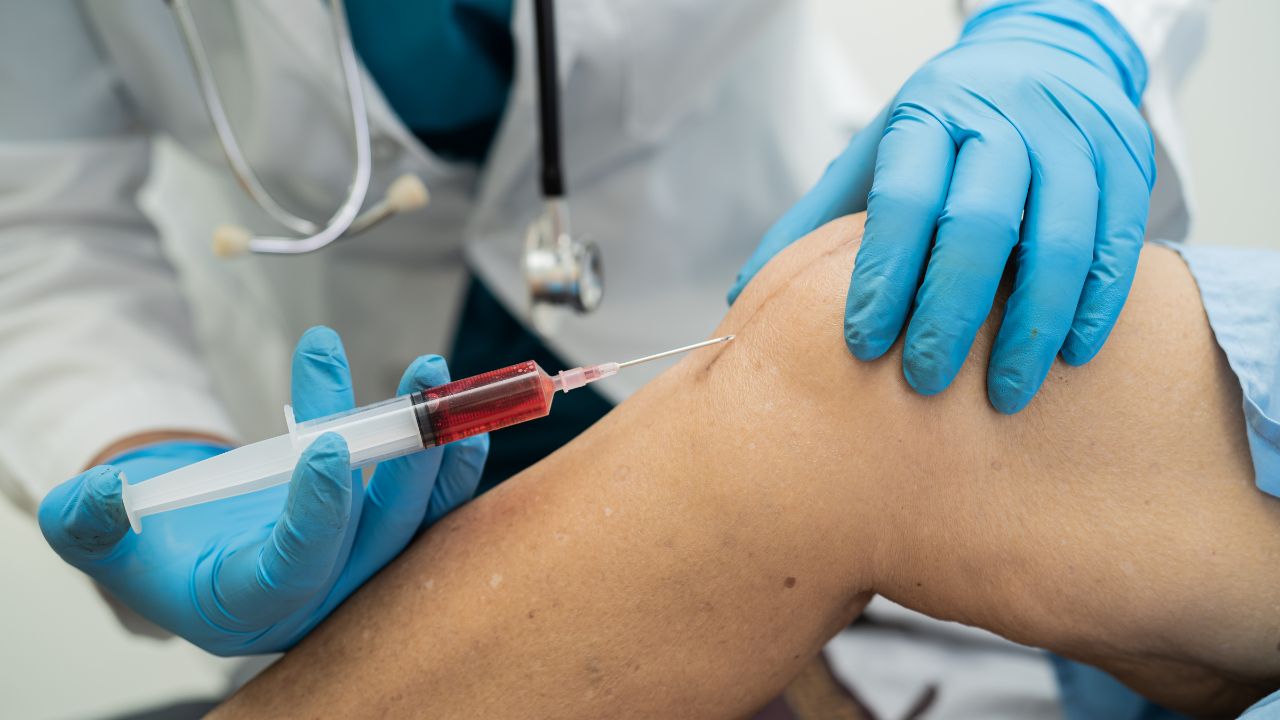
Hip pain from osteoarthritis, labral tears, or avascular necrosis disrupts your ability to walk, exercise, and maintain the active lifestyle you value. Traditional treatment pathways offer limited options: medication manages symptoms temporarily, physical therapy provides modest relief, and total hip replacement requires months of recovery. Hip pain regenerative medicine, specifically platelet-rich plasma (PRP) and stem cell therapies, offers a minimally invasive alternative that targets the root cause of tissue damage, reduces inflammation, and stimulates your body’s natural healing capacity. For appropriately selected patients with early-to-moderate hip conditions, these treatments can delay or prevent hip replacement surgery while restoring function and reducing pain.
This guide examines how PRP hip treatment and stem cell therapies work, which conditions they treat most effectively, what outcomes you can expect, and when surgery remains the better option.
Key Takeaways
- PRP delivers 30-50% pain reduction for early hip osteoarthritis with 1-3 day recovery
- Stem cell therapy provides superior results for moderate cartilage damage and avascular necrosis
- Both treatments work best for Kellgren-Lawrence Grades I-III; Grade IV requires surgery
- Neither therapy is covered by insurance; costs range from $2,200-$17,200
- Recovery time dramatically favors regenerative options over hip replacement surgery
What Is Regenerative Medicine And How Can It Help With Hip Pain?
Regenerative medicine stimulates your body’s natural healing capacity rather than replacing damaged tissue surgically. For hip pain, this approach targets the root cause, tissue damage and inflammation, instead of masking symptoms with medication or removing the joint entirely.
These non-surgical hip options address hip osteoarthritis, labral tears, gluteal tendinopathy, trochanteric bursitis, and avascular necrosis. The goal is straightforward: delay or prevent total hip replacement. For many patients with early to moderate hip conditions, regenerative therapies offer a minimally invasive path to restored function and pain relief.
What Are Platelet-Rich Plasma (PRP) And Stem Cell Therapies?
PRP therapy concentrates your platelets, 3 to 5 times normal levels, and injects them into damaged tissue. Platelets release growth factors that accelerate tissue repair and reduce inflammation. Stem cell hip therapy uses mesenchymal stem cells capable of becoming cartilage, bone, or tendon cells while secreting anti-inflammatory molecules.
The optimal choice depends on your diagnosis and tissue damage severity. PRP works best for early-stage conditions and soft tissue injuries. Stem cell therapy targets moderate cartilage loss and structural damage.
What Is Platelet-Rich Plasma (PRP) Therapy?
PRP therapy begins with a blood draw. Your blood is processed in a centrifuge to separate and concentrate platelets, then injected directly into the affected hip joint or tissue under ultrasound guidance. The concentrated platelets release growth factors, PDGF, TGF-β, VEGF, and IGF-1, that stimulate cell proliferation, reduce inflammatory cytokines, and accelerate tissue repair.
PRP is particularly effective for soft tissue conditions: gluteal tendinopathy, labral tears, trochanteric bursitis, and early-stage hip osteoarthritis. Recovery is minimal. Most patients return to daily activities within 1 to 3 days.
What Is Stem Cell Therapy For Hip Pain?
Stem cell therapy employs mesenchymal stem cells with a dual mechanism: they differentiate into needed tissue types and secrete molecules that modulate inflammation and stimulate healing. MSCs are harvested from bone marrow (via iliac crest aspiration) or adipose tissue (via mini-liposuction).
These cells differentiate into chondrocytes for cartilage, osteoblasts for bone, and tenocytes for tendons. Beyond differentiation, they exert paracrine effects, modulating the immune environment, reducing chronic inflammation, and activating resident tissue stem cells. Stem cell therapy is especially valuable for moderate hip osteoarthritis, significant cartilage damage, or early-stage avascular necrosis.
How Do PRP And Stem Cell Therapies Compare For Hip Pain Treatment?
| Feature | PRP Therapy | Stem Cell Therapy |
| Best Conditions | Early OA, tendinopathy, bursitis, labral tears | Moderate OA, cartilage damage, AVN |
| Mechanism | Growth factor release; anti-inflammatory | Differentiation + paracrine signaling |
| Procedure Complexity | Low (blood draw + injection) | Moderate (cell harvest + injection) |
| Recovery Time | 1–3 days | 3–7 days |
| Number of Treatments | 1–3 injections (often repeated annually) | 1–2 injections |
PRP offers a lower-complexity entry point for early-stage conditions. Stem cell therapy provides a more comprehensive regenerative response for moderate tissue damage. Both are outpatient procedures with minimal downtime compared to surgical alternatives.
How Effective Is PRP For Hip Pain Relief?
PRP produces a 30 to 50% reduction in pain scores for hip osteoarthritis patients, with effects lasting up to 12 months. A study published in PMC11488654 found significant improvements in Harris Hip Score and WOMAC functional scores sustained at one-year follow-up.
| Patient Condition | PRP Effectiveness | Notes |
| Hip OA (Early) | 68% | Best results for early-stage patients |
| Hip OA (Moderate) | 55% | Moderate cartilage loss |
| Tendonitis/Bursitis | 75% | Highest effectiveness for soft tissue |
Effectiveness scores represent composite pain relief + functional improvement derived from published clinical trials and systematic reviews.
PRP is most effective for early-stage conditions and soft tissue injuries. For moderate to advanced cartilage damage, stem cell therapy may provide superior outcomes.
How Effective Is Stem Cell Therapy For Hip Pain Relief?
Stem cell therapy produces significant improvements in the Harris Hip Score and sustained pain reduction across multiple hip conditions. For early-stage avascular necrosis, combined stem cell and PRP therapy promotes bone regeneration and prevents femoral head collapse, potentially avoiding hip replacement entirely.
| Patient Condition | Stem Cell Effectiveness | Notes |
| Hip OA (Early) | 75% | Superior to PRP for early degeneration |
| Hip OA (Moderate) | 62% | Effective for cartilage damage |
| Cartilage Damage | 70% | Strong structural repair evidence |
Effectiveness scores represent composite pain relief + functional improvement derived from published clinical trials and systematic reviews.
Stem cell therapy outperforms PRP for moderate cartilage damage and provides superior structural repair. For early-stage conditions, the 7-percentage-point advantage over PRP may justify the higher cost and complexity for patients seeking maximum benefit as a surgery-free alternative.
Which Therapy Is More Effective In The Long Term?
Treatment frequency differs significantly. PRP requires annual repetition to maintain benefits. Stem cells may need only one to two treatments for durable results. Both therapies work best for early-to-moderate disease; advanced bone-on-bone arthritis shows poor response to either approach.
Physical therapy significantly enhances the longevity of benefits from both treatments. For early-stage avascular necrosis, combined stem cell and PRP therapy demonstrates superior long-term bone regeneration compared to either treatment alone. Disease progression and patient compliance with rehabilitation determine ultimate durability.
How Do PRP And Stem Cell Therapies Differ In Terms Of Success Rates?
| Patient Group | PRP Success Rate | Stem Cell Success Rate | Surgery Success Rate |
| Early OA (Age 40-55) | 68% | 75% | 40% |
| Moderate OA (Age 55-65) | 55% | 62% | 75% |
| Severe OA (Age 65+) | 35% | 40% | 92% |
Success rates represent meaningful pain reduction and functional improvement sustained at 12-month follow-up.
Early-stage patients achieve the highest success rates with regenerative medicine, significantly outperforming surgery. As disease severity increases, the advantage shifts toward surgical intervention. For severe osteoarthritis with bone-on-bone contact, total hip replacement remains the gold standard.
What Are The Benefits And Risks Of PRP Therapy For Hip Pain?
PRP delivers 30 to 50% pain reduction sustained up to 12 months from a minimally invasive outpatient procedure. Recovery is rapid; most patients return to daily activities within 1 to 3 days.
For appropriately selected patients with early hip osteoarthritis, PRP can delay hip replacement by several years. The low procedural complexity and minimal downtime make it an accessible first-line regenerative option before considering stem cell therapy or surgery.
What Are The Risks And Side Effects Of PRP Therapy?
Infection at the injection site occurs in less than 1% of cases. Temporary tissue irritation or pain increase lasting 2 to 5 days is common. Bruising or swelling resolves within 1 to 2 weeks.
PRP provides insufficient relief in 15 to 20% of moderate-to-severe osteoarthritis patients. Patients with advanced cartilage loss or bone-on-bone contact should expect limited benefit and consider stem cell therapy or surgical consultation instead.
What Are The Benefits And Risks Of Stem Cell Therapy For Hip Pain?
Stem cell therapy’s dual mechanism, differentiation and immunomodulation, provides superior results for moderate osteoarthritis and cartilage damage compared to PRP. Most patients require only one to two treatments for durable benefit, eliminating the need for annual repetition.
For avascular necrosis, stem cell therapy prevents femoral head collapse and bone deterioration, potentially avoiding hip replacement entirely. This represents the most compelling application of regenerative medicine for hip conditions.
What Are The Risks And Side Effects Of Stem Cell Therapy?
Infection at the harvest or injection site occurs in 1 to 2% of cases. Procedural risks from bone marrow aspiration or adipose tissue harvest include bleeding, nerve injury, and anesthesia complications. These risks are low but exceed PRP’s minimal invasiveness.
Stem cell therapy provides insufficient relief for advanced bone-on-bone arthritis. Higher cost and procedural complexity compared to PRP require careful patient selection. Advanced disease warrants surgical consultation rather than regenerative approaches.
What Are The Costs Of PRP And Stem Cell Therapies For Hip Pain?
How Much Does PRP Therapy for Hip Pain Cost?
| Cost Component | Low Estimate | High Estimate |
| Single PRP Injection | $500 | $2,500 |
| Total Series (w/ consult, imaging, PT) | $2,200 | $7,900 |
Insurance does not cover PRP for orthopedic applications. All costs are out-of-pocket. A complete treatment series typically includes initial consultation, pre-treatment imaging, three injections spaced 4 weeks apart, and post-treatment physical therapy.
How Much Does Stem Cell Therapy For Hip Pain Cost?
| Cost Component | Low Estimate | High Estimate |
| Stem Cell Treatment (harvest + injection) | $1,000 | $8,500 |
| Total Treatment (w/ consult, imaging, PT) | $3,300 | $17,200 |
Insurance does not cover stem cell therapy. Total hip replacement averages $39,000 but is typically covered by insurance, making the out-of-pocket cost lower than regenerative options for insured patients. Regenerative medicine requires full self-pay but avoids surgical risks and lengthy recovery.
How Do PRP And Stem Cell Therapies Affect Hip Pain Surgery Decisions?
When Should You Consider PRP Or Stem Cell Therapy Over Hip Surgery?
Consider regenerative therapy if you have early-to-moderate hip osteoarthritis without advanced bone-on-bone contact. Failed conservative treatments, physical therapy, NSAIDs, and steroid injections make you a stronger candidate. Active patients aged 40 to 65 seeking to maintain their natural joints represent the ideal profile.
Recovery time constraints often drive the decision. If you cannot afford 3 to 6 months of surgical recovery and rehabilitation, hip arthritis alternatives offer a return to daily activities within days to weeks. The desire to delay major surgery while preserving treatment options is a valid clinical strategy.
What Factors Influence The Decision Between Regenerative Therapy And Surgery?
| Factor | Favors Regenerative Therapy | Favors Surgery |
| Severity | Early-moderate OA (KL I-III) | Severe bone-on-bone (KL IV) |
| Age | 40-65 years | 65+ years |
| Recovery Time | Limited availability | Can accommodate 3-6 months |
| Cost Consideration | Can afford $3K-$17K out-of-pocket | Has insurance coverage |
Kellgren-Lawrence grade determines clinical appropriateness. Grades I through III respond well to regenerative medicine. Grade IV requires surgical intervention. Insurance coverage fundamentally changes the cost equation; hip replacement averages $39,000 but is typically covered, while regenerative therapies require full self-pay.
How To Prepare For PRP And Stem Cell Treatments For Hip Pain?
What Are The Preparation Steps For PRP Therapy?
Discontinue NSAIDs and aspirin 7 to 10 days before your procedure, these medications interfere with platelet function. Avoid alcohol 48 hours prior. Complete pre-treatment imaging, typically MRI or diagnostic ultrasound, to guide injection placement.
Arrange transportation home. While PRP uses only local anesthesia, hip discomfort immediately post-injection may impair driving ability. Most patients resume driving within 24 hours.
What Are The Preparation Steps For Stem Cell Therapy?
Complete a comprehensive medical evaluation and pre-treatment MRI to assess cartilage damage and determine cell injection targets. Discontinue anti-inflammatory medications 7 to 10 days prior, these suppress the regenerative response.
Fasting may be required if sedation is used during bone marrow or adipose tissue harvest. Arrange assistance at home for 24 to 48 hours post-procedure. Harvest site discomfort and post-injection hip pain peak in the first 48 hours.
What Is The Recovery Process After PRP Or Stem Cell Treatment For Hip Pain?
How Long Does It Take To Recover From PRP Therapy For Hip Pain?
| Recovery Milestone | Timeline |
| Return to Daily Activities | 1-3 days |
| Pain Reduction Begins | 1-2 weeks |
| Return to Sport/Work | 2-4 weeks |
| Maximum Benefit | 6-12 weeks |
| Duration of Effects | Up to 12 months |
PRP delivers the fastest recovery among all hip pain interventions. Most patients resume normal daily activities within 1 to 3 days. Pain reduction begins within 1 to 2 weeks as growth factors stimulate tissue repair. Maximum benefit occurs at 6 to 12 weeks, with effects lasting up to one year.
How Long Does It Take To Recover From Stem Cell Therapy For Hip Pain?
| Recovery Milestone | Timeline |
| Return to Daily Activities | 3-7 days |
| Pain Relief Onset | 4-8 weeks |
| Return to Sport/Work | 6-12 weeks |
| Maximum Benefit | 6-12 months |
Stem cell therapy requires slightly longer recovery than PRP due to cell harvest and the gradual differentiation process. Return to daily activities takes 3 to 7 days. Pain relief onset occurs at 4 to 8 weeks as cells differentiate and secrete anti-inflammatory molecules.
Comparison: Total hip replacement requires 84 days to return to daily activities, 150 days to return to sport, and 300 days for full recovery, significantly longer than either regenerative option.
What Are The Possible Complications Of PRP And Stem Cell Therapies For Hip Pain?
What Are The Possible Complications Of PRP Therapy?
Infection at the injection site is rare, occurring in less than 1% of cases. Temporary tissue irritation lasting 2 to 5 days is common. Bruising or temporary stiffness resolves within 1 to 2 weeks.
Insufficient pain relief occurs in 15 to 20% of patients, particularly those with moderate-to-severe osteoarthritis. Advanced cartilage loss reduces PRP effectiveness. These patients should consider stem cell therapy or surgical consultation.
What Are The Possible Complications Of Stem Cell Therapy?
Infection at the harvest or injection site occurs in 1 to 2% of cases. Procedural complications from bone marrow aspiration or adipose tissue harvest include bleeding, nerve injury, and anesthesia complications. Post-procedure pain lasting 3 to 7 days is typical.
Inadequate response in advanced osteoarthritis remains the primary limitation. Severe bone-on-bone arthritis with significant joint space narrowing shows poor response to stem cell therapy. These patients require surgical intervention.
Should You Choose PRP Or Stem Cell Therapy For Your Hip Pain?
Choose PRP if:
- You have early hip osteoarthritis or soft tissue injuries (tendinopathy, labral tears, bursitis)
- Your budget allows $500 to $2,500 per treatment
- You need rapid recovery (1 to 3 days)
Choose Stem Cell Therapy if:
- You have moderate hip osteoarthritis with cartilage damage
- You have early-stage avascular necrosis
- PRP therapy failed to provide sufficient relief
- You prefer longer-lasting results with fewer repeat treatments
Consider Surgery if:
- You have severe bone-on-bone arthritis (Kellgren-Lawrence Grade IV)
- Regenerative therapies have failed
- Insurance coverage makes surgery financially accessible
Next steps: Obtain an evaluation from a board-certified orthopedic specialist. Complete pre-treatment MRI to assess cartilage damage and disease stage. Discuss realistic outcome expectations with your provider. Plan for out-of-pocket costs and explore financing options. Commit to post-treatment physical therapy to maximize regenerative benefit.
Ready to explore pain management solutions for your hip? Schedule a consultation at the Regenerative Institute of Newport Beach.

